

Dr David Scott, Editor of the 1640-60 House of Lords section, explores the role of the peers in securing the right of Parliament to meet regularly.
The Triennial Act of February 1641 was the first piece of legislation passed by the ‘Long Parliament’ in its momentous thirteen-year history of reform, rule and, in 1649, regicide. Of course, none of the peers and MPs who had assembled late in 1640 anticipated that Parliament would overthrow Charles I and seize the reins of government. But what they did foresee was the need to exploit the crisis engendered by his recent and disastrous war against the Scots in order to curtail the royal prerogative – the monarchy’s traditional discretionary powers that enabled it to govern without Parliament. None of these powers was more significant than the king’s right to call and dissolve Parliaments at will. The Triennal Act was brought in to limit this right, introducing legal provisions for summoning Parliament automatically in the event that the king had failed to do so after a three-year period. Here was the first step in a hoped-for revolution in royal government whereby parliamentary laws and taxation, based upon consent, would replace what many at the time saw as the king’s ‘arbitrary’ rule over their lives and property.
The fact that the Act originated in the Commons and was sponsored by Oliver Cromwell and other radicals has persuaded some historians that it was a power-grab by MPs determined to prove that they were now ‘the active agency of Parliament’ (G. Yerby, The Economic Causes of the English Civil War (Abingdon, 2020), p. 236). Yet even supposing the Commons viewed their handiwork in these terms they faced a major obstacle, for draft legislation still required the endorsement of both the Lords and the king to become law. As sent up to the Lords early in 1641 for their consent, the triennial bill (i.e. the draft Act) was indeed a radical document. It stipulated that if the king did not call a Parliament when required then the task would fall to the county sheriffs and other returning officers and then – if they too failed in this duty – to the electors themselves. Laws for calling regular Parliaments to redress ‘Mischiefs and Grievances’ had been on the statute books since the fourteenth century (The Statutes of the Realm (1810), vol. 1, p. 374); but none, so far as is known, had authorised people this far beyond the normal circles of government to act for the crown independently of their political masters. Charles was appalled that his ‘Ancient Prerogative’ would be exercised by ‘Sheriffs and Constables and I know not whom…’ (J. Rushworth, Historical Collections (1721), vol. 4, p. 155).
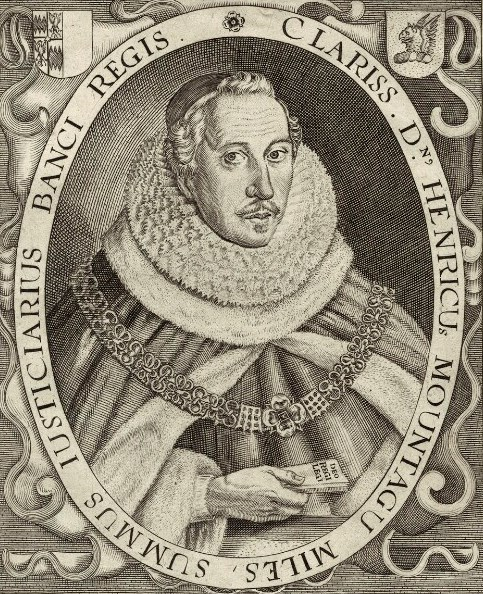
When the triennial bill was read in the Lords late in January 1641 it provoked ‘serious Debate’ and was referred to a committee to make ‘Additions and Amendments’ (Journals of the House of Lords (1782), vol. 4, p. 247). The king had even bigger problems with the bill and proposed to the Lords ‘that the Lawes for houlding of Annuall Parliam[en]tes be dulie kept and observed’, but that if this safeguard failed then the power of summoning a new Parliament should be vested either in the lord chancellor or the lord keeper (Parliamentary Archives, Main Papers, 28 Jan. 1641). These crown officers were royal ministers of state, appointed by the monarch, and the king seems to have calculated that if push came to shove they would remain answerable to him. The peer who chaired the committee to amend the bill was another royal minister – the lord privy seal, Henry Montagu, 1st earl of Manchester. He was a firm believer in the authority, indeed duty, of the peerage to act for the good of the commonwealth in disputes between the monarch and the people. He and his fellow committeemen did not object to royal ministers or, if necessary, local returning officers summoning Parliament independently of the king. Instead, they inserted between the two groups their own choice as guardians of the public interest – the aristocracy.
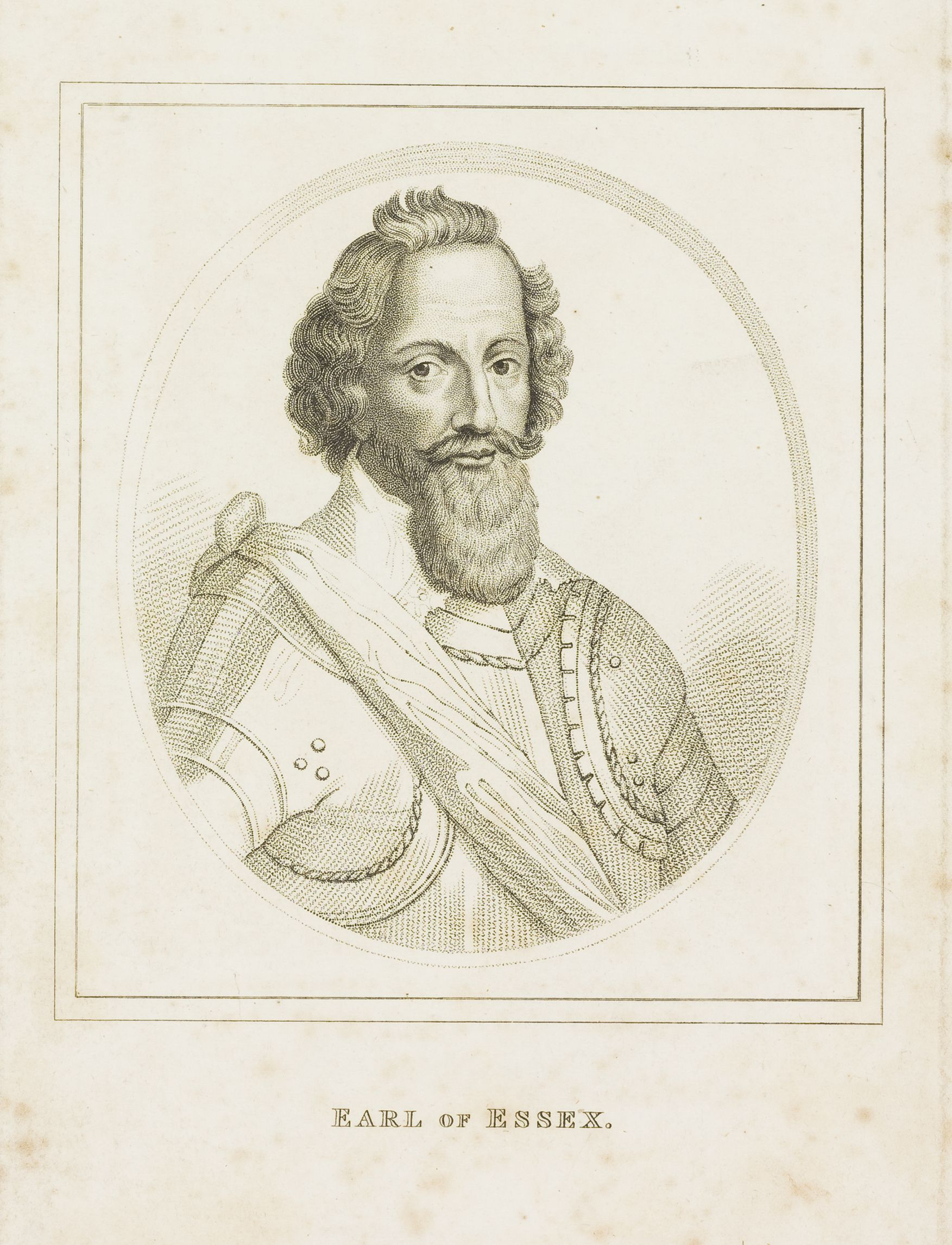
Manchester’s committee proposed that if the king or one of his ministers did not summon Parliament as required then the peers of the realm, ‘or any twelve or more of them’, should meet at Westminster and issue the necessary writs for holding elections (The Constitutional Documents of the Puritan Revolution 1625-1660 ed. S.R Gardiner (Oxford, 1906), p. 147). The number twelve in this context was a highly controversial one and loaded with political significance. In 1601 a group of English noblemen led by Robert Devereux, 2nd earl of Essex, had justified their rebellion against Elizabeth I by claiming authority under a precedent of 1265 for twelve peers to seize power and summon Parliament. Five members of Manchester’s 1641 committee, among them Essex’s son, the 3rd earl, had invoked this same authority just the previous year, joining seven other noblemen – making twelve peers in all – to petition Charles, demanding that he call Parliament. This demand, backed by Scottish force, had worked; the disaffected peers of 1640, unlike their Elizabethan predecessors, had prevailed.
The Lords’ amended triennial bill was returned to the Commons where it was referred to a committee dominated by Cromwell and like-minded MPs and was approved with only minor changes. A delegation of peers then attended the king on the understanding that if he withheld his royal assent to the bill he would be threatened with ‘the most extreme designs’; Charles ‘yielded to necessity’ and complied (Calendar of State Papers Venetian, 1640-1642 ed. A.B. Hinds (1924), p. 126). To him the Act represented a slippery slope towards an aristocratic republic and, in time perhaps, full parliamentary sovereignty. But a more immediate challenge to royal power – certainly once Parliament had been dissolved – was the baronial authority that the twelve petitioner peers had wielded and to which the Triennial Act now gave legal expression. The Commons had acquiesced in the Lords’ re-drafting of their bill because they shared the reformist ideals of the twelve peers. Indeed, some of the leading MPs had conspired with these noblemen to bring down Charles’s ‘personal rule’ the year before.

The two Houses were determined not just to affirm the lordly interest evident in the Triennial Act but to strengthen it. In their final overture to the king before the outbreak of civil war in 1642 they insisted on aristocratic control of royal government in the intervals between Parliaments; but Charles scorned the idea of reigning as a ‘Pupil or Ward’ of his over-mighty subjects (His Majesties Answer to the XIX Propositions (1642), p. 14). On raising an army against him that summer, parliamentarian peers and MPs declared allegiance to their new lord general with the baronial pledge that they would ‘live and die with the [3rd] Earl of Essex’ (Journals of the House of Lords (1786), vol. 5, p. 206).
DS
Further reading:
John Adamson, The Noble Revolt: The Overthrow of Charles I (London: Weidenfild & Nicolson, 2007)
Esther S. Cope, ‘The inconveniences of long intermissions of Parliament and a remedy for them’, Albion, 13 (1981), pp. 1-11
Pauline Croft, ‘The debate on annual Parliaments in the early seventeenth century’, Parliaments, Estates and Representation, 16 (1996), pp. 163-74
Paul E. J. Hammer, ‘The earl of Essex and Elizabethan Parliaments’, Parliamentary History, 34 (2015), pp. 90-110
Note: the biography of Oliver Cromwell has been published in House of Commons, 1640-60. The biographies of Robert Devereux, 3rd earl of Essex and Henry Montagu, 1st earl of Manchester, will appear in House of Lords, 1640-60. For a study of Robert Devereux, 2nd earl of Essex, see House of Lords, 1558-1603 (forthcoming).
