Unlike the House of Commons, which underwent major ‘democratic’ reform in the 19th century, the Lords remained virtually unchanged during the entire Victorian period. With a new hereditary peers bill now entering its final stages, Dr Philip Salmon explores how and why the House of Lords was able to survive the ‘age of reform’, highlighting constitutional difficulties that still have relevance today.
The 19th century is traditionally seen as a key period of ‘democratisation’ in British politics. The reform acts of 1832, 1867 and 1884 vastly expanded the number of people who could vote in elections (with the glaring exception of women) and created a constituency system based on similarly sized electoral districts. By the end of the century, a recognisably modern and almost democratic voting system had emerged, underpinning the legitimacy and authority of the elected House of Commons. But where did all this leave the ‘other place’, the unelected and hereditary House of Lords?
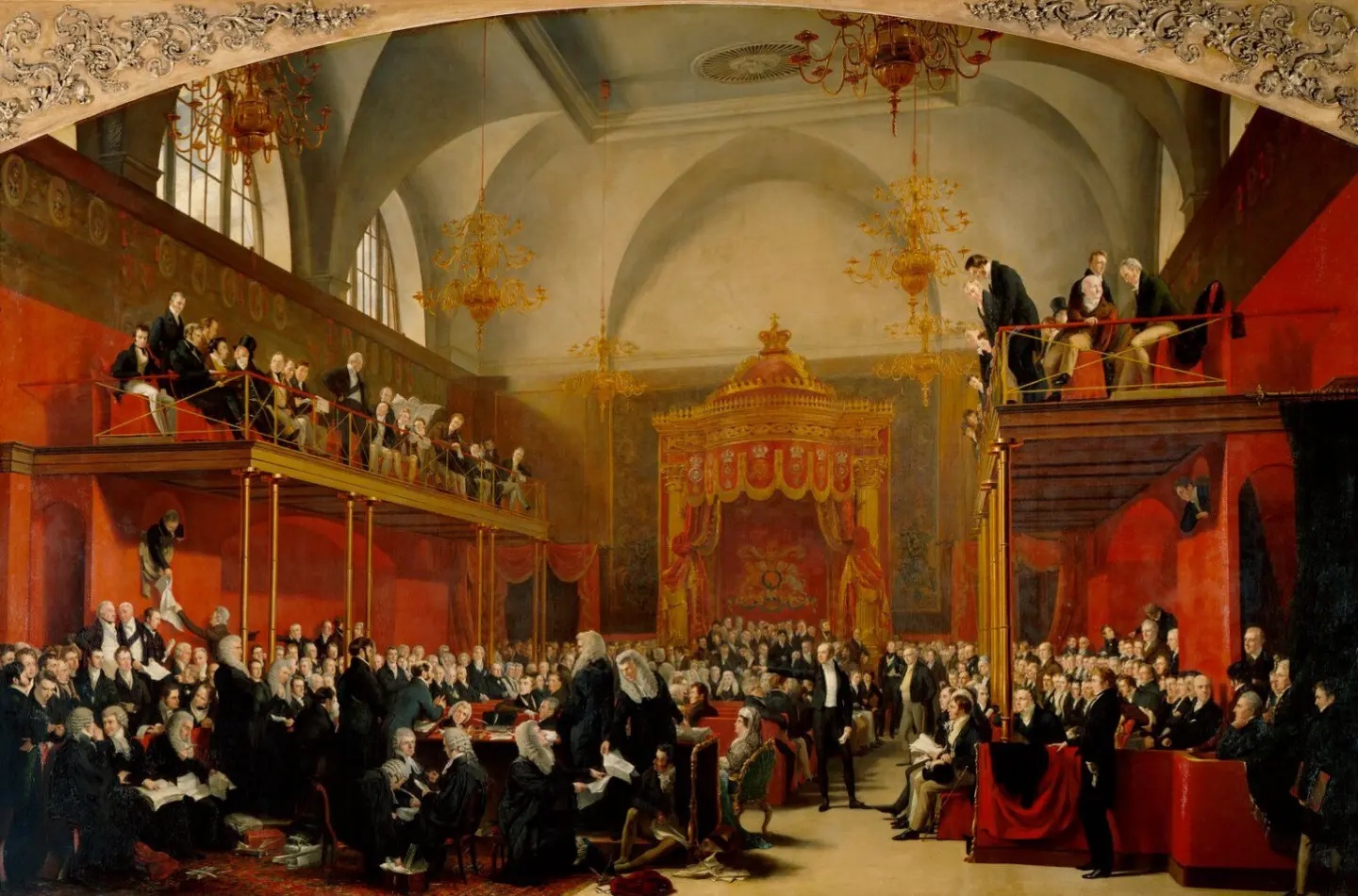
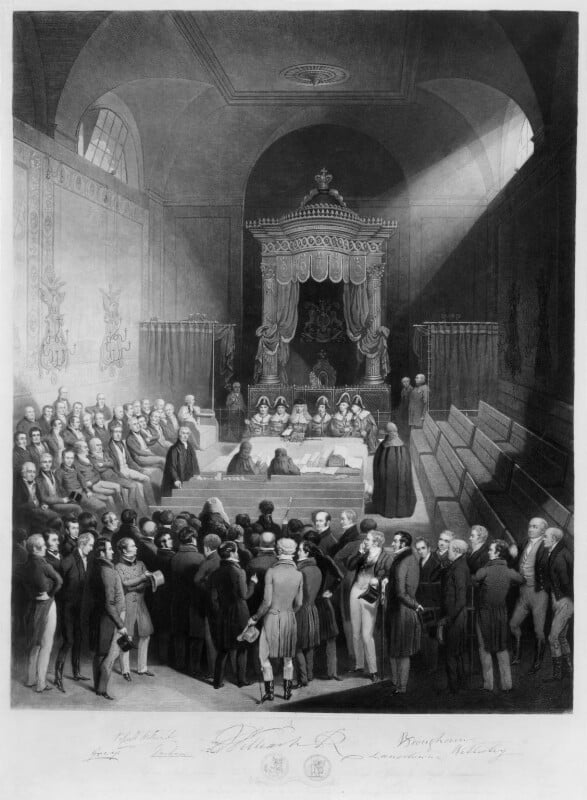
The traditional assumption has been that as the electoral system ‘democratised’, so too the Commons became the superior body in Parliament. The constitutional stand-off between the two Houses over the reform bill in 1831-2 is widely seen as a pivotal moment in this process. Under the threat of new pro-reform peers being created, the Lords were eventually forced to surrender to the Commons and agree to pass the 1832 Reform Act. And with a new electoral system in place after 1832, which limited the former ability of many members of the Lords to control elections, the Commons now had an even greater claim to be dominant and implement its policies without opposition.
The leader of the Tory anti-reformers in the Lords, the Duke of Wellington, had little doubt about the significance of the Reform Act, famously declaring that it would ‘destroy the House of Lords’. The constitutional theorist Walter Bagehot, writing 30 years later, agreed, arguing that the Reform Act had fundamentally altered the ‘function’ of the Lords, effectively making it a temporary ‘revising’ or ‘suspending’ chamber. Writing in 1908 the legal expert Lawrence Lowell noted how the ‘Great’ Reform Act had drawn ‘attention to the fact that an hereditary body, however great the personal influence of its members, could never … be the equal … of a representative chamber’. Chris Ballinger in his recent magisterial work on the 20th century Lords has also suggested that ‘the power of the Lords diminished throughout the nineteenth century’.
One problem with this narrative though is that it does not capture the whole story. One of the most striking features to emerge from our ongoing research on the post-1832 House of Commons is the continuing role of the Lords in actively shaping and even deciding many aspects of the political agenda. Some of this occurred behind the scenes, but there was also a significant amount in terms of policy and procedural initiatives that have been overlooked.
An assertive Lords
Only a few months after the first reformed election of 1832 returned a huge majority for the Whig-Liberals, for instance, the Lords successfully managed to block the Whig ministry’s controversial Irish Church ‘appropriation’ reforms, in what the Ultra-Tory Lord Ellenborough gleefully termed a ‘triumph’. Emboldened, they then went on to modify the terms of the bill to abolish slavery in favour of slaveowners, before proceeding to throw out major reforms granting the admission of Dissenters to Oxford and Cambridge Universities and allowing Jews to sit in Parliament. The Lords would continue to reject bills for Jewish emancipation – reforms that had passed the elected Commons – on another eight occasions before 1858.
The Lords became even more assertive after the 1835 election reduced the Whig government’s majority, rejecting or amending an all-time record number of Commons bills over the next two Parliaments. One of the most significant of these was the Whig ministry’s 1835 municipal corporations bill, replacing the old corporations that had governed English towns with newly elected town councils. Drawn up by the radical election agent Joseph Parkes, the bill that originally passed the Commons proposed abolishing all the freemen voters who had been admitted by the old corporations, despite their ‘ancient right’ privileges having been preserved under the terms of the 1832 Reform Act.
Latching on to this controversial clause, the Lords drastically amended the bill out of all recognition, arguing that disfranchising these freemen voters was not only grossly unfair, but a modification of the settlement of 1832 by stealth, which went way beyond the remit of a local council bill. Appalled by the attack on their ancient rights, freemen voters across the nation rallied behind the Lords’ amendments, in what became a popular and successful campaign. Sensing this was not the best issue on which to make a stand, the Whig leadership in the Commons reluctantly accepted most of the Lords’ changes, including the preservation of freemen voters. As Joseph Parkes later admitted, ‘we committed a great mistake in the bill. It was absurdly foolish … to attack the freemen … Nor was it exactly fair to attempt it through the municipal bill. We were clearly … causing unpopularity among a large class of the people’.
On this issue, as on many others that followed, the Lords had clearly managed to gauge and represent public opinion in a way that challenged the authority of the Commons. The results of the next general election seemed to vindicate their actions. In 1837 the Whig government’s majority was almost completely wiped out, with most freemen voters supporting anti-Whig candidates.
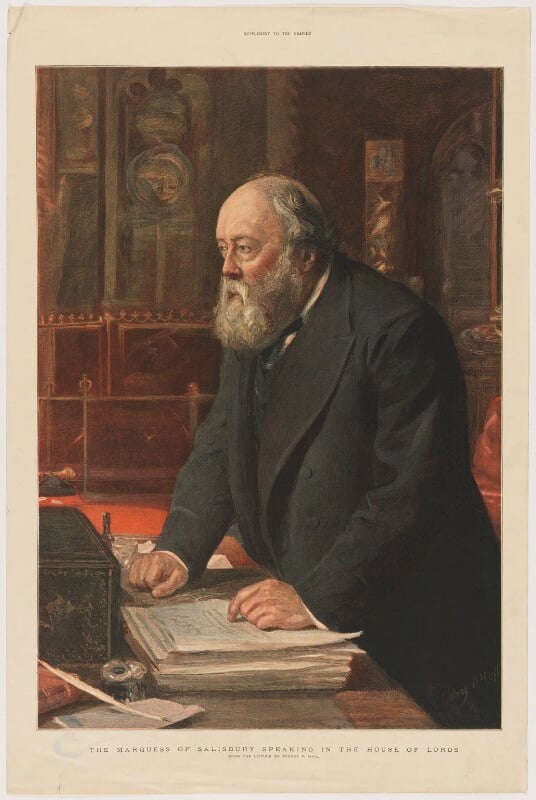
This notion of the House of Lords being able to articulate the ‘will of the people’ more accurately than the Commons is most famously associated with the extraordinary theories developed later in the 19th century by the 3rd Marquess of Salisbury. The leader of the Conservatives in the Lords from 1881-1902, and three times Conservative prime minister, Salisbury did more than anyone else to fashion a ‘doctrine’ of the Lords being a genuinely representative assembly, untainted by party diktats and the ‘demagoguery’ of election cycles. As Salisbury put it in June 1869:
We must try to impress upon the country the fact that, [just] because we are not an elective House, we are not a bit less a representative House … It may be that the House of Commons in determining the opinion of the nation is wrong; and … does not represent the full … convictions of the nation.
After 1885 Salisbury and other Tory peers even began to suggest that owing to the representative deficiencies of the new first-past-the-post system – a system which ironically Salisbury himself had helped to implement in 1885 – the Lords could be a better interpreter of public feeling than the Commons, with its ‘crude’ non-proportional election system based on simple ‘bare majorities’.
The most striking example of Salisbury’s ‘doctrine’ in action was the Lords’ rejection of Gladstone’s second Irish Home Rule bill by 419 votes to 41 in 1893, incidentally the largest Lords vote of the century. Salisbury insisted that Irish Home Rule had not been sufficiently mandated at the previous general election and needed clearer national support, as part of what became known as his ‘referendal theory’. In 1894 the Lords threw out other Commons bills on similar grounds, dealing with employers’ liabilities and arbitration for evicted Irish tenants. The result of the 1895 general election then rewarded Salisbury and the Conservative-Unionists with a substantial majority, seemingly vindicating Salisbury’s claims about the Lords being more representative than the Commons and the ‘conscience of the nation’.
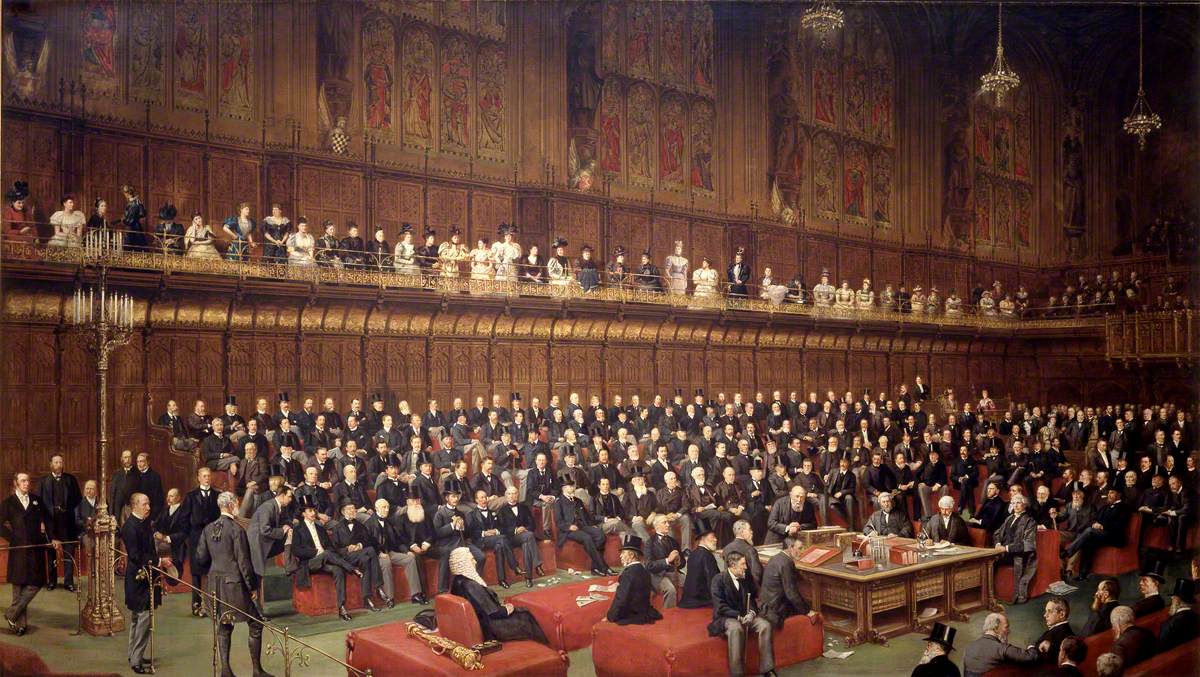
The Home Rule Debate in House of Lords, 1893, Gladstone’s Second Bill Rejected, Marquess of Salisbury Speaking; Dickinson Brothers and Joshua James Foster (1893); Image credit: Parliamentary Art Collection via Art UK
Opposition to the Lords
Not everyone accepted the idea that the Lords enjoyed this representative function. The Lords’ steady rejection of bills approved by the Commons – whether it was the civil and religious reforms of the 1830s, financial measures such as the repeal of paper duties in the 1860s, military reforms in the 1870s, electoral reforms in the 1880s, and almost every bill relating to Ireland – triggered regular calls for reform of the Lords in the popular press, on the hustings and eventually in the Commons itself.
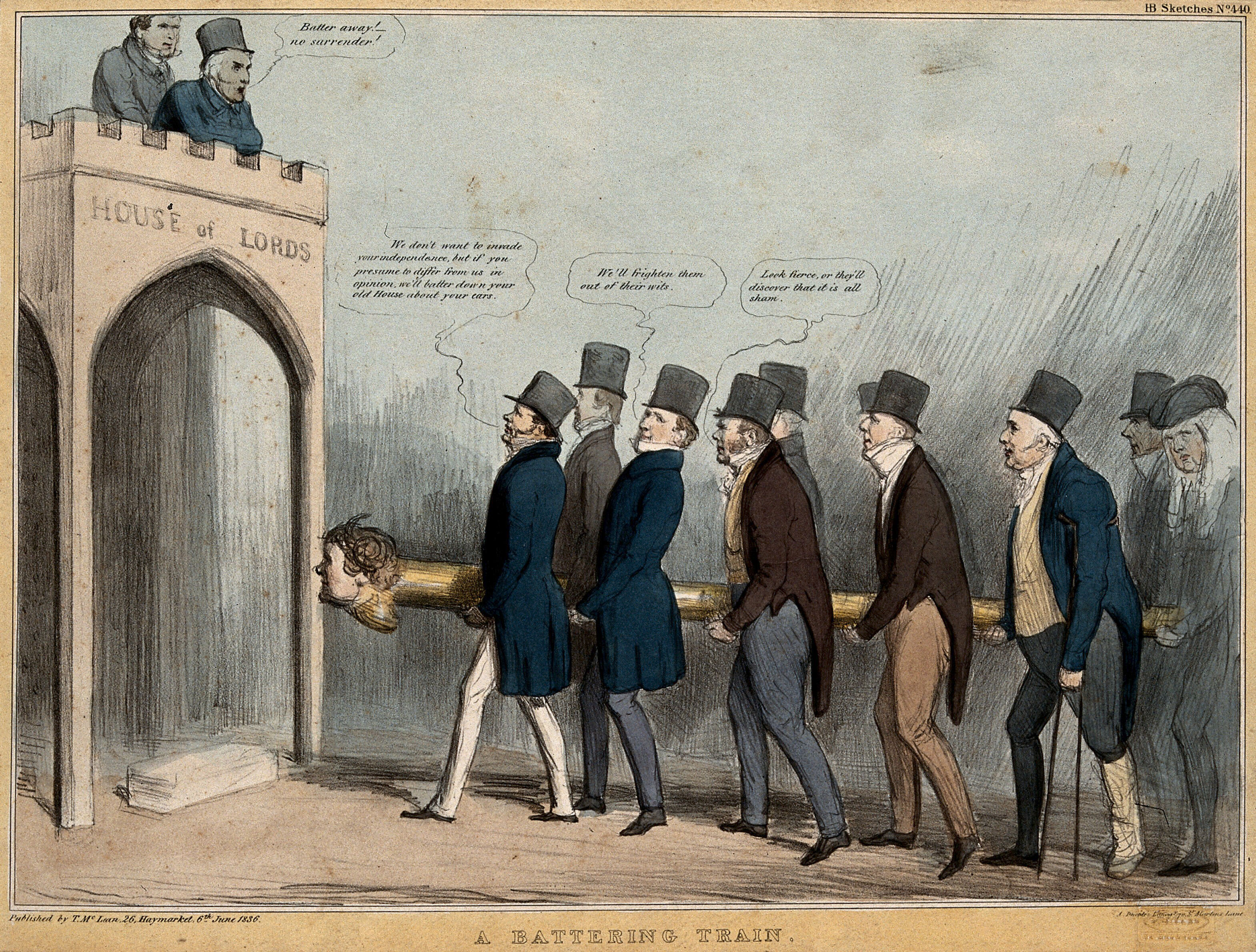
Earlier demands for change in the mid-1830s by radicals such as George Grote and John Roebuck and the Irish agitator Daniel O’Connell included plans to replace all hereditary peers with elected delegates, and to deprive the Lords of their ability to completely reject bills. Removing the bishops also became a standard demand. These under-studied proposals, many of which resemble today’s arguments, provided a field-day for satirists but rarely made it to the floor of the Commons, let alone a vote.
The Lords being attacked by a battering ram with the head of O’Connell, H. B. (John Doyle), Sketches, June 1836. PD via Wellcome Collection
By the 1850s, however, a number of leading Whigs and Liberals had also begun to contemplate changes to the Upper House. Faced with likely opposition in the Lords on major policies such the repeal of navigation laws, for example, the prime minister Lord John Russell repeatedly considered introducing life peerages for distinguished men from outside the Commons, only to be dissuaded by his Cabinet warning that this could lead to the ‘packing’ of the Lords by the government of the day, again a familiar modern argument. In the end Russell, like other party leaders, was forced to fall back on the use of ‘proxy votes’ – voting rights transferred by absent peers to other Lords – to get his government’s agenda through. The abolition of these proxies in 1868 by a standing order undoubtedly made it more difficult for some later governments to manage the Lords, increasing the calls for reform.
In 1856 a solitary ‘trial’ life peerage was eventually created with the approval of the Queen, to bolster the legal expertise available to Palmerston’s government. Sir James Parke, a noted jurist, was ennobled as Baron Wensleydale. When it came to it, however, the Lords refused to let him take his seat, arguing that his life peerage would dilute the hereditary honour of the House and establish a dangerous precedent. Wensleydale was quickly upgraded to a hereditary peerage. It would not be until 1876 that two senior judges were admitted to the Lords on a temporary basis, and not until 1887 that these new ‘law lords’ were then made into peers for life.
More substantive proposals for Lords reform eventually emerged in the last two decades of the 19th century, against the backdrop of Salisbury’s increasingly bold assertions about the Lords’ representative mandate. In 1884, 1886 and 1888 the radical MP Henry Labouchere introduced motions to abolish the Lords, each time increasing his Commons support. In 1894 he won a vote in the Commons calling for the removal of the Lords’ ability to reject bills. No legislation was prepared, however, before the 1895 election brought Salisbury back into power.
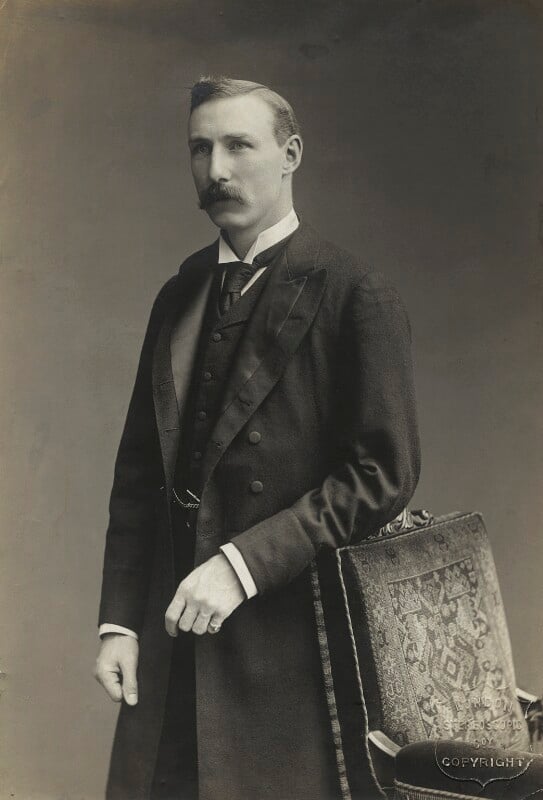
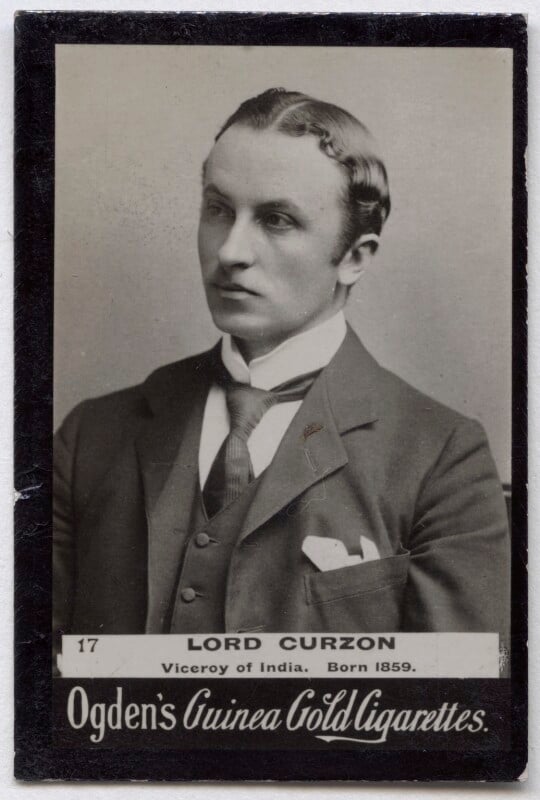
Meanwhile in the Lords itself the future Liberal leader Lord Rosebery moved for a committee to look at life peerages and restrictions on hereditary peers in 1884. Four years later he proposed bringing in elections for a limited number of hereditary peers, who would serve a fixed term, and life peerages for delegates representing local councils and some overseas colonies. None of these initiatives was successful. The idea of life peerages, and making hereditary peers undertake some form of public service before they qualified to sit, was later taken up by a group of young, dashing aristocratic MPs in the Commons, famously led by the Liberal Unionist William Palmer and the Conservative George Curzon (later viceroy of India and leader of the House of Lords). As their campaign showed, by the 1890s even some Conservative-Unionists were also beginning to advocate change, not to restrict the Lords’ powers – the policy increasingly favoured by most Liberals and the National Liberal Federation – but instead to enhance the Lords’ legitimacy and authority.
Why wasn’t the Lords reformed during the 19th century?
This takes us back to the question of why the Lords, unlike the Commons, avoided being constitutionally reformed during the 19th century? The traditional argument that the Lords adopted a more submissive role following the 1832 Reform Act, accepting the superior status of the Commons, is clearly not the answer. Both in terms of the number of bills the Lords blocked or amended after 1832, and in terms of developing its own distinct claim to reflect the will of the nation, it remained a highly assertive and influential body. The number of public petitions that continued to be sent to the Lords provides yet another indicator of its importance as a national forum for drawing parliamentary attention to all sorts of political causes, and as a useful arbiter of local grievances.
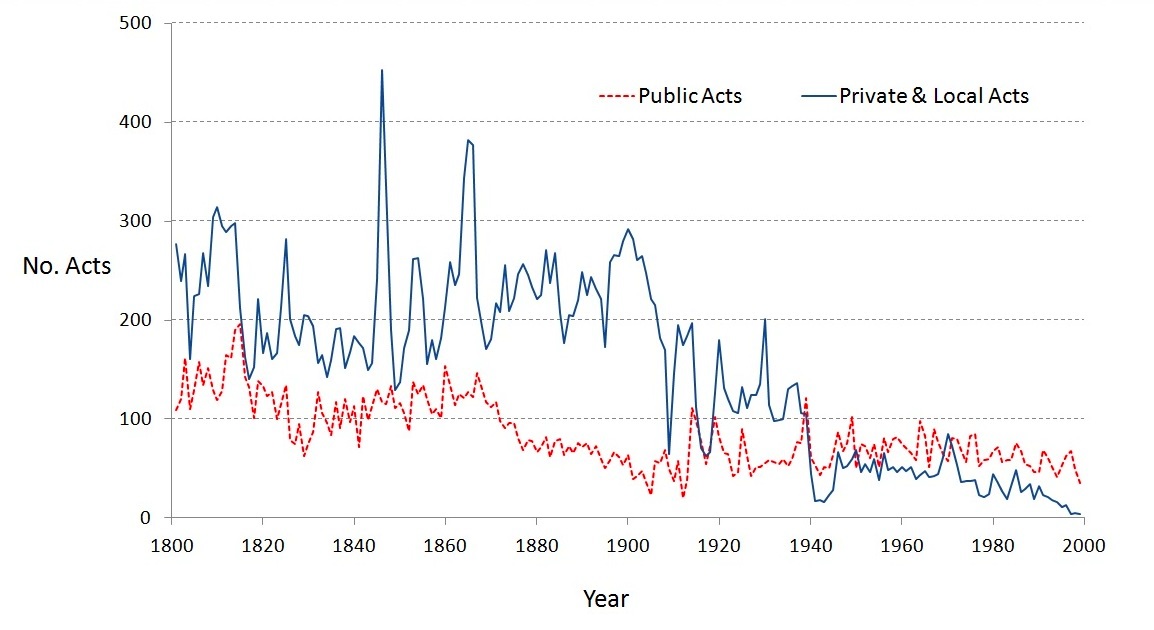
Linked to this, the Lords also performed a crucial but much overlooked role in managing private legislation. The latest edition of How Parliament Works notes that the ‘vast majority’ of laws passed by Parliament ‘and by far the more important, are public’. Throughout the 19th century, however, exactly the opposite was true. Not only did ‘private’ acts of Parliament (not to be confused with private members’ bills) completely transform the physical environment and create Britain’s modern infrastructure – legalising the construction of railways, canals, tramways, docks, sewers, roads, bridges, museums, parks, and essential utilities such as water, gas and electricity (to name but a few) – but they also outnumbered ‘public’ acts by a factor of more than two to one well into the 20th century. The sheer volume of private bill work undertaken by the Lords, particularly from the 1840s, eventually forced them to develop new, streamlined legislative procedures, many of which went on to be copied or adapted by the Commons and transferred to the handling of public business as well.
Acts of Parliament, 1800-2000 Source: P. Salmon, ‘Parliament’, in The Oxford handbook of Modern British political history, 1800-2000 (2018), p. 89
The fact that so many prime ministers sat in the Lords rather than in the Commons also helped to bolster its status and legitimacy. Over half the twenty prime ministers of the 19th century, including the two longest serving (Liverpool and Salisbury), formed their governments as peers, while two more (Russell and Disraeli) started out in the Commons but later served as premier in the upper house. For just over half the entire nineteenth century, the government was led by a prime minister sitting in the Lords.
Underpinning this, rather than being separate or even rival institutions, as is sometimes assumed, the Victorian Commons and Lords were deeply integrated in terms of their practical business, politics and personnel. Family ties and patronage networks ensured a very close working relationship between members of both Houses, with many MPs either succeeding or being promoted to peerages. Behind the scenes, both the membership of the Lords and the Commons also began to adapt, reflecting new types of wealth associated with industrialisation and the professions such as banking and commerce. Over 40% of the new peers created after 1882 were from non-landed backgrounds.
Most significant of all, the Lords certainly didn’t oppose every progressive measure sent up from the Commons, instead passing many reforms that are now viewed as key milestones in Britain’s political development. It granted Dissenters equal civil rights in 1828, finally agreed to pass Catholic emancipation in 1829 and allowed the Catholic college of Maynooth to be state funded in 1845, despite so many Lords (and bishops) being staunchly Protestant Anglicans.
In 1846 the Lords even backed Peel’s highly controversial repeal of the corn laws, despite its membership being overwhelmingly landed and major beneficiaries of agricultural protection. Significantly, the rebellion of the Conservative party on this issue against Peel was actually lower in the Lords than it was in the Commons. In 1867, despite huge misgivings, the Lords also agreed to pass Disraeli’s second Reform Act, the greatest extension of voting rights of the 19th century, only eclipsed in its scope by the 1918 Representation of the People Act.
The fact that it was Tory / Conservative governments that proposed so many of these major reforms of the 19th century clearly helped to reduce the number of conflicts between the two Houses during this period. Despite years of Liberal peerage creations, the Lords always remained a Tory chamber, with Liberal membership peaking at 40% in 1880. The dominance of the Tory peers combined with their loyalty to party – ironically the very thing that Salisbury liked to criticise the Commons for – ensured that most Tory bills, even highly controversial ones, nearly always passed the Lords.
This partisan bias of the House of Lords is of course often viewed as the cause of its undoing in the early 20th century, when its veto over legislation was finally reduced to a delaying power of two years by the 1911 Parliament Act. But for most of the 19th century this same partisan Tory bias also helped the Lords to survive. For as long as Conservative ministries continued to enact progressive reforms in the national interest, the number of dramatic ‘peers versus people’ moments remained limited, keeping the Lords on the right side of history.
PS
Further reading:
A. Adonis, Making aristocracy work: the peerage and the political system in Britain 1884-1914 (1993)
C. Ballinger, The House of Lords 1911-2011 (2012)
R. Davis, A political history of the House of Lords 1811-1846 (2008)
R. Davis (ed.), Lords of Parliament. Studies, 1714-1914 (1995)
R. Davis (ed.), Leaders in the Lords 1765-1902 (2003)
R. Davis, ‘Wellington, Peel and the House of Lords in the 1840s’, in C. Jones, P. Salmon & R. Davis (eds.), Partisan politics, principle and reform in Parliament and the constituencies, 1689-1880 (2005), 164-82
R. Davis, ‘House of Lords, 1801-1911’, in C. Jones (ed.), A Short History of Parliament (2009), 193-210
J. Hogan, ‘Party management in the House of Lords, 1846-1865’, Parliamentary History (1991), x. 124-50
D. Large, ‘The decline of the “party of the crown” and the rise of parties in the House of Lords, 1783-1837’, English Historical Review (1963), lxxviii. 669-95
G. Le May, The Victorian Constitution (1979), 127-51
Lord Longford, A history of the House of Lords (1988)
A. Lowell, The government of England (1908), i. 394-422
P. Salmon, ‘Parliament’, in D. Brown et al (eds.), The Oxford handbook of Modern British political history, 1800-2000 (2018), 83-102
E. A. Smith, The House of Lords in British Politics and Society 1815-1911 (1992)
R. Smith (ed.), The House of Lords: a thousand years of British tradition (1994)
A. Turberville, ‘The House of Lords and the Advent of Democracy, 1837-67’, History (1944), xxix. 152-83
C. Comstock Weston, The House of Lords and ideological politics. Lord Salisbury’s referendal theory and the Conservative party, 1846-1922 (1995)
C. Comstock Weston, ‘Salisbury and the Lords, 1868-1895’, Historical Journal (1982), xxv. 103-29
Philip Salmon is a political historian specialising in the long nineteenth century. He is Editor of the House of Commons 1832-1868 section and Deputy Director of the History of Parliament.