
Ahead of next Tuesday’s Parliaments, Politics and People seminar, we hear from Professor Wendy Ugolini of the University of Edinburgh. On 3 June she will discuss The Recording Angel and the expression of English Welsh identities during the First World War.
The seminar takes place on 3 June 2025, between 5:30 and 6.30 p.m. It is fully ‘hybrid’, which means you can attend either in-person in London at the IHR, or online via Zoom. Details of how to join the discussion are available here.
The commanding Recording Angel memorial in St Stephen’s Porch, Westminster Hall, is dedicated to peers, MPs, officers, and their sons who lost their lives in the First World War. Designed by the Australian sculptor, Sir Bertram Mackennal, and unveiled in November 1922, the Recording Angel memorial includes three English-born sons of Welsh MPs – Iorwerth Glyndwr John (1894-1916), William Pugh Hinds (1897-1916), and William Glynne Charles Gladstone (1885-1915), himself an MP.
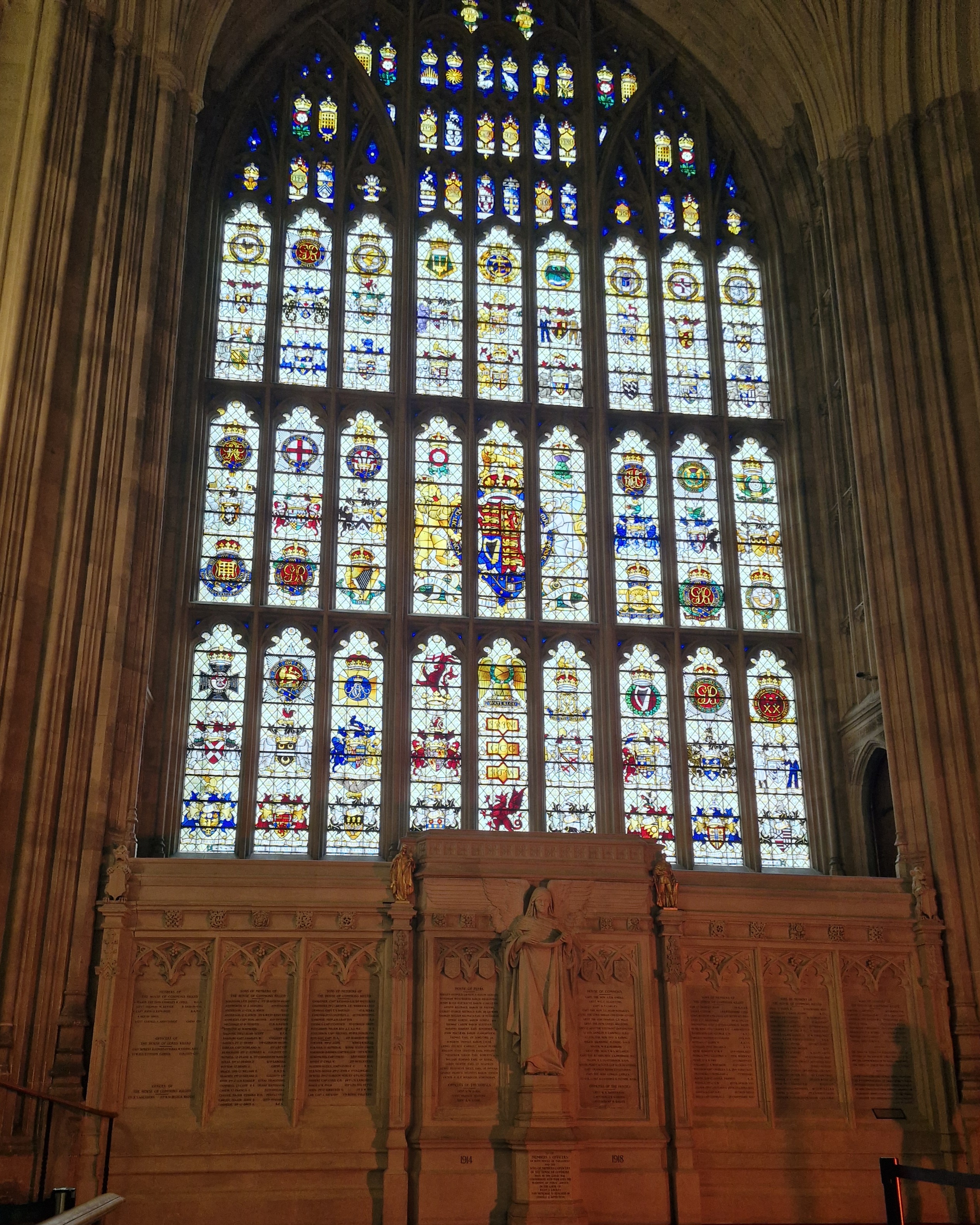
Through naming, it demonstrates the ways in which the Houses of Parliament captured expressions of English Welsh dualities within its political iconography in the immediate aftermath of the First World War. The memorial also provides a useful vehicle through which to examine the performance of English Welsh dual identities during the war itself and the fluidity of identity formation back and forwards across the borders of England and Wales in the first decades of the twentieth century.
One of the ninety-four sons recorded on the memorial was Iorwerth Glyndwr John, son of the MP for East Denbighshire, Edward Thomas (E. T.) John. The Pontypridd-born MP, a keen advocate of home rule for Wales, had been an iron ore merchant in Middlesbrough before entering parliament. His son Iorwerth, born in Middlesbrough in 1894, was educated at New College, Harrogate and Balliol College, Oxford, where he read jurisprudence. Serving with the South Wales Borderers, he was killed near Loos in February 1916.
On Iorweth’s death, his alma mater recalled:
While at Oxford he showed keen interest in Welsh music and in the political and national life of Wales generally… Doubtless, if he had lived, he would have played a prominent part in the public life of Wales.
For Iorwerth’s epitaph, E. T. John chose an inscription which was drenched in Welsh symbolism, using lines adapted from the bard Hedd Wyn’s wartime poem, Nid â’n Ango ([It] Will Not Be Forgotten):
Un O Feibion Hoffusaf Cymru | Ei Aberth nid el heibio | a’i enw annwyl nid a’n ango (One of Wales’s favourite sons | His sacrifice will not be passed over | And his dear name will not be forgotten)
This commemorative act signifies a clear desire by the bereaved father to emphasise the deceased’s links to Wales and the Welsh language, and to maintain linguistic communion with his son beyond death, despite Iorwerth’s ostensibly English upbringing.
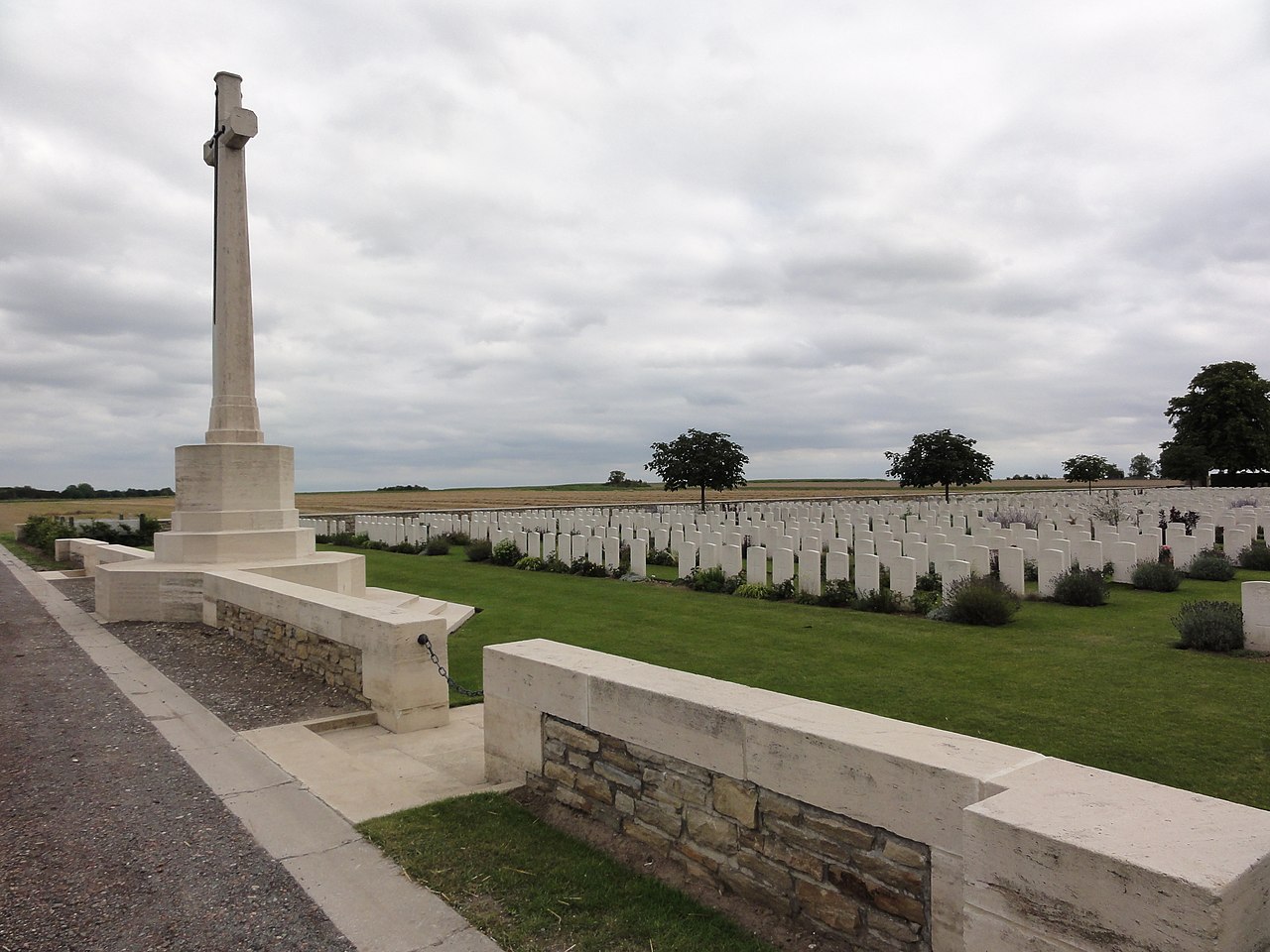
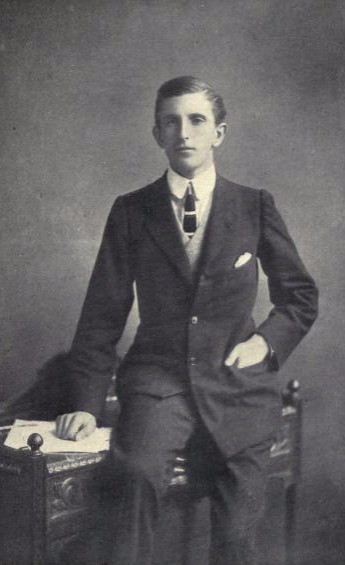
William Pugh Hinds, who died from wounds in February 1916, was the only son of the Blackheath draper and MP for West Carmarthenshire, John Hinds. Born and educated in Blackheath, Hinds was studying engineering at the Electrical Standardising, Testing, and Training Institution, London before he enlisted in November 1914. He served as an officer in France with the 15th (1st London Welsh) Battalion, Royal Welch Fusiliers (RWF), a unit deliberately set up to accommodate Londoners of Welsh heritage and enthusiastically sponsored by his father.
Within months of volunteering, Hinds was severely wounded by a sniper’s bullet. Just days before his death, he was visited in an emergency field hospital by the then Minister for Munitions, David Lloyd George. This encounter had such an impact on the politician that when he returned to London, he confided to his mistress, Frances Stevenson, ‘The horror of what I have seen has burnt into my soul, and has almost unnerved me for my work.’
Hinds’s death continued to haunt Lloyd George. When he returned to France in late 1916, he made a pilgrimage to Hinds’s grave at Merville Communal Cemetery, subsequently receiving a note of gratitude from Hinds MP that he ‘found time to visit our dear lad’s grave.’ As with E. T. John, Hinds selected a Welsh inscription for his offspring’s headstone: Yn Anghof Ni Chant Fod (They Will Not Be Forgotten), from the poem ‘Dyffryn Clwyd’, so that even in death he embraced his Londoner son in a Welsh martial identity.
The final MP’s son listed on the Recording Angel was William Glynne Charles Gladstone (William), also an MP in his own right. He was killed in 1915 whilst serving as an officer with the Royal Welsh Fusiliers (RWF) in France. William was born at 41 Berkeley Square, London in 1885, the son of William Henry Gladstone MP, and grandson of the former Liberal Prime Minister, William Ewart Gladstone.
Like his grandfather, William embodied an attachment to both England and Wales, inheriting the family estate at Hawarden Castle, Flintshire when he was twenty-one. As the Squire of Hawarden, William encouraged those in the district to join up and military service in the RWF further deepened his ties with Wales. In April 1915, for example, William and his mother exchanged correspondence on an orphanage at Hawarden which was being used for RWF convalescent soldiers, the former writing, ‘Please let the Orphanage soldiers know that they can wander over the Park Woods and Old Castle in case they don’t do it.’
William maintained a connection with his Welsh home through discussion of his family’s patronage, on both military and domestic fronts, of RWF soldiers. Following his death, William was often characterised in obituaries as ‘a border hero’ whose life criss-crossed the boundaries between England and Wales; the Liverpool Post noting, ‘the border counties lost a true and devoted son in the late W G C Gladstone, of Hawarden.’
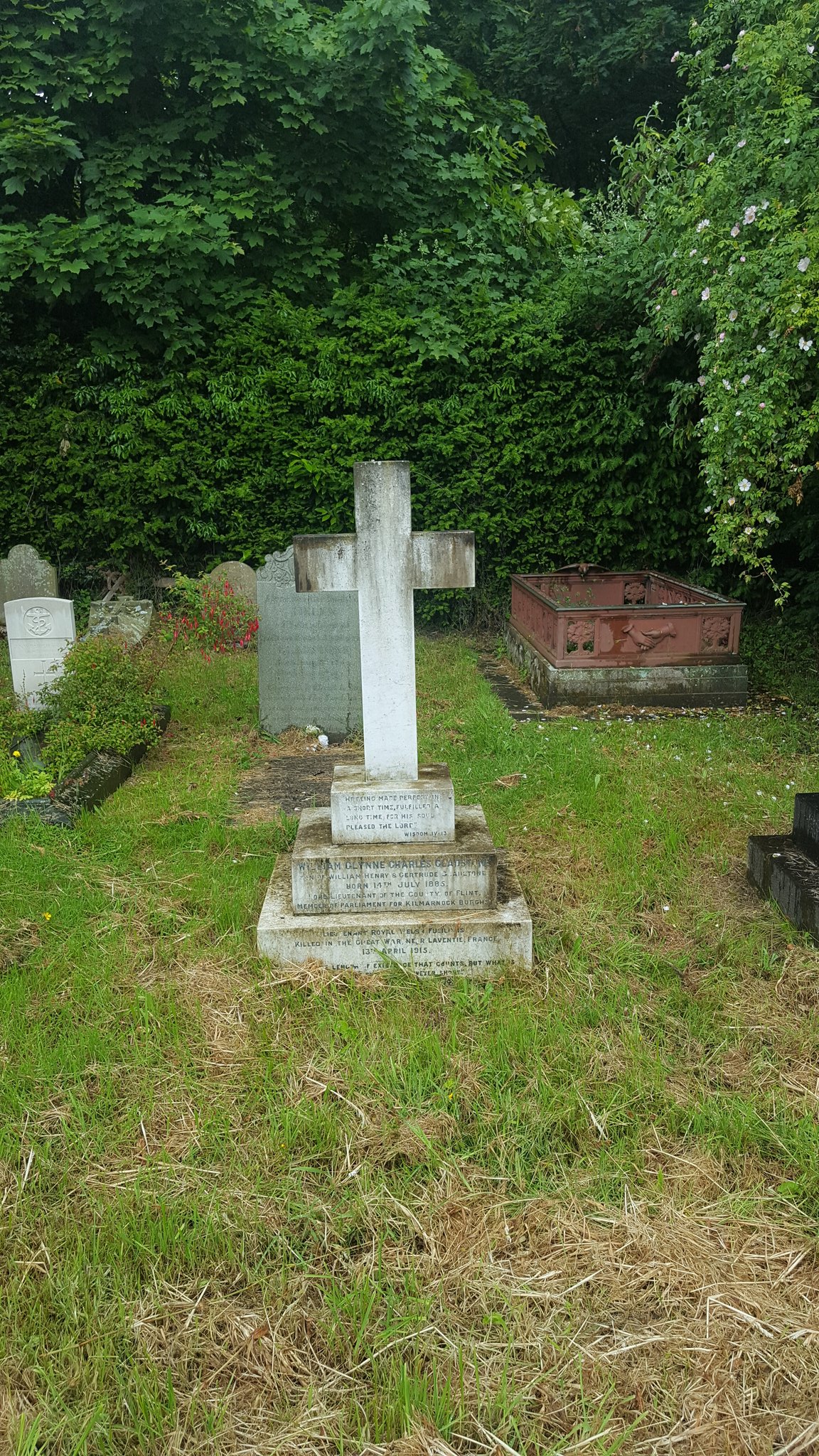
Notably, John, Hinds and Gladstone all served with Welsh regiments: the South Wales Borderers, the 15th (London Welsh), and the Royal Welsh Fusiliers respectively. This suggests that within Welsh diasporic families in England, those of military age were often prompted by patrilineal ties to approach their military enlistment through the lens of Welshness, seeking to serve in a Welsh regiment.
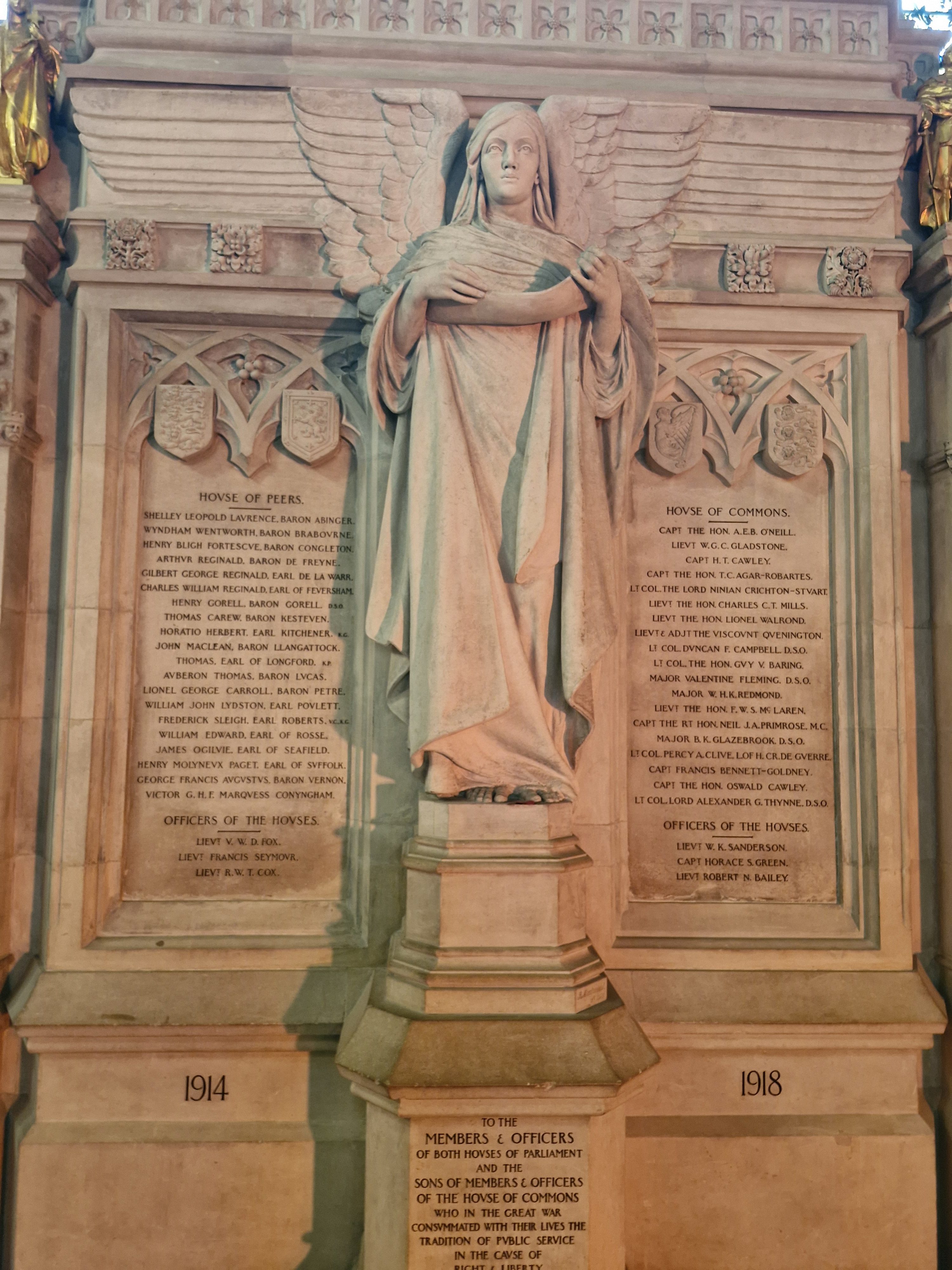
Image credit: Prof. Wendy Ugolini
Ultimately, the Recording Angel memorial is important in acknowledging the existence of English Welsh dualities within wartime memorialisation which, in turn, acts to shore up a sense of shared Britishness. The memorial also highlights the functioning of a form of militarized Welsh patriotism amongst the male diasporic elite, some of whom were MPs, which occasionally demanded the sacrifice of their own sons.
WU
Wendy’s seminar takes place on 3 June 2025, between 5:30 and 6.30 p.m. It is fully ‘hybrid’, which means you can attend either in-person in London at the IHR, or online via Zoom. Details of how to join the discussion are available here.
