
Articles by Simon Payling
-
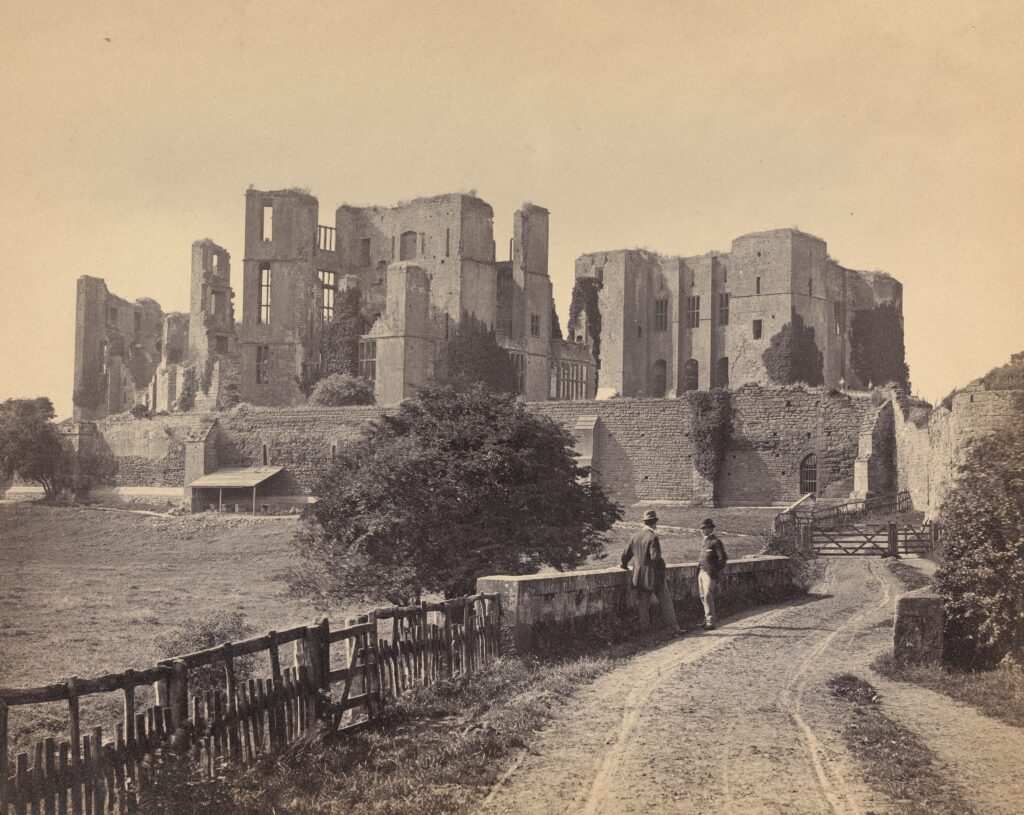
A Lancastrian City? Coventry and the Wars of the Roses, 1451-1471
This piece is in memory of Professor Peter W. Fleming, who died in April 2025. His publishing career spanned 40…
-
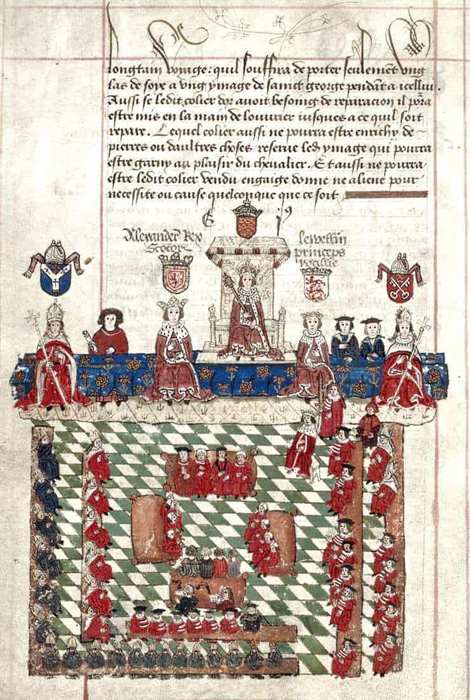
Parliament and Politics in the Later Middle Ages
Dr Simon Payling, of our 1461-1504 section, tracks the development of Parliament and Politics in the Later Middle Ages, from…
-

Did they believe in portents? Severe weather and other extreme natural phenomena in Walsingham’s Chronica Maiora and other late-medieval monastic chronicles
Dr Simon Payling, of our Commons 1461-1504 section, explores the theme of extreme weather in medieval chronicles. It is a familiar…
-

From Lancaster to York and back again: the political evolution of the Derbyshire Blounts
Dr Simon Payling, of our Commons 1461-1504 section, explores the fortunes and shifting loyalties of one gentry family in Derbyshire during…
-

A Yorkist Family during the Wars of the Roses: the Devereuxs of Weobley in Herefordshire
Dr Simon Payling, of our Commons 1461-1504 section, explores the fortunes of one particularly loyal Yorkist family during the Wars of…
-

The story of a manor in memorials: the early tombs in the Shropshire church of Kinlet
The Shropshire church of Kinlet stands isolated in parkland, the village it once served re-sited in the early-eighteenth century on…
-

The Making of a Marcher Town: Ludlow and the Wars of the Roses
Dr Simon Payling, of our Commons 1461-1504 section, explores the crucial role of the Shropshire town of Ludlow during the Wars…
-

The town of Shrewsbury and the Wars of the Roses: The campaigns of 1459-61
Dr Simon Payling, of our Commons 1461-1504 section, explores the political allegiance of the Shropshire town of Shrewsbury during the…
-

Hugh Oldham, bishop of Exeter, ‘hath more poison in that grete fowle bely of hys then all the Bysshoppes in Englond’: scandalum magnatum in early-sixteenth century England
For the first article of 2025, Dr Simon Payling of our Commons 1461-1504 Section, explores the use of a unique…
-

A disputed election in the wake of the battle of Bosworth: the Shropshire election of 1485
Following the battle of Bosworth and Henry Tudor’s accession to the English throne, the country’s gentry who had sided with…
-

John, Lord Clifford, ‘the butcher’ and the killing of Edmund, earl of Rutland, at the battle of Wakefield, 30 December 1460
In the 15th Century, the killing of rival faction leaders were commonplace, especially throughout the Wars of the Roses. However,…
-

A Medieval Monk’s View of Parliament: Thomas Walsingham’s Chronica Maiora and the Parliaments of 1376 to 1410
Thomas Walsingham is best known for his role as a chronicler of his own religious life, but he was also…