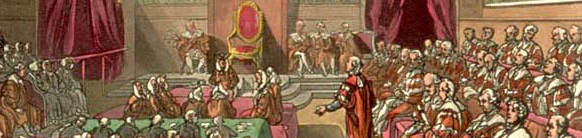

For many, the beginning of November means the advent of longer nights as the year winds down to Christmas. Some may still enjoy attending firework displays marking the failure of the 1605 Gunpowder Plot. In November 1788, though, serious efforts were made to establish a lasting memorial to the Revolution of 1688, whose centenary was celebrated nationwide. However, as Dr Robin Eagles shows, no one could quite agree on how or even when to do it.
On Monday 20 July 1789, Henry Beaufoy, MP for Great Yarmouth, moved the third reading of a bill he had sponsored through the House of Commons for instituting a perpetual commemoration of the 1688 Revolution. The bill was a relatively simple one, seeking merely to insist that in December every year, clergy in the Church of England would read out the Bill of Rights, thereby reminding their congregations of the events that had seen James II expelled and William III and Mary II installed as monarchs.
Beaufoy’s bill had to compete with other rather more urgent measures. These included one for continuing an Act passed in the previous session for regulating the shipping of enslaved people in British ships from the coast of Africa; and another for granting over £20,000 towards defraying the costs of the Warren Hastings trial, which had commenced the previous year and would continue to annoy the House until 1795. Consequently, it was late in the day when Beaufoy got to his feet and, although his motion carried by 23 votes to 14, it was determined that as the House now lacked the requisite 40 members present to make a quorum, the Commons should adjourn.
Next day, Beaufoy tried again. Once more, there was opposition. During the two days when the bill was debated objections were raised by Sir William Dolben and Sir Joseph Mawbey, the latter arguing that Beaufoy was merely mimicking the Whig Club in seeking popularity, while Henry James Pye considered the measure ridiculous as it would result in two commemorative events each year. Others were warmly in favour, though and, when it came to a division, the motion to give the bill a third reading was carried. Following a failed effort by Mawbey to introduce an amendment granting to each clergyman required to read the declaration 20 shillings, the bill was passed and sent up to the Lords. [Commons Journal, xliv. 543-7]
Beaufoy’s bill had its origins in the centenary celebrations of the Revolution, which had been marked across the country the previous autumn. Like his bill, not everything had proceeded smoothly. Not least, there were obvious rivalries between the clubs and societies heading up the various events. There was even disagreement on precisely when to mark the day. The Revolution Society had chosen 4 November, on the basis that this was both William III’s birthday (and wedding anniversary) and the day that he had made landfall. The Constitution Club, on the other hand, chose to hold its entertainment on 5 November, which chimed with the date chosen by John Tillotson (soon to be Archbishop of Canterbury), when preaching his 1689 commemorative sermon. It also echoed celebrations of the thwarting of the Gunpowder Plot and this dinner was rounded off with toasts to the ‘three eights’: 1588 (Armada), 1688 and 1788. [Gazetteer and Daily Advertiser, 6 November 1788]
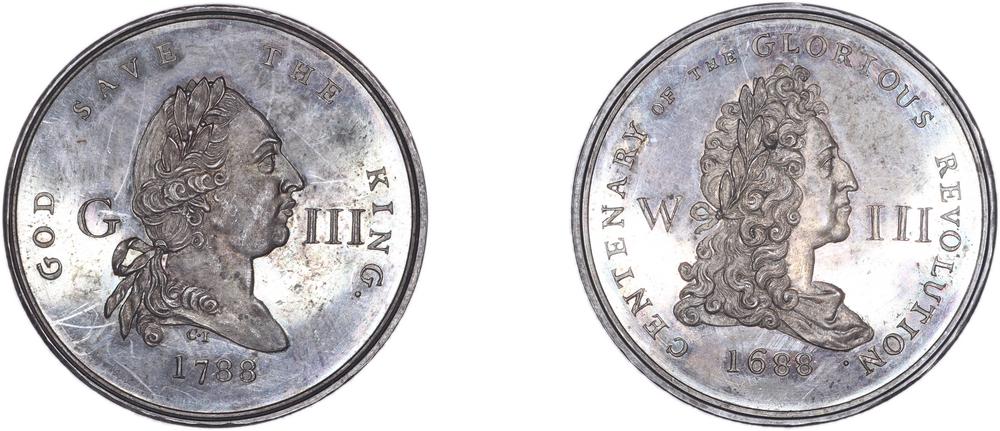
Aside from somewhat petty disagreements about whether 4 or 5 November was most apt, several of the societies also had strikingly different political outlooks and exhibited fierce rivalry. Speaking at the Whig Club, Richard Sheridan concluded his remarks with proposing a subscription for erecting a monument to the Revolution, which appeared to get off to a fine start with £500 being pledged almost at once. The plan was for the edifice to be located at Runnymede, emphasizing the links between the safeguarding of English liberty with Magna Carta, and the completion of the process with William of Orange’s successful invasion.
Not everyone liked the idea of a physical monument, though, and when the proposal was read out at other clubs, it received either muted or downright hostile responses. Speaking at the Constitution Club’s dinner at Willis’ Rooms, presided over by Lord Hood and featuring around 700 diners, John Horne Tooke made no secret of his contempt for the Whig Club’s plan. It was at this meeting that Beaufoy first raised his idea for a day of commemoration to be legislated for by Parliament, though at least one paper reported that his speech had been drowned out by the noise around him.
Elsewhere, there was more harmony. One of the grandest celebrations of 1688 took part at Holkham Hall in Norfolk, where Thomas Coke (future Earl of Leicester) laid on a spectacular firework display as well as mounting a recreation of William’s landing at Brixham having brought in squadrons of horses and loaded them onto miniature ships, which were launched on a canal. Perhaps the most evocative event, though, was one of many held in London taverns, where an unidentified man, said to be 112 years old, was reported to have been in attendance and chaired by the company. According to the paper he was one of ten centurions residing in the French hospital on Old Street, but at 112 he was likely the only one of them who actually remembered the Revolution taking place. [E. Johnson’s British Gazette and Sunday Monitor, 9 November 1788]
All of this was cast thoroughly into the shade by the very unhelpful timing of the king’s illness, which had commenced that summer but become steadily more acute through October and finally reached a crisis on the symbolic date of 5 November. The Prince of Wales had been on his way to Holkham to take part in Coke’s celebrations, but was forced to turn back after being alerted to the king’s deteriorating condition. At a time when the stalwarts of the Revolution Settlement were trying to make the case for the stability it had provided in settling the throne on the House of Brunswick, the prospect of a king no longer able to fulfil his constitutional functions was a disaster.
By the time Beaufoy finally made his motion in the Commons, the king had recovered but that did not ease the progress of what always seems to have been a rather unwanted bill. Having made its way through the Commons, the measure was presented to a thinly attended House of Lords on Thursday 23 July 1789, and a motion for the bill to be given a first reading was moved by Earl Stanhope – a leading member of the Revolution Society.
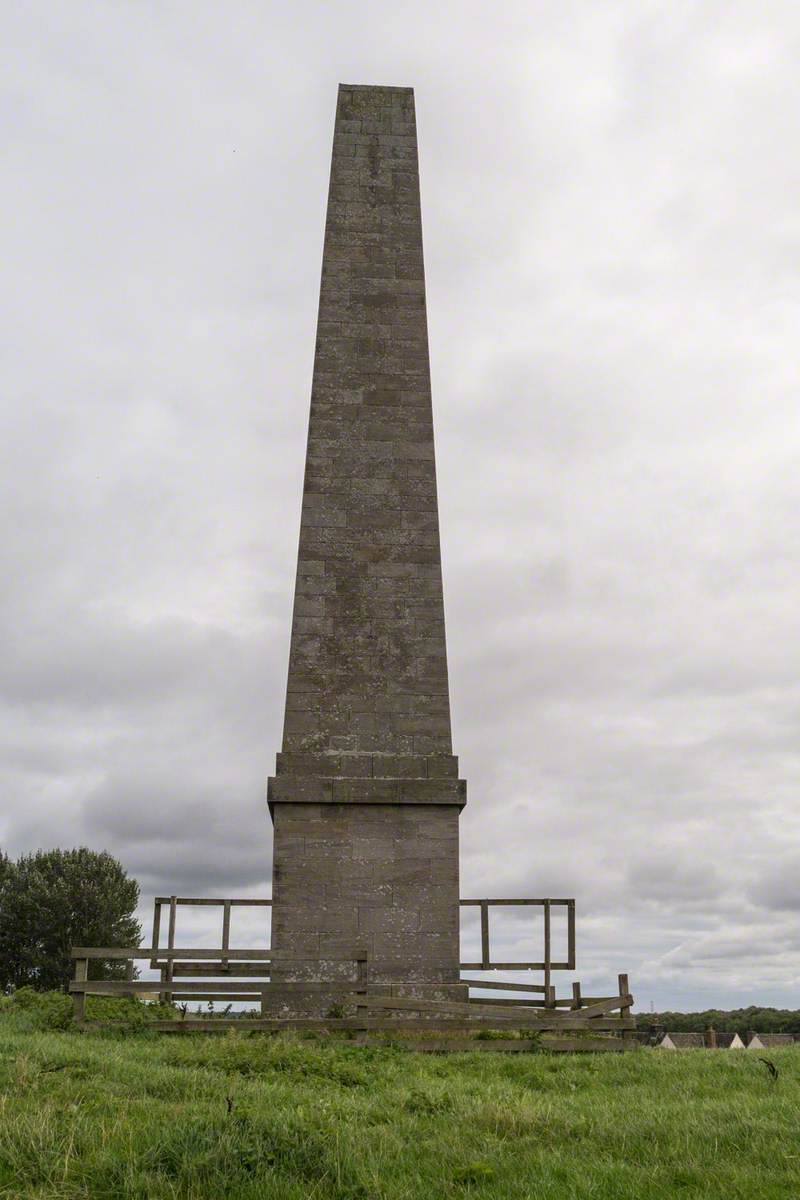
Stanhope’s motion was objected to by the Bishop of Bangor, who insisted that a prayer was already said for the Revolution in church each year. Stanhope attempted to argue in favour of the ‘pious and political expediency’ of the bill, insisting that the event was not commemorated satisfactorily in church. [Oracle, 24 July] The Lord Chancellor left the wool sack to enable him to offer his own opinions on the matter, backing up Bangor’s view and arguing the bill to be absurd, before a final contribution was made in favour of the proposed measure by the Earl of Hopetoun. The motion for the first reading was then negatived by six votes to 13, after which the Lords resolved without more ado to throw the unwanted bill out. [Diary or Woodfall’s Register, 24 July; The World, 24 July] Sheridan’s wish for a grand monument met with a similar fate, though an obelisk celebrating the centenary was raised at Kirkley Hall near Ponteland in Northumberland, by Newton Ogle, Dean of Winchester, and another at Castle Howe near Kendal in Cumbria.
As far as commemoration of 1688 was concerned this was far from the end of the story. Two centuries on, the tercentenary witnessed an unusual expression of unity from the then Prime Minister, Margaret Thatcher, and the Leader of the Opposition, Neil Kinnock. Moving a humble address to the Queen, expressing the House’s ‘great pleasure in celebrating the tercentenary of these historic events of 1688 and 1689 that established those constitutional freedoms under the law which Your Majesty’s Parliament and people have continued to enjoy for three hundred years’, Thatcher was answered by Kinnock, agreeing that it was: ‘a worthy act, not only because it celebrates a significant advance, as the Prime Minister just said, but because it requires us all to consider the character of our democracy…’
Father of the House, Sir Bernard Braine, was next to speak. He welcomed the rare moment of political harmony and underlined the key principal about what 1688 meant to everyone in the chamber:
‘It is the knowledge that the parliamentary system which we jointly serve is greater than the sum total of all who are here at any one time.’
RDEE
Further Reading:
John Brooke, King George III (1972)
Journals of the House of Commons
Journals of the House of Lords