
The 31 May 2025 marks Dr Stuart Handley’s last day at the History of Parliament. One of his last biographies for The House of Lords, 1715-90 has been William Pulteney, earl of Bath. It will be the third History of Parliament biography of Pulteney, his long career having been covered by Dr Andrew Hanham in The House of Commons, 1690-1715, and by Dr Romney Sedgwick in The House of Commons, 1715-54. In his final post for the History, Dr Handley considers Bath’s long career.
One of the seminal moments of Pulteney’s career occurred at the end of the parliamentary session on 31 May 1725 when he was dismissed from his post as cofferer of the household, on account of his opposition earlier in the session, most notably over the Civil List bill. There followed a period of opposition which ended only with the resignation of Sir Robert Walpole from the Treasury on 3 February 1742. Pulteney then entered the Cabinet, but consistent with his oft-repeated pledge not to take office, he did not take an administrative post. On 14 July, the penultimate day of the 1741-2 session, he was raised to the earldom of Bath, taking his seat in the Lords on the following day.
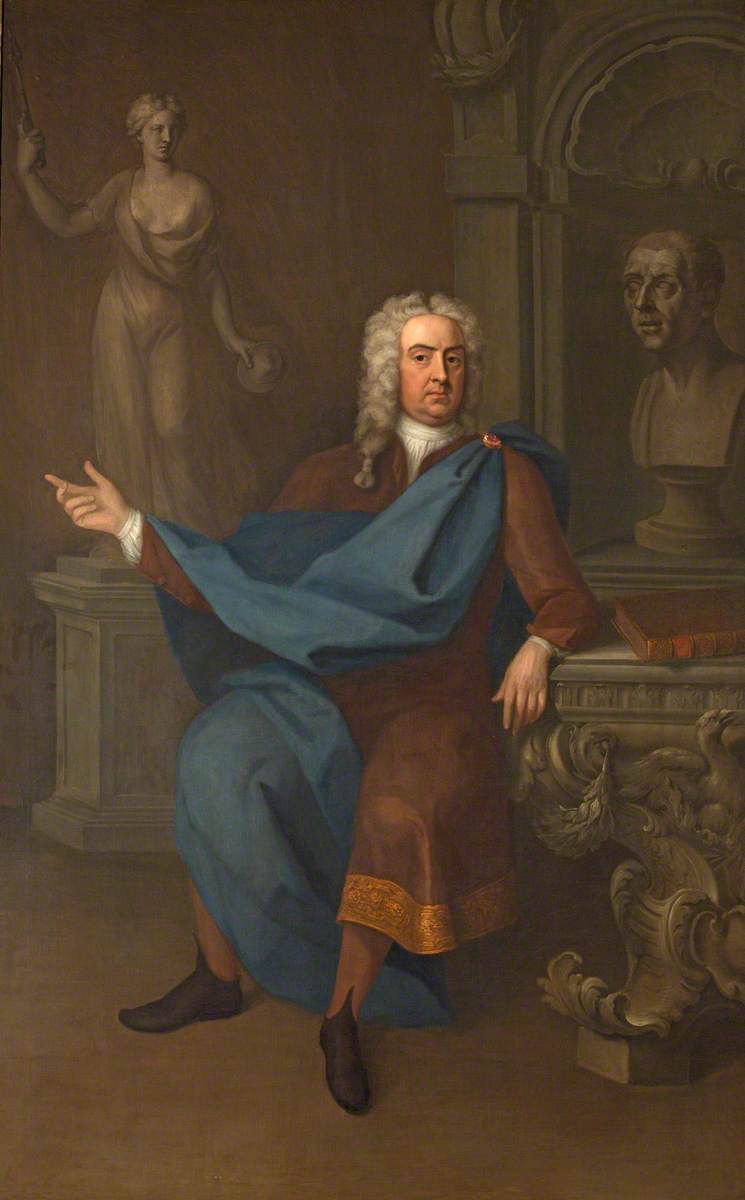
Pulteney lost a lot of popularity when entering the House of Lords, and he failed twice to attain major office in the years following: he was overlooked in favour of Henry Pelham, as first lord of the Treasury, upon the death of the earl of Wilmington in July 1743 and failed to construct a ministry when the Pelhams and most of their colleagues resigned in February 1746. From then on, his political career is deemed to have been over and he spent his time in ‘retirement’.
However, there was another side to Pulteney, related to the accumulation of power and influence. On the very day he took his seat in the Lords, a bill to prevent the marriage of lunatics received the royal assent. This was managed through the Commons by Pulteney’s long-term associate Phillips Gybbon and served to offer some protection to Pulteney’s investment in the reversion of the estates of the Newport, earls of Bradford.
The heir to the estates of Pulteney’s friend, Henry Newport, 3rd earl of Bradford (1683-1734) was Bradford’s illegitimate son, John Newport, whose mother Ann Smyth was on her deathbed. The reversion of Bradford’s estates had been granted to Pulteney (in return for paying for Newport’s maintenance and the debts of the third earl). Now Newport could not be married off by unscrupulous operators for the estates. Similarly, the third earl’s brother, Thomas Newport, who succeeded to the title as 4th earl of Bradford, was a certified lunatic.
The Bradford estates were destined for Pulteney’s son, William, Viscount Pulteney, who pre-deceased his father in June 1763. Sir Lewis Namier detailed the battle waged by Bath to become lord lieutenant of Shropshire following the accession of George III. Bath used his connexions with the new king and John Stuart, 3rd earl of Bute, to overcome the claims of his rival, Henry Arthur Herbert, created Baron Herbert of Chirbury in 1743 and promoted earl of Powys in 1748. In 1736 when Ann Smyth had petitioned for a bill to allow her son (at the time known as John Harrison) to be adopt the surname Newport, the first two-names on the drafting committee were Herbert and Pulteney, with Herbert managing the bill through the House.
The death of Viscount Pulteney did not end Bath’s interest in the Bradford estates. On 21 March 1764 a bill received the royal assent allowing the guardians of John Newport to make leases of his estates during his lunacy. It was managed through the Lords by Pulteney’s ally, Samuel Sandys, Baron Sandys, and through the Commons by John Rushout, the future Baron Northwick (son of Pulteney’s friend, Sir John Rushout, 4th bt.).
Bath turned 80 on 22 March, but continued to exhibit considerable vigour, sitting on eight of the 18 days remaining in the session, including on 2 April despite being begged by Lady Elizabeth Montagu ‘not to lose all this lovely morning in the House of Lords’ [https://emco.swansea.ac.uk/emco/letter-view/1297/]. Following the end of the session, Bath travelled to Shropshire, where he reviewed the militia at the end of May. Upon his return to London, he fell asleep in a garden, caught a fever and died on 7 July 1764.
The dynastic implications of Bath’s actions become clear if we look beyond the contemporary criticism levelled at him for leaving his estate to his elderly brother, General Harry Pulteney. In fact, the descent of the estates followed the intentions laid down by Henry Guy in his will of 1711 (which provided the basis of Bath’s wealth). Guy’s list of remainders ended with the male heirs of Daniel Pulteney, Bath’s cousin.
The ultimate beneficiary in 1767 was Frances Pulteney, daughter of Daniel and the wife of William Johnstone, who took the name Pulteney after Frances succeeded to the Pulteney estates. This William Pulteney succeeded his brother (Sir James Johnstone) as 5th baronet in 1794 and spent over 30 years as MP for Shrewsbury. His daughter and heir, Henrietta, was created successively Baroness Bath (1792) and countess of Bath (1803). Upon her marriage to Sir James Murray, 7th bt. in 1794 he also took the name Pulteney.
SNH

