
In this guest post, Dr Jonathan Fitzgibbons of Lincoln University, looks at a constitutional issue from the 1650s with obvious contemporary relevance: the place of the House of Lords.
As politicians continue to debate the House of Lords’ future, including legislation to eliminate its remaining hereditary peers, they might draw lessons from its past. Particularly instructive are the events of the English Revolution, which saw the House of Lords and monarchy abolished in 1649. Both were collateral damage in the single-minded pursuit of King Charles I’s trial by a radical minority of MPs abetted by the parliamentarian army. The unicameral parliaments that followed in the 1650s proved unmanageable, or at least unserviceable to what Oliver Cromwell and the godly believed should be the agenda for settlement.
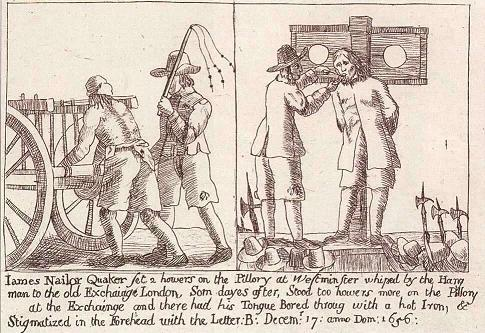
Even after expelling the torpid Rump Parliament by force in 1653, and assuming the title of Lord Protector under Britain’s first written constitution, The Instrument of Government, Cromwell struggled with his parliaments. Desperate measures, including the exclusion of around a hundred MPs before the meeting of the Second Protectorate Parliament in 1656, failed to bring that assembly to heel. Cromwell was particularly alarmed when that same parliament gave rein to its religious intolerance, not least by claiming the power to define, judge and punish the alleged misdemeanours of a Quaker named James Naylor, who MPs unilaterally found guilty of ‘horrid blasphemy’ and voted a suitably savage punishment. As Cromwell warned a meeting of army officers in February 1657, the ‘case of James Naylor might happen to be your own case’. As far as he was concerned, the Commons needed ‘a check, or balancing power’ in the form of a second chamber (John Morrill et al, The Letters, Writings and Speeches of Oliver Cromwell, iii. 340-1).
His wishes were answered in March 1657 when MPs presented Cromwell with a new written constitution, The Humble Petition and Advice, which created an ‘Other House’ of parliament. This was no straightforward revival of the House of Lords. Its membership would consist of a maximum of seventy men, sitting not by hereditary right, but chosen by the Protector and approved by the Commons. Members would serve for life, or until removed for misdemeanours, whereupon new ones would be chosen to fill vacant places. While Cromwell was no political theorist, he found hereditary systems of rule inherently unsound. He failed to see the logic in an arrangement where it mattered little if a person was ‘a fool or wise, honest or not’, for ‘whatever they be’, they ‘must come in’ (Morrill et al, iii. 144). Instead, admission to the Other House was based on what Cromwell perceived to be individuals’ merits or principles. He claimed to chose men who valued ‘not titles’, but ‘a Christian and an English interest’ (Morrill et al, iii. 493).
This does not mean Cromwell was unwilling to select noblemen for the Other House. Ultimately, though, only seven old English peers received summons: the earls of Manchester, Mulgrave and Warwick, Viscount Saye and Sele and Lords Eure, Fauconberg and Wharton. These were men who had either shown a willingness to play some role in the Cromwellian regime, or were erstwhile allies from the 1640s who Cromwell hoped to win back. Many other peers were overlooked, however, including some, like the earl of Salisbury, who had sat in the House of Commons during the 1650s. Other noblemen were chosen who had not been eligible to sit in the English House of Lords, including the Irish Lord Broghill and the Scottish earl of Cassillis, perhaps suggesting that Cromwell aimed to make the new chamber representative of the fragile union achieved by the English republic’s conquest of Scotland and Ireland.
Yet, the vast majority of the sixty-two members summoned to the Other House were not noblemen but new men: Cromwell’s ‘sons and kindred, flattering courtiers, corrupt lawyers, degenerated swordmen, and… self-interested salarymen’, as one critic put it (A Second Narrative of the Late Parliament (so called) (1658), pp. 23-4). The charge had substance: over a quarter of the members were closely related to the Protector, including two sons and three sons-in-law. They also included all but one of Cromwell’s privy councillors, and many administrators, court officials and judges.
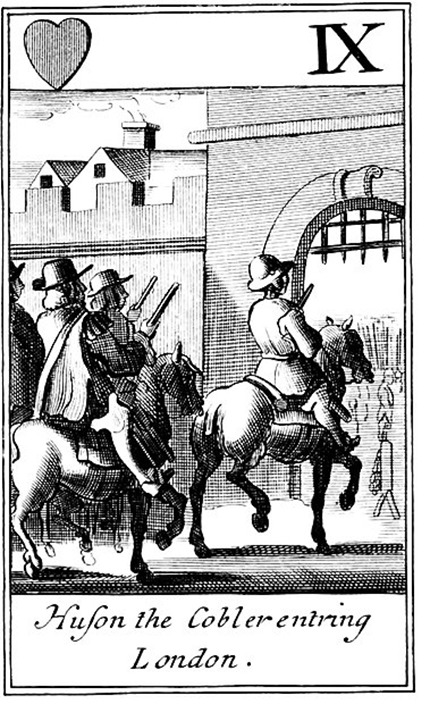
It is hardly surprising, given Cromwell’s desire for the new chamber to act as a balance on the Commons, that he selected those who shared his political and religious vision. But this made the Other House a very different animal to the old Lords. Its membership was more socially diverse: several had amassed fortunes only after rising through the ranks during the civil wars, such as the shoemaker John Hewson, the brewer Thomas Pride, and James Berry, who was a clerk at an ironworks before the conflict. Of course, this made it easy for critics to suggest the Other House was an assemblage of men of mean birth and low principles, but from Cromwell’s perspective it represented a meritocracy not an aristocracy.

Those old peers summoned to the ‘Other House’ recognised its novelty. Writing to Lord Wharton in late 1657, Viscount Saye was clear that they must not accept Cromwell’s writ of summons. To do so would make them complicit in the ‘laying aside of the Peers of England who by birth are to sit’; they would ‘disown their own rights and the rights of all the Nobility of England’. By breaking the ancient link between hereditary nobility and parliamentary membership, Saye believed the Other House was ‘a stalking horse’ to ‘carry on the design of over-throwing the House of Peers’ (Bodl. Carte MS 80, f. 749).
Saye’s warning was prophetic. When the Other House assembled in January 1658, Cromwell pointedly referred to it as ‘our House of Lords’, implying it now assumed the position of its predecessor (Morrill et al, iii. 467). To complete the charade, its members were styled ‘lords’ and sat in the Lords’ chamber at Westminster. Yet, the Commons were not easily deceived. As the republican MP Thomas Scot mischievously put it, if the Other House was really the House of Lords, Cromwell must summon all ‘the old peerage’, but the ‘old nobility, will not, do not, sit there’. The Other House were ‘but Commoners’; its members were ‘part of the Commons, in another place’ (The Diary of Thomas Burton, ed. J.T. Rutt (1828), ii. 389-90). Other MPs stressed that the new chamber must be styled the ‘Other House’ to make clear it derived its authority from the Humble Petition and Advice alone. As the MP William Brisco explained, it must have a ‘new name’ because it was a ‘new constitution’; its members and powers were ‘new’. The ‘Other House’ was not a ‘revival’ of the old upper chamber but was a new creation, brought into being by the Commons through the written constitution. As Brisco informed the Commons, it was ‘a House set up by you’ and ‘the derivative power shall never exceed the primitive power’ (Burton, ii. 410-11). The old House of Lords was a different matter because its membership sat by virtue of their birthright, not election; their membership and authority had been independent of the Commons.
The parliamentary session ground to a halt as the Commons failed to agree on how to address, or define, the new chamber. The feeling of exasperation was best summed up in the speech of Griffith Bodurda, who pleaded with the Commons to give the new chamber ‘some name… You must call them a House, of men, or women, or something that have two legs’ (Burton, ii. 432). His calls fell on deaf ears and Cromwell angrily dissolved the parliament on 4 February 1658. Ironically, Cromwell’s hope that a second chamber would better control the Commons foundered upon MPs’ unwillingness to own that chamber as a balance over them.
So much about the Other House was novel: a membership of Life Peers, fixed in number, and more socially and geographically diverse than any House of Lords had been. Yet, in a society that revered precedent, it was always going to be a hard sell. Cromwell failed to convince others that it was a suitable replacement for the House of Lords: styling it as such was never enough. The lack of the old peers left many questioning the extent to which it was a legitimate, or independent, component of the parliamentary trinity.
Perhaps, as the final hereditary peers are removed from the House of Lords, politicians will emulate their counterparts from the 1650s by reflecting on the identity crisis posed by a House of Lords without the ancient nobility. Will it essentially become another House, an ‘Other House’? On what basis will its remaining members sit, and what will be the chamber’s constitutional foundation? Is it destined to become a cipher for the government, or a House of Commons sitting elsewhere? These are thorny issues, but the Cromwellian era has lessons to offer.
JF
Further Reading:
The biographies of James Berry, Griffith Bodurda, Lord Broghill (Roger Boyle), William Brisco, the earl of Salisbury (William Cecil), Oliver Cromwell, John Hewson and Thomas Pride are in the recently-published Commons 1640-60 volumes.
J. Fitzgibbons, Cromwell’s House of Lords: Politics, Parliaments and Constitutional Revolution, 1642-1660 (2018)
C.H. Firth, The House of Lords during the Civil War (1910)
P. Little and D.L. Smith, Parliaments and Politics during the Cromwellian Protectorate (2007)
J. Fitzgibbons, ‘Hereditary Succession and the Cromwellian Protectorate: The Offer of the Crown Reconsidered’, English Historical Review, 128 (2013), 1095-1128.
