

Dr Simon Payling, of our Commons 1461-1504 section, explores the crucial role of the Shropshire town of Ludlow during the Wars of the Roses.
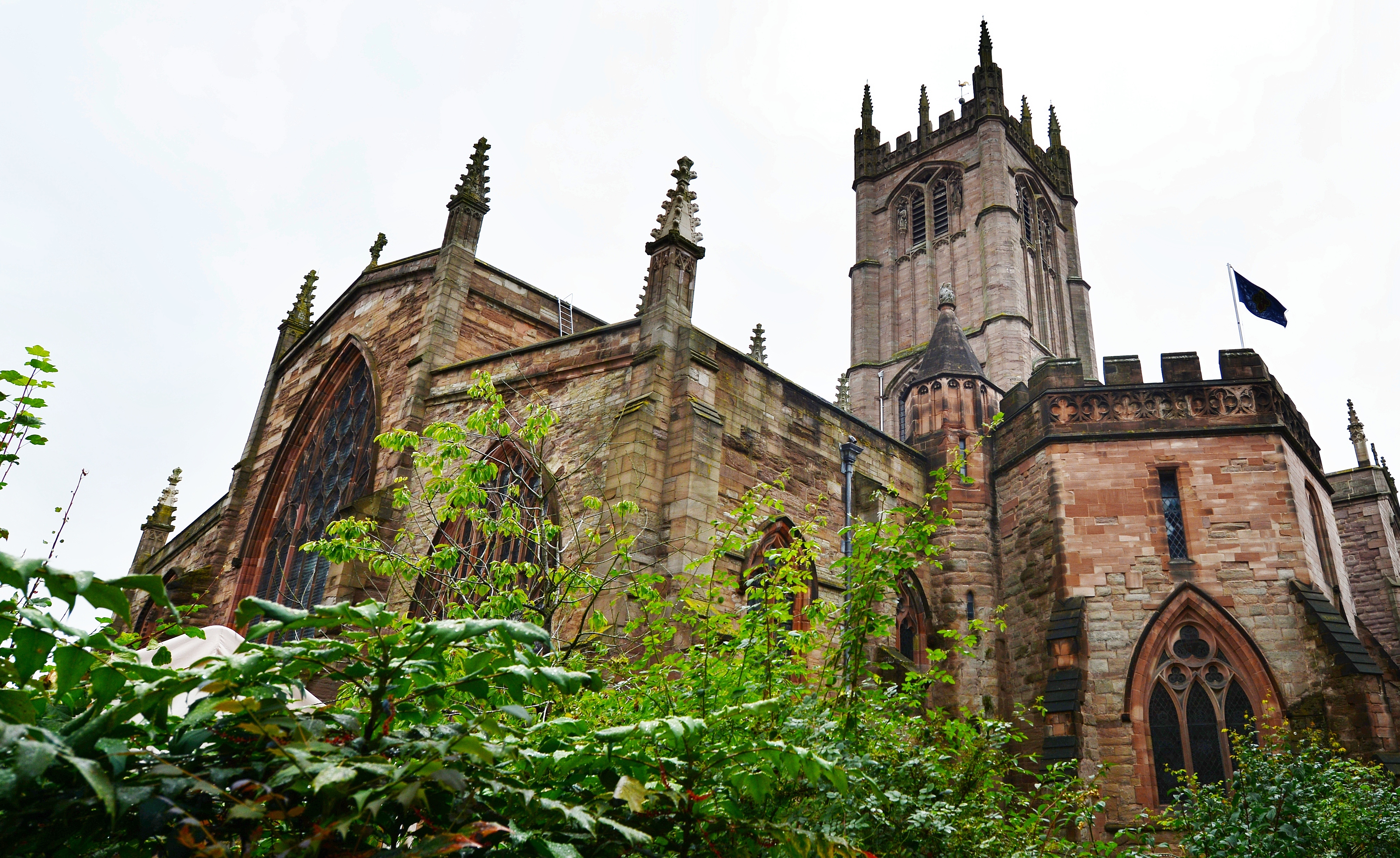
Political geography ensured that the town of Ludlow would, for good or ill, play some part in the great civil conflict that began when its lord, Richard, duke of York, moved into active opposition to the government of his cousin, Henry VI. The town was part of the great inheritance that came to the duke on the death of the last Mortimer earl of March in 1425, and, throughout his career, its castle was a favoured residence and a place of refuge in troubled times. But his interest extended beyond the castle, for he showed a benevolent concern for the town beyond its walls. In the late 1430s he and his wife, Cecily Neville, were admitted to the Palmers’ guild, by far the largest and most prestigious of the town’s fraternities, and the period of his lordship coincided with the major rebuilding, begun in the early 1430s (although not completed until the early 1470s), of the town’s church, of St. Lawrence. More significantly, in terms of the town’s institutional development, he acknowledged the right of the townsmen to a certain amount of administrative freedom. In 1449 he allowed that the town councils of 12 and 25 had the right to govern the town in all matters, save those that belonged to his steward ‘in the holding of our courts’.
The escalating political tensions of the following decade, however, revealed a less welcome side to the town’s position as a centre of benevolent lordship. In early 1452, as the duke launched a campaign (the so-called ‘Dartford rising’) to remove the King’s chief minister, Edmund Beaufort, duke of Somerset, he rallied forces at Ludlow before marching to London, only to submit tamely in face of the King’s superior forces. This humiliation was followed by another in the summer when royal commissioners toured the duke’s estates to investigate the local disturbances that had attended the rising. Coming to Ludlow in August, they took an indictment that implies that some radical and dangerous political ideas were circulating in the town. Two of its tradesmen were among those indicted for claiming that Henry VI had neither the ability nor the right to rule (‘non est habilis nec de potestate gubernare regnum .. nec illud regnum de recto regere debuisset’), and that he could be deposed by ‘a Parliament of the whole community of the realm (‘parliamenti tocius communitatis regni’) and another elected in his place (TNA, KB9/103/1, m. 15). The rebels then gave active expression to their treasonable designs by participating in the murder of a yeoman of the Crown who had come to the town with a message for the duke. There is no reason to suppose that the duke himself approved this conspiracy nor that it had the support of any of the leading townsmen, but it provides an indication of the strength of Yorkist feeling there.
The strength of that feeling was to be tested seven years later when the duke and his Nevilles allies, feeling themselves endangered by the militant regime of Henry VI’s queen, Margaret of Anjou, brought national conflict to its very gates. On 12 October 1459 the Lancastrian army, nominally led by the King, confronted an inferior Yorkist force at the bridge over the River Teme on its southern edge. To avoid defeat, the Yorkist lords fled into exile under cover of darkness, the duke leaving his town to face the unhappy consequences. ‘Gregory’s Chronicle’, in its typically vivid style, describes them: ‘The mysrewle of the kyngys galentys at Ludlowe, whenn they hadde drokyn i-nowe of wyne that was in tavernys … robbyd the towne, and bare a-waye beddynge, clothe, and othyr stuffe, and defoulyd many wymmen’.

These sufferings did not deflect the town from support for the house of York. According to the Burgundian chronicler, Jean de Wavrin, when the duke came there on his return from exile in September 1460, the townsmen were among the Shropshire men who went further than the duke himself had yet publicly gone by acclaiming him King. This loyalty was to bring the town considerable rewards when York’s son, Edward, took the Crown in the following March. Its castle had been his childhood home, and he spent a week there in the autumn after his accession. The burgesses took the opportunity to lobby for the grant of a comprehensive new charter. That charter was granted on the following 7 December (while Parliament was in session), and the townsmen were given extensive powers of self-government under two bailiffs elected annually from among their ranks. With administrative privileges went financial ones. The townsmen were to hold at a favourable annual farm of 37 marks all the royal property in the town, save for the castle; to regulate the town’s trade through a guild merchant; and to levy a sales tax to maintain its bridges, gates and walls. Most important of all, however, at least from the aspect of parliamentary history, was the grant of representation: the burgesses were given the right to elect two MPs ‘of themselves or others’. This enfranchisement was an important mark of the town’s enhanced status.
The town’s importance was further enhanced in the second half of Edward’s reign.
In July 1471, to improve peace-keeping in the Welsh marches, the newly-restored King established a council there for his infant son, Edward, not yet a year old. Some 18 months later, in February 1473, this council was formalised and enlarged, and soon after the infant prince took up residence in the town, which remained his principal home for the rest of his father’s reign. The council came to exercise wide-ranging functions, supervising the administration of the principality of Wales and the marches. The town later became home to Henry VII’s eldest son, Arthur, who lived there from the spring of 1493 until his death in April 1502. This, in the words of Ralph Griffiths, gave the town a ‘unique profile among England’s provincial centres’, and an importance far beyond its population of about 2,000.
S.J.P.
Further reading
R.A. Griffiths, ‘Ludlow During the Wars of the Roses’, in Ron Shoesmith and Andy Johnson (eds.), Ludlow Castle: Its History and Buildings (Hereford: Longstone Press, 2000), 57-68.
Simon Payling, ‘Making the most of a parhelion: the earl of March and the battle of Mortimer’s Cross’, History of Parliament, 3 February 2020.
Simon Payling, ‘The battle of Ludford Bridge’, History of Parliament, 10 October 2019.
