
In the wake of Burns Night, it is worth considering how the patronage of a small number of Scottish nobles helped Robert Burns become established as the national bard. In his latest piece for the Georgian Lords, Dr Charles Littleton, considers the important role played by a clutch of elite Scots families.
Burns first published his Poems, Chiefly in the Scottish Dialect, in Kilmarnock in 1786 and, encouraged by his local supporters, arrived in Edinburgh in January 1787 to arrange a second edition. He quickly found a patron there in James Cunningham, 14th earl of Glencairn making an introduction through common Ayrshire connections. Both the earl and his mother, the dowager countess, strove to ensure that his poems would appear in a new edition from an Edinburgh publisher, with Glencairn putting Burns in touch with bookseller William Creech, Glencairn’s tutor during his Grand Tour, who agreed to produce it.
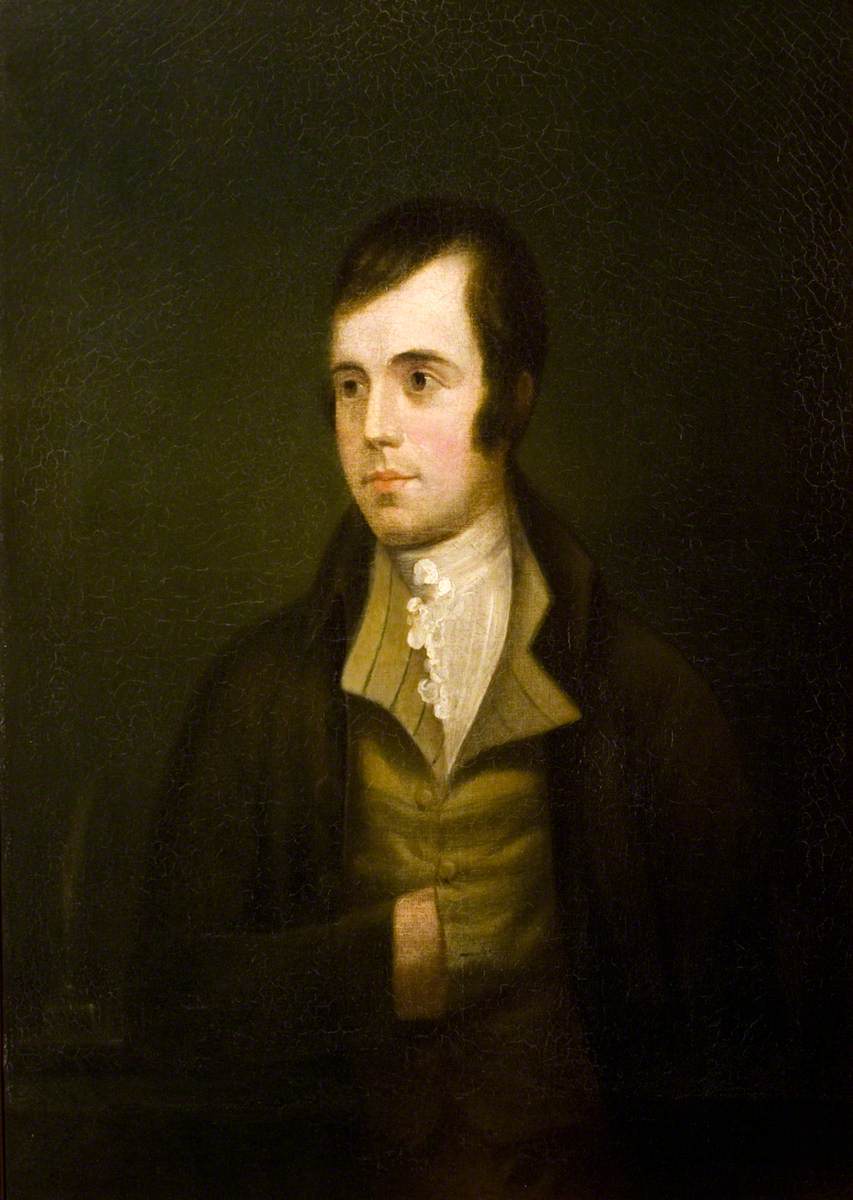
Glencairn encouraged Burns to dedicate the new volume to the Royal Caledonian Hunt, an elite social and sporting club. At a meeting on 10 January Glencairn persuaded the members of the Hunt to pledge to purchase 100 copies, bringing Burns £25 in advance. Glencairn also sent blank subscription forms to James Graham, marquess of Graham, in order to have them filled up by the ‘first Scottish names about Court’. He also enlisted William Henry Cavendish Bentinck, 3rd duke of Portland, to solicit subscriptions from other peers in London [Letters, i. 73]. Few English subscribers signed up, apart from the duchess of Devonshire and countess of Derby. When Burns’s revised Poems appeared in April, it was dedicated to the Caledonian Hunt, which headed the list of subscribers. Between them Glencairn and his mother pledged to purchase 24 copies, the countess dowager alone subscribing for sixteen.
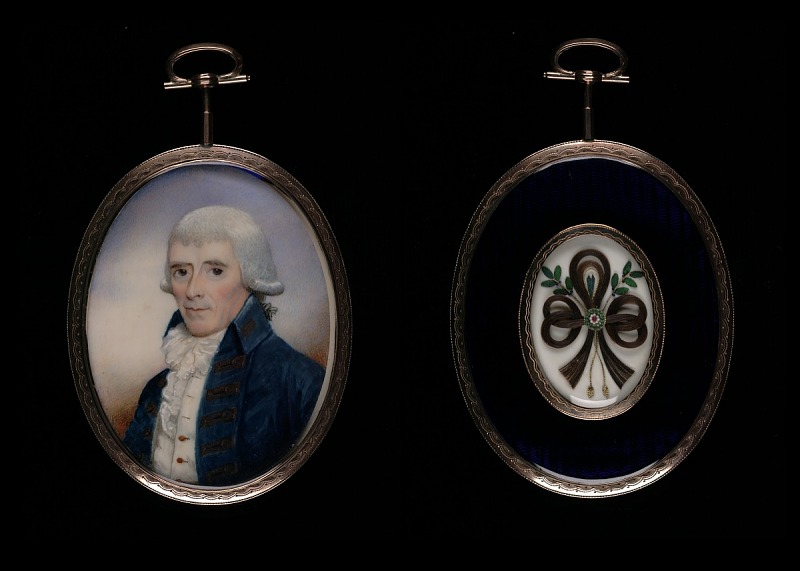
Glencairn had succeeded to his peerage in 1775, and three years later was commissioned a captain of the Western Fencible Regiment, a temporary outfit raised to defend the Scottish west coast. Like many Scots, he was angered by Westminster’s unwillingness to trust the Scots with a more established domestic military force, on the lines of the English militia.
Elected one of the 16 representative peers in 1780, Glencairn quickly joined the patriot movement for an independent Scottish militia. In spring 1782 he witnessed the unsuccessful attempts of Lord Graham to promote a Scottish militia bill in the Commons. Glencairn took up the cause himself and was its main driver from the summer. He was in Westminster in June 1783 when Graham once again brought the Scots’ desire for their own militia before the Commons. However, the session was prorogued a month later without the militia bill having been introduced.
Glencairn supported the Fox-North coalition and voted for its East India Company bill in December 1783. He failed to be included on the Court’s list of representative peers for the general election, and was heavily defeated when standing as an independent. For the rest of his life he opposed William Pitt and his Scottish manager Henry Dundas. On 6 Dec. 1785 he was named to an Ayrshire committee tasked with countering Dundas’s planned diminution of the number of judges on the Court of Session. [Public Advertiser, 26 Dec. 1785] He was also a member of the Independent Friends, a society of Scottish Whigs. As he had done in 1784, Glencairn threw his interest behind the Opposition candidate in Ayrshire elections in 1789 and 1790, but without success.
Thus, when Glencairn met Burns in late 1786 he already had extensive credentials as a Scottish patriot and quickly became an enthusiastic supporter of Burns’s wish to project a genuine Scottish voice. Burns was solicitous of Glencairn’s opinion on his poems, especially those with political content. He submitted his piece on the American war, When Guilford Good, for Glencairn’s approval, worried that ‘my political tenets… may be rather heretical in the opinion of some of my best friends’ [Letters, i. 77]. Glencairn countenanced its inclusion in the Edinburgh edition, and would have agreed with Burns’s positive view of the Americans’ cause.
Burns and Glencairn also found common cause on the issue of the Scottish militia. Burns’s 1784 poem The Author’s Earnest Cry and Prayer urged the 45 Scottish MPs to fight back against an Act that had increased the excise on whisky. He felt that if the measure were allowed to continue, Scotland, already on edge because ‘Her lost Militia fir’d her bluid’ [blood], would be ready to resort to violence.
Burns did not have many years to enjoy his friendship with Glencairn and the earl’s death on 30 Jan. 1791 while returning from a trip abroad distressed Burns greatly. He composed a Lament, which concluded: ‘The mother may forget the child / That smiles sae sweetly on her knee;/ But I’ll remember thee Glencairn / And a’ that thou hast done for me!’. In 1794, Burns even named his newborn son James Glencairn Burns.
Another Ayrshire native and peer who encouraged Burns’s poetry in 1787 was Archibald Montgomerie, 11th earl of Eglinton, a fiercely proud Highlander. He had commanded a regiment in America during the Seven Years War and served as a representative peer for 20 years. James Boswell described him to Dr. Johnson as ‘a person who was as violent a Scotsman as he [Johnson] was an Englishman’ [Life of Johnson, iii. 170, 503]. In January 1787 Eglinton provided Burns with an unsolicited donation of 10 guineas [Letters i. 79, 84], and subscribed to 42 copies of his Poems, one of the largest individual subscriptions.
In 1796 all these connections were abruptly severed, beginning with Burns’s own death on 21 July, aged just thirty-seven. On 24 September Glencairn’s younger brother, John, the 15th earl, died childless, and the title became extinct. Eglinton died without a male heir on 31 October, and his distant cousin Hugh Montgomerie of Coilsfield (mentioned in The Author’s Earnest Cry and Prayer) succeeded him in the peerage.
CGDL
Further reading:
Ian McIntyre, Robert Burns: A Life (1995)
The Letters of Robert Burns, Vol. 1: 1780-89, ed. G. Ross Roy (1985)
J. Robertson, The Scottish Enlightenment and the Militia Issue (1985)
Boswell’s Life of Johnson, ed. G. B. Hill (6 vols., 1934-1950)