

Guest blogger Dr Fraser Dickinson uses the events surrounding Philip Herbert, 4th earl of Pembroke, between May and July 1641, to illustrate the interaction between the paradigms of ‘history from above’ and ‘history from below.’
The past is often viewed as being either ‘history from above’ (the ‘great man theory’ of history), or ‘history from below’ (the Marxist emphasis on economic and social forces). Of course, any astute practitioner knows that history is neither of these – it is both. Indeed, the past would be so much easier to understand if only one of these two alternatives was adopted. The events surrounding Philip Herbert, 4th earl of Pembroke, in the three months from May to July 1641 are a clear demonstration of the interaction between these two forces.

Pembroke had risen to prominence as a favourite of Charles I’s father, James I. According to Edward Hyde, 1st earl of Clarendon, Pembroke (then plain Philip Herbert) ‘had the good fortune, by the comeliness of his person, his skill, and indefatigable industry in hunting, to be the first who drew the king’s eyes towards him with affection …’ (Clarendon, History of the Rebellion, i. 74). As evidence of James’s favour, Herbert was made earl of Montgomery in May 1605. Like George Villiers, 1st duke of Buckingham, with whom he was on good terms, Montgomery successfully managed the transition from James I to Charles I in 1625. In August 1626, he succeeded his brother, William Herbert, 3rd earl of Pembroke, as lord chamberlain. In April 1630, he became 4th earl of Pembroke on his brother’s death, inheriting the third earl’s role as a champion of the Protestant cause in Europe. Pembroke now had a substantial income, which enabled him to cut a figure at court. He also entertained the king every summer at his country seat at Wilton House, near Salisbury in Wiltshire. As a mark of royal favour, Pembroke, who was a keen connoisseur of art, was present in January 1637 when the king opened cases containing a consignment of pictures, which were a present to Charles from Pope Urban VIII to Charles. The earl was clearly an important part of the king’s court as well as being a provider of counsel in the late 1630s.
However, by the middle of 1641, Pembroke had completely lost Charles’s favour. The immediate cause was his role in the trial of the king’s former first minister, Thomas Wentworth, 1st earl of Strafford. In March 1641, Pembroke, as lord chamberlain of the household, was key in stage-managing the impeachment trial of Strafford in Westminster Hall. Pembroke was then deeply involved in the House of Lords passing Strafford’s bill of attainder in early May. Notably, he whipped up the crowd in Old Palace Yard just outside the House of Lords to encourage his fellow peers to pass Strafford’s attainder. Pembroke is reported as telling the anti-Strafford demonstrators that ‘Justice [would be done] very shortly’ (BL, Add. MS 19398, fo. 72: letter of intelligence, 3 May 1641).
The king never forgave Pembroke for his role in the attainder and the ensuing execution of Strafford in May. Just over two months later, on 19 July, Pembroke was involved in a physical argument with Henry Howard, Lord Mowbray, striking that peer twice with his staff. Charles took this opportunity to revenge himself on the earl and to remove him from his office of lord chamberlain, conferring it instead on another opposition peer, Robert Devereux, 3rd earl of Essex, as part of a belated effort to woo the latter. (Charles had been advised to offer Essex preferment as early as September 1640 immediately before Parliament sat.) As one discerning observer put it, ‘My lord of Pembroke did not loose his place [as lord chamberlain] for this faulte [the fracas with Lord Mowbray], but for countenancing of those tumultuous people’ outside Parliament during the debate on Strafford’s bill of attainder (TNA, SP16/482, fo. 178: Thomas Wiseman to Sir John Pennington, 29 July 1641).
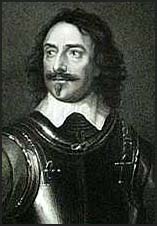
The events outlined above link high politics (the Lords and the passing of Strafford’s bill of attainder in May 1641), popular action (Pembroke’s courting of the crowd in Old Palace Yard supporting some peers – and pressuring others – into passing Strafford’s bill of attainder, again in May), together with royal courtly revenge (Charles’s replacement of Pembroke as Lord Chamberlain with Essex in July). These events centred around one individual (Pembroke) over a short timeframe of three months, and support the premise of the interaction of ‘history from above’ and ‘history from below.’
These two historical architypes would continue to feature in the remainder of the crisis of 1641-2 and, indeed, into the civil war. In January 1642, the London Trained Bands, representing ‘history from below,’ would side with Parliament against Charles, forcing the king from the city and depriving him of its resources and wealth for the duration of the civil war. The London Trained Bands would then be decisive in turning away Charles’s thrust towards London at Turnham Green in November. Similarly, there are examples of ‘history from above’ in the civil war. In 1643, the property-owning elite in Parliament would greatly extend the tax base by introducing an excise tax, which, as a form of regressive indirect taxation, fell hardest on the commonality. And, over the winter of 1644-5, political infighting in Parliament would create the New Model army, leading to the king’s ultimate defeat in 1645-6.
F.D.
Further reading
John Adamson, The Noble Revolt: The Overthrow of Charles I (2007)
Dianne Purkis, The English Civil War: A People’s History (2006)
David Smith, ‘Herbert, Philip, first earl of Montgomery and fourth earl of Pembroke (1584-1650)’, Oxford Dictionary of National Biography (2004)
Biographies of the peers named in this blog will be covered in the forthcoming House of Lords, 1640-60. Pembroke, in his role as MP for Berkshire in the Rump Parliament, is also included in the recently published House of Commons, 1640-60.
