
We at the History of Parliament have been deeply saddened to hear of the death of Lord Cormack, Patrick Cormack, who has been one of the History’s greatest friends and allies for more than forty years. Former Director, Paul Seaward, writes about Lord Cormack’s political career and involvement with the Trust.

Patrick Cormack was something of an institution in Parliament: not just because of his old-fashioned courtesy and his habit of pronouncing all the syllables in ‘Parliament’, but also as a man of strong will, generous disposition, and definite and independent views, who counted many political opponents as friends and collaborators. In part this was because of a range of passionately pursued interests and activities that crossed the political divide, most notably on heritage. Among them was a long-term interest in history: he read history at Hull University with the great historian of the English Reformation Professor A.G. Dickens, and he worked as history teacher before becoming an MP in 1970. There was also a deep appreciation of the Palace of Westminster, on the history of which he published a successful book. It was no doubt inevitable that he should have become a Trustee of the History of Parliament in 1983, and chairman (never chair, on the grounds that he didn’t wish to sound like a piece of furniture) of the Trust in 2002. He held the position until he stepped down in 2017, but he retained a close and lively interest in the History thereafter.
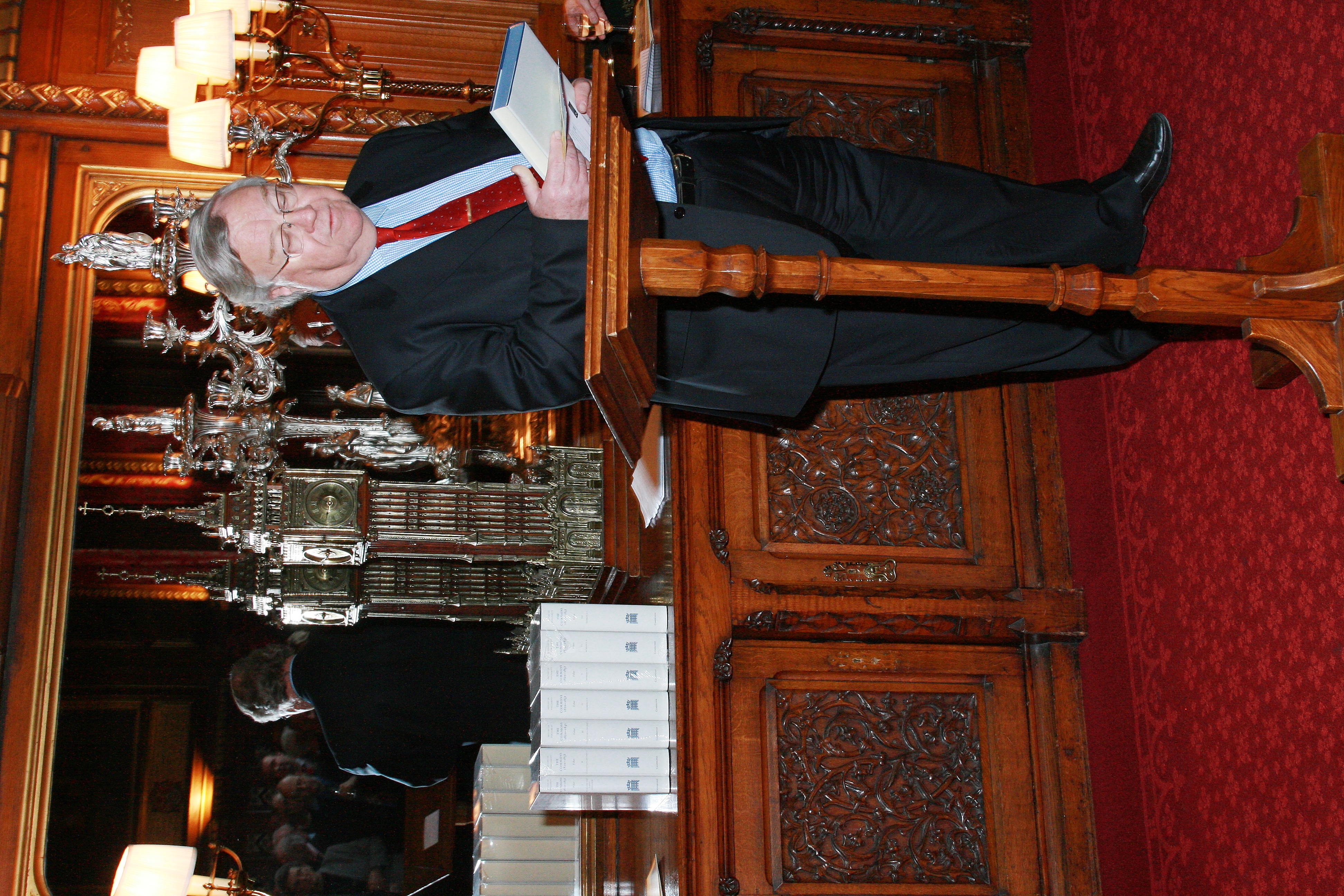
Patrick had politics in his blood: both of his parents were involved in local politics, and he remembered being taken to local Conservative party meetings at the age of eleven or twelve. In 1963, at the age of 24, he was chosen to second the speech of the leader of the Conservative party, Iain Macleod, at the party conference in Blackpool; a year later he was standing as a parliamentary candidate. Though he lost that election, he achieved a famous win in 1970 over the grand dame of the Labour Party, Jennie Lee, at Cannock in Staffordshire. Often out of sympathy with the leadership of his party, especially during the Thatcher years, and rather more recently, it perhaps isn’t a surprise that he never became a minister, though he served on the opposition front bench in various roles, and chaired the Northern Ireland select committee in the 2005 Parliament. He also stood for election to the Speakership of the Commons, twice, and (after he received a peerage in 2010) for the Lord Speakership in the Lords, though was unsuccessful.
His great contribution to public life was in a series of effective campaigns: most famous, perhaps, was the ‘Heritage in Danger’ campaign in the mid-1970s, an attempt to resist the decay and destruction of some of England’s greatest historical assets. His love of Parliament also translated into active involvement in its administration: the House of Commons Works of Art Committee was a bailiwick for many years; he was closely engaged in the committees overseeing the design of Portcullis House in the 1990s; he served, too, on the House of Commons Commission, the statutory committee chaired by the Speaker, which acts as the House’s decision making body in relation to its own organisation.
Patrick’s contribution to the Trust was perhaps second only to that of its founder, the Liberal and Labour MP Josiah Wedgwood, Lord Wedgwood (1872-1943), whom he resembled in many of his interests, in his independent-mindedness and in his cultivation of friendships across political boundaries. Throughout Patrick’s tenure of the chairmanship, he encouraged us in many new departures, including the start of our series of projects on the House of Lords, our oral history project, our engagement activities including an annual lecture, prizes for undergraduates and sixth formers and much else. The History will miss his encouragement, counsel and support.
P.S.
