

As the UK marks Disability History Month, today’s guest blogger, Dr Ekaterina (Katya) Kolpinskaya explores the representation of disabilities in the House of Commons, and why Members of Parliament may be unwilling or unable to be more open about their disabilities.
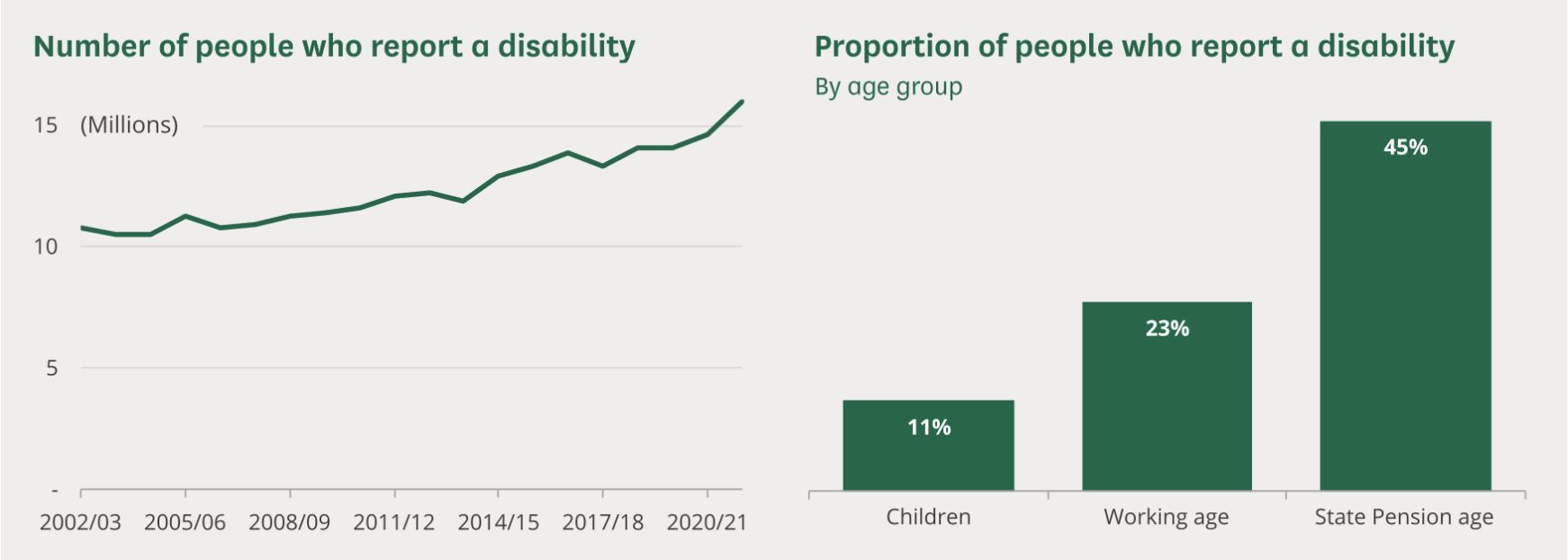
The recent increase in the number of disabled people in Britain – who have a physical or mental health impairment which has a substantial and long-term adverse effect on their ability to carry out normal day-to-day activities – to almost one in four (24%) or 16 million people, means that the salience of disability in the public life is growing. This is reflected in greater attention to improving accessibility and inclusion for disabled persons in political discourse (e.g., in the context of the Restoration and Renewal programme) and through legislation (e.g., the British Sign Language Act 2022; Mental Health Bill 2022-23).
There are also frequent calls from disability rights campaigners to improve political representation of disabled people in the House of Commons to bring the composition of the House closer to that of the British population – with only 5 MPs (0.8%) out of 650 having declared themselves disabled at the last General Election, though it rose to 8 MPs (1.2%) by 2022. This aims to normalise the presence of disability in a political space by making it more visible and strengthen recognition of political rights of disabled persons in line with the 2006 United Nations Convention on the Rights of Persons with Disabilities (UNCRPD). It would also improve quality of legislation and policy making by enabling disabled persons to feed into these processes directly rather than through intermediaries. Achieving these aims relies on politicians being open about their physical and mental health impairments, and this is a big ask in the context of a national, elected legislature.
There are several reasons why Members of Parliament may be unwilling or unable to be more open about their disabilities. They stem from their relationships with the world outside Parliament (e.g., their constituents, the media and wider public) and with their political parties, as well as their desire to protect privacy on a personal matter on health and wellbeing.
Starting from the pre-parliamentary stage of political careers, Prospective Parliamentary Candidates (PPCs) are reluctant to declare disability for fear of electoral penalty resulting from commonly held stereotypes around disability and even ‘openly expressed prejudices’. Expectations of prejudice are not unfounded and resonates with experiences of PPCs of being pitied and treated as weak or incapable during the selection process and on the campaign trail. Interestingly, evidence from experimental research casts doubt in the prevalence of the public’s perception of physically disabled candidates as incompetent. Rather, they are seen as more honest, compassionate, and hard-working than non-disabled candidates. Despite these encouraging insights, the recent rise in abusive and intrusive behaviours towards politicians, whereby four out of five MPs reported experiencing such behaviours in 2015, is likely to be particularly detrimental to disabled persons as ‘experience or threat of harassment, stalking or violence may lead to profound psychological effects, including post-traumatic stress disorder, depression, fear, anxiety, and avoidant behaviour’. The rise in such inappropriate behaviours has been partly associated with the increase of exposure of politicians to less regulated channels of communication such as social media and other online interactions.
Political parties – both in constituency and in Parliament – are a support network and occasionally an obstacle for disabled politicians, with experiences of resourcing, accessibility and attitudes varying greatly between and within political parties and for candidates with different types of impairments. Once elected, a parliamentary party becomes a source of support and guidance for a Member, with whips undertaking both managerial and pastoral duties with regards to their Members. On the one hand, this makes them the most obvious source of support for disabled Members (alongside the Members’ Services). On the other hand, parliamentarians may be reluctant to mention their physical or mental health conditions to them and risk affecting career progression and ministerial promotion prospects. That said, there is a sense of the House starting to ‘open up’ to issues around disability, and Members (especially in safer seats, or who plan to stand down) starting to talk publicly about their mental health, neurodivergence, life-changing illnesses, and their personal experiences more broadly (e.g., Sir Charles Walker MP, Emma Lewell-Buck MP, Amy Callaghan MP, Olivia Blake MP).
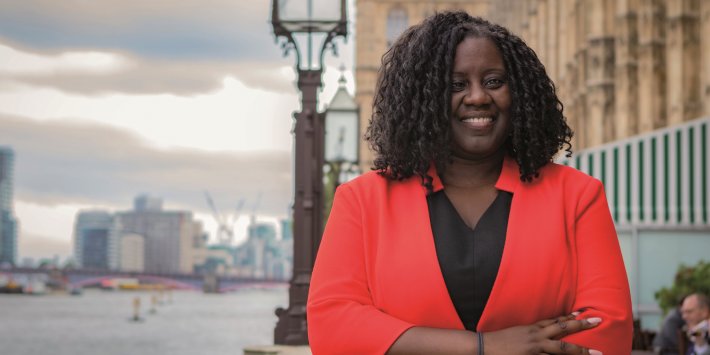
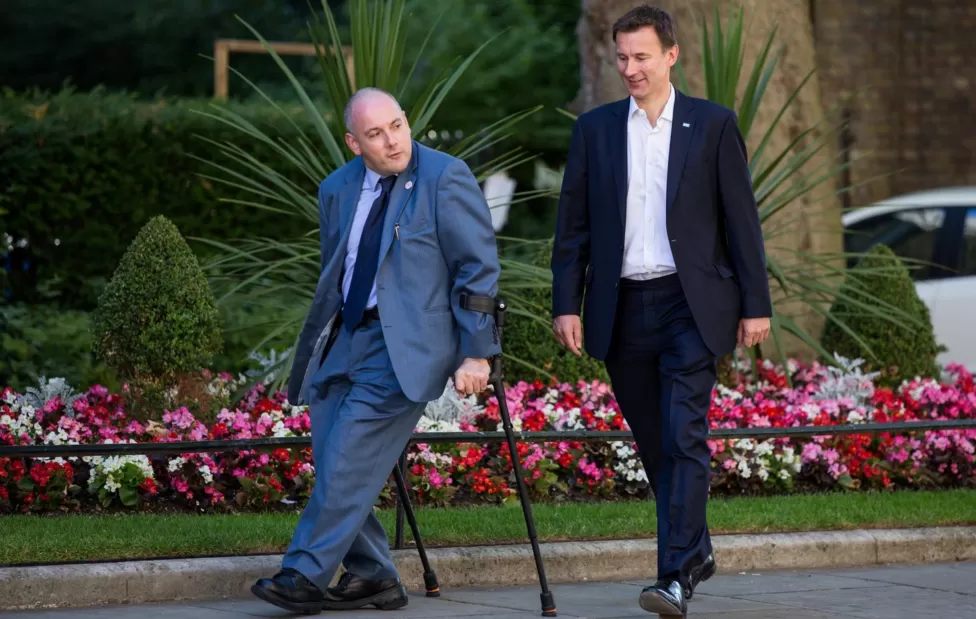
This greatly depends on a Member’s willingness to come forward and self-identify as disabled, even if they have a visible, medically diagnosed impairment, as the threshold for doing so is high in the context of the House of Commons and British electoral politics. In addition to the practical concerns mentioned above, disabled parliamentarians have different relationships with and understanding of their health conditions. For example, while some of them such as Robert Halfon MP dislike ‘the tag’ and prefer ‘differently-abled’, others such as Marsha de Cordova MP self-identify as disabled. There is similar variation in self-identification between Members with less visible impairments (e.g., dyslexia, dyspraxia, obsessive compulsive disorder), with some of them describing themselves as disabled (e.g., Emma Lewell-Buck MP) and some talking about management of mental health conditions in a social context without referring to a disability (e.g., Sir Charles Walker MP). Indeed, such conditions may or may not be disabling. Depending on their experiences and perception of their health conditions, parliamentarians may not consider it relevant or necessary to declare themselves disabled, with this data being private, special category data as recognised under the General Data Protection Regulation.
While there are good practical reasons and public benefit to increasing the number of disabled parliamentarians in the House of Commons – and encouraging Members to be more open about disabilities, equally, there are obstacles that discourage them. These stem from Members’ desire to protect their private lives, especially in the context of practical concerns as to how this may affect their career progression, and how their voters, the media and the wider public will respond.
Dr Ekaterina (Katya) Kolpinskaya
Parliamentary Academic Fellow, the House of Commons Centre of Excellence for Procedural Practice Lecturer in British Politics, University of Exeter.
Many of the issues discussed in this blog on the experience of MPs and why many may be unwilling or unable to be more open about their disabilities are also found in the History of Parliament’s oral history interviews with past MPs.
You can find the Victorian Commons’ blog on Henry Fawcett, the first completely blind MP, here: https://victoriancommons.wordpress.com/2018/07/19/mp-of-the-month-henry-fawcett-1833-84/
