
During the 1640s the parliamentary day grew longer and longer until all-night sittings became a regular feature in the House of Commons. Dr Stephen Roberts, editor of the House of Commons 1640-1660, explains the debates that kept the Commons sitting late and how orders and divisions on candles became a regular feature.

UK Parliament is celebrated for its traditions: consider the Speaker’s daily procession, the spectacle of the State Opening of Parliament with its customs such as Black Rod’s summons at the door of the Commons, and the show of resistance in response. Yet the culture of Parliament, whether meaning the customs and habits of MPs or the political interactions influencing them, is a continuously evolving process, as the Houses respond to wider social and political change. The 20 years between the opening of the first Parliament of 1640 and the final dissolution of the Long Parliament in 1660 can be considered a micro-environment of rapidly changing parliamentary culture. Two instances of invented tradition can be attributed to Puritan ideals of godly conduct. The Christmas Day holidays of 1640 and 1641 proved to be the last for many years. In 1643 and the subsequent 10 Christmases, 25 December was a normal working day if Parliament was in session. Disapproval of ‘holy days’ was of course behind this, and the same ideology gave impetus to the inauguration of fast sermons as a custom of the Commons. Established early in 1642, immediately following the king’s failed attempt to arrest the parliamentary leadership, the fast sermons were delivered every last Wednesday of the month. On these ‘days of public humiliation’ and fasting, two invited clerics would preach at St Margaret’s, Westminster, morning and afternoon. For seven years, the monthly fast day was a fixture in the parliamentary calendar, but after the Presbyterians, the principal devotees of the Fast Sermons, had been purged by the New Model Army from Parliament in December 1648, the custom was quietly dropped.
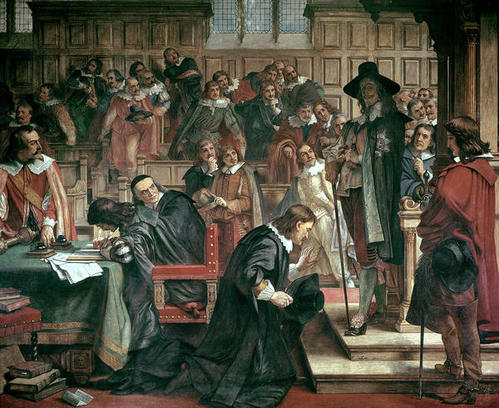
As the deepening political crisis led to armed civil hostilities in 1642, pressure of parliamentary business dictated a new custom, that of the whole House sitting in the afternoons. By the late 1640s, this was regarded as normal, certainly by the 276 new MPs recruited to the House after August 1645, for whom this was the standard practice they encountered on entry. Different dimensions of parliamentary work competed for available time. Whole day sittings impacted on committee activity, which until the 1640s was reserved for afternoons. Commons orders to regulate the working day, for example by confining the whole House sitting to an hour on a Wednesday and Friday, leaving the rest of the day for committees, were soon overridden. An absurdist-sounding ‘committee for lessening committees’, was another failed expedient. Beyond attempts to corral committee meetings into particular times of the day, or to determine how particular days of the week were to be used, the very duration of the working day offered a new front in the battle for time. Occasional early starts – earlier, that is, than the usual 8 or 9 am. – were uncontroversial. It was a different story with late nights. The first division of the House on whether to continue to sit after darkness had fallen took place on 15 December 1641, after it had become ‘so dark as the clerk could not see to write’. Dusk lent itself to a ritual: the order to illuminate the chamber and the bringing in of sconces of candles. Throughout the following three years, the House sat frequently beyond the usual 5 or 6 pm, with no orders for candles; but in the three years of 1646, 1647 and 1648 there were 24 motions on candles and 12 divisions on whether they should be brought in. The reason for these motions is not hard to discover: they coincided with the period of bitterest faction-fighting in the Commons between the Presbyterians and the Independents, and the party politicization potentially of every aspect of parliamentary culture.
Regardless of calls for illumination, late nights were always times of heightened drama in the chamber. On 9 August 1641, when the House rose around 10 pm, Members had debated the highly contentious question of how England was to be governed after Charles I had travelled to his other kingdom of Scotland. On 31 March 1645, Speaker Lenthall used his casting vote around 8 pm to continue proceedings, after a tied vote in a division and a sitting already of 9 or 10 hours’ duration. Extra time failed to deliver the Independents their desired censure of peers accused of corresponding with the king. Sir Simonds D’Ewes, a ‘peace party’ advocate, took comfort from the failure of the ‘candle-work’. On 6 May 1646 it was the fate of the king himself that was in dispute. After a division on candles, the Independents were successful in a motion calling for the king to be brought from the custody of the Scots to Warwick Castle. The House rose after 10 pm. But these were short sittings compared to two exceptional late nights in 1641 and 1648. On 22 November 1641 the House had debated the Grand Remonstrance, the draft petition that brought together myriad grievances against the king’s government. Opponents of the Remonstrance were particularly hostile to having it published. At around 1 am, just as the House had seemingly postponed the debate for another day, Sir Geoffrey Palmer, Member for Stamford, sought a protestation against the Remonstrance. Pandemonium ensued, some MPs waving hats, others taking swords and scabbards off their belts, and holding them by the pommels in front of them: ‘there was very great danger that mischief might have been done’, recorded D’Ewes. The MPs left the chamber just as the clock was striking 2 in the morning.
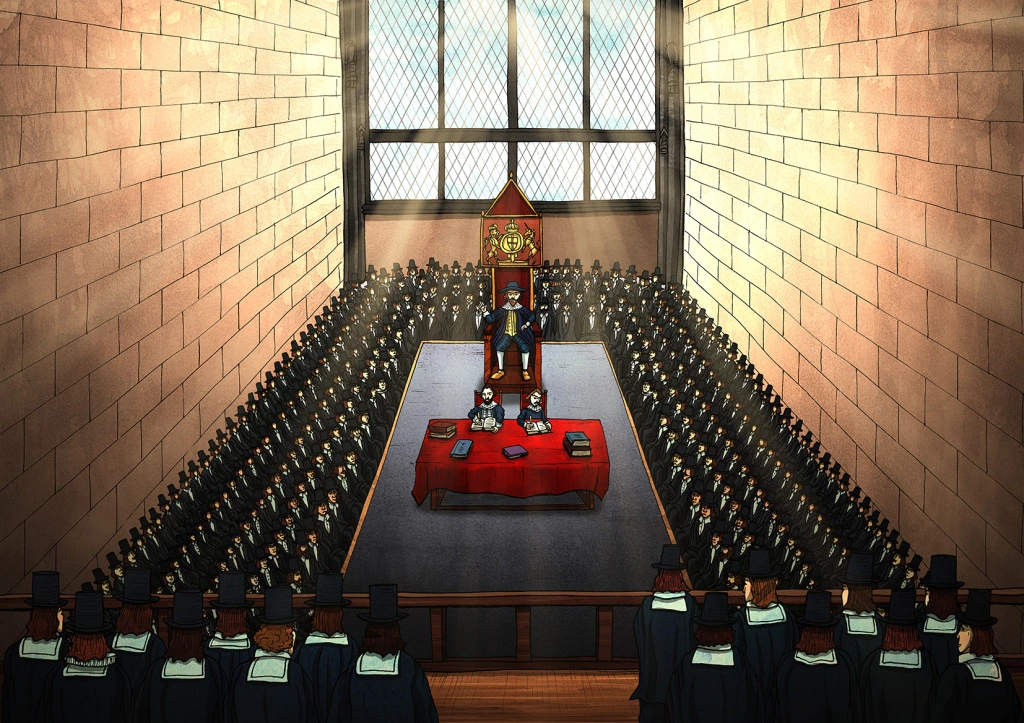
But even this marathon sitting takes second place to that on 4 December 1648 and the debate on the motion ‘that the answers of the king to the propositions of both Houses are a ground for the House to proceed upon for the settlement of the peace of the kingdom’. Here was the dramatic culmination of the years of factional conflict between Presbyterians and Independents over the future constitution of the kingdom and the place in it of both king and Parliament. The king was in forced residence on the Isle of Wight: should Parliament continue to negotiate with him? The motion for candles was carried, and the debate continued through the night. Three hours of it were taken up by the speech of one Member, the irrepressible Presbyterian, William Prynne, who had modified his earlier hostility to the king to become an advocate for continuing constitutional discussions with him. Despite the drift homewards of over 100 MPs before the night was out, the sitting ended no earlier than 8 the following morning, the 5th, the clerk misleadingly recording in the Journal the single sitting as occurring on two days. The Presbyterians won the final division to continue negotiations, and as in November 1641, those who felt themselves to be on the losing side of the drift of events demanded a protestation, to no avail.
The record sitting of 4/5 December 1648 led directly to the purge of Parliament by the army on the 6th, and paved the way to the trial and execution of the king weeks later. Orders and divisions on candles would next be a regular feature in the winter of 1654, when the written constitution of the protectorate was hotly contested. For the time being, Members were cured of all-night sittings, but the 1640s nevertheless marked the start of night as part of parliamentary day.
SR
More about the MPs mentioned in this blog can be found in the newly published, The History of Parliament, House of Commons 1640-60 volumes.
