

William Rudhale had a successful career in the medieval legal profession culminating in his promotion to serjeants-at-law. Simon Payling from our Commons 1461-1504 project discusses the significance of the decoration on his memorial in the church of Ross-on-Wye.
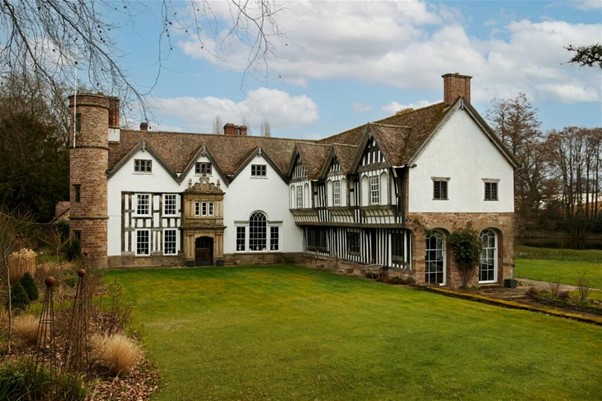
The church of Ross-on-Wye in Herefordshire has a series of remarkable memorials, none more so than chronologically the earliest, that of William Rudhale, King’s serjeant-at-law, and his wife, Anne Milborne. The lawyer it memorialises had a long and successful career. Like many others who rose to high rank in the medieval legal profession, he was from a family of lesser gentry. Admitted to the Inner Temple in the early 1480s, he progressed up the professional ranks, more slowly than the most brilliant lawyers of his day but nonetheless to a place among the legal elité. Early in his career he represented his native county in the Parliament of 1491, and soon after he benefited from the establishment by Henry VII of a regional council at Ludlow. He served successively as attorney-general to the King’s two sons, Arthur and Henry (the future Henry VIII), and then to Henry VIII’s queen, Katherine of Aragon. His career culminated in 1521 with a belated promotion, when he cannot have been much short of sixty, to the august order of serjeants-at-law. His age was against promotion to the judicial bench, which he was still awaiting on his death in 1530. None the less, the profits of his long career had enabled him to invest heavily in land, mostly in the environs of Ross, and to rebuild the family manor house at nearby Rudhall (which, although much changed, still survives). According to his own testimony, he undertook the latter ‘yn token of Remembrans’ of his long service to the Crown, employing the images of the prince of Wales’s feathers as part of the decorative scheme of a manor house suitably extended to match his new status.
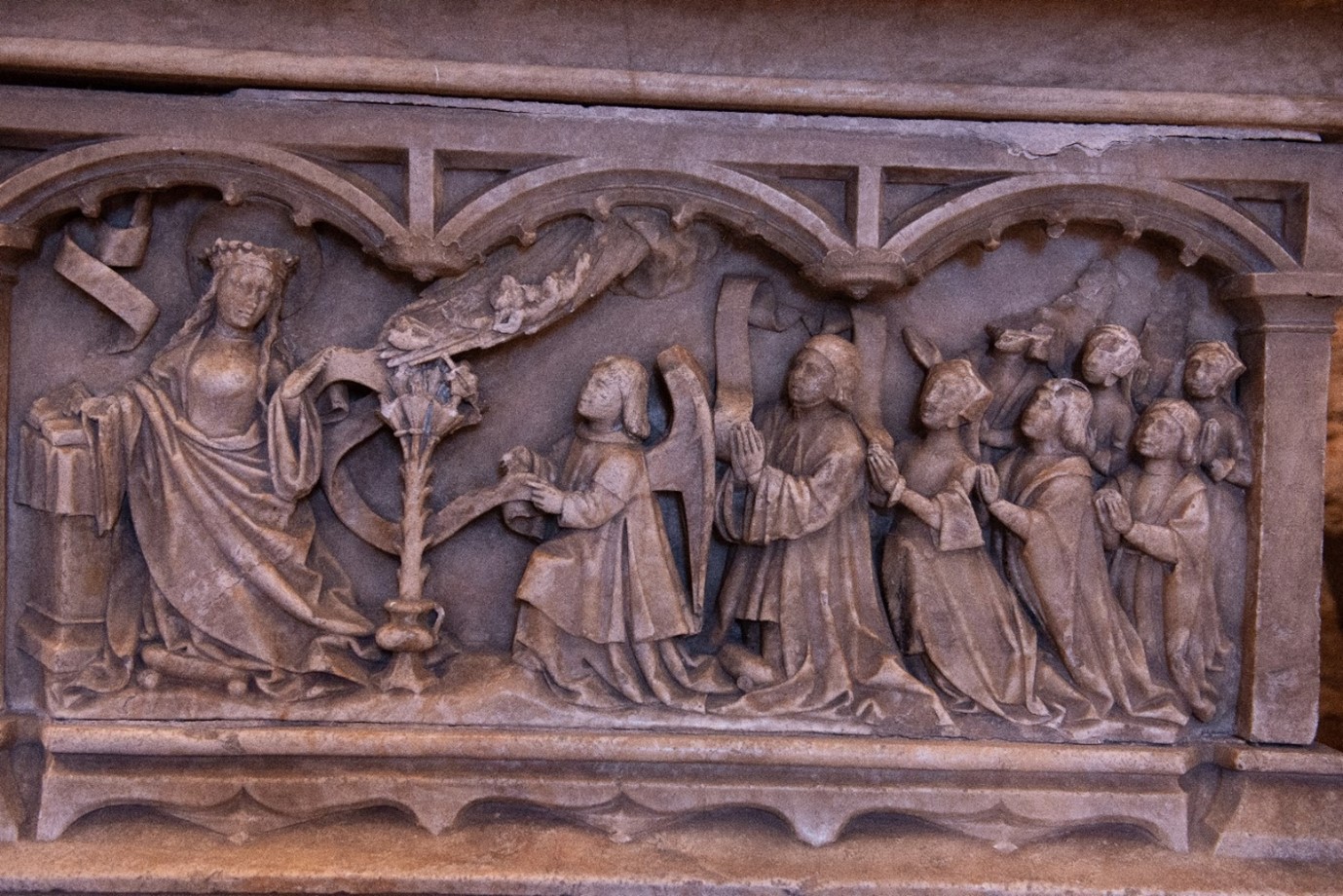
The house provides one memorial to the serjeant, but his tomb provides a greater one. Of the highest quality, and probably from a Nottingham alabaster workshop, it has two recumbent figures, the male effigy in serjeant’s robes, and both with their hands raised, the fingers now lost, in prayer. But the tomb’s chief interest lies in the elaborate decoration of its three visible sides, and particularly the vivid Annunciation scene at its head, composed, in the words of the Herefordshire antiquary John Duncumb (d.1839), ‘with originality and loving pains’. The left side has the Virgin with the Angel Gabriel kneeling before her; the right the kneeling figures of William, again his serjeant’s garb, his wife and nine children (only seven children can now be discerned, but there were nine in Duncumb’s time). The conceit is a strange one, seemingly implying the presence of the family at a sacred moment.
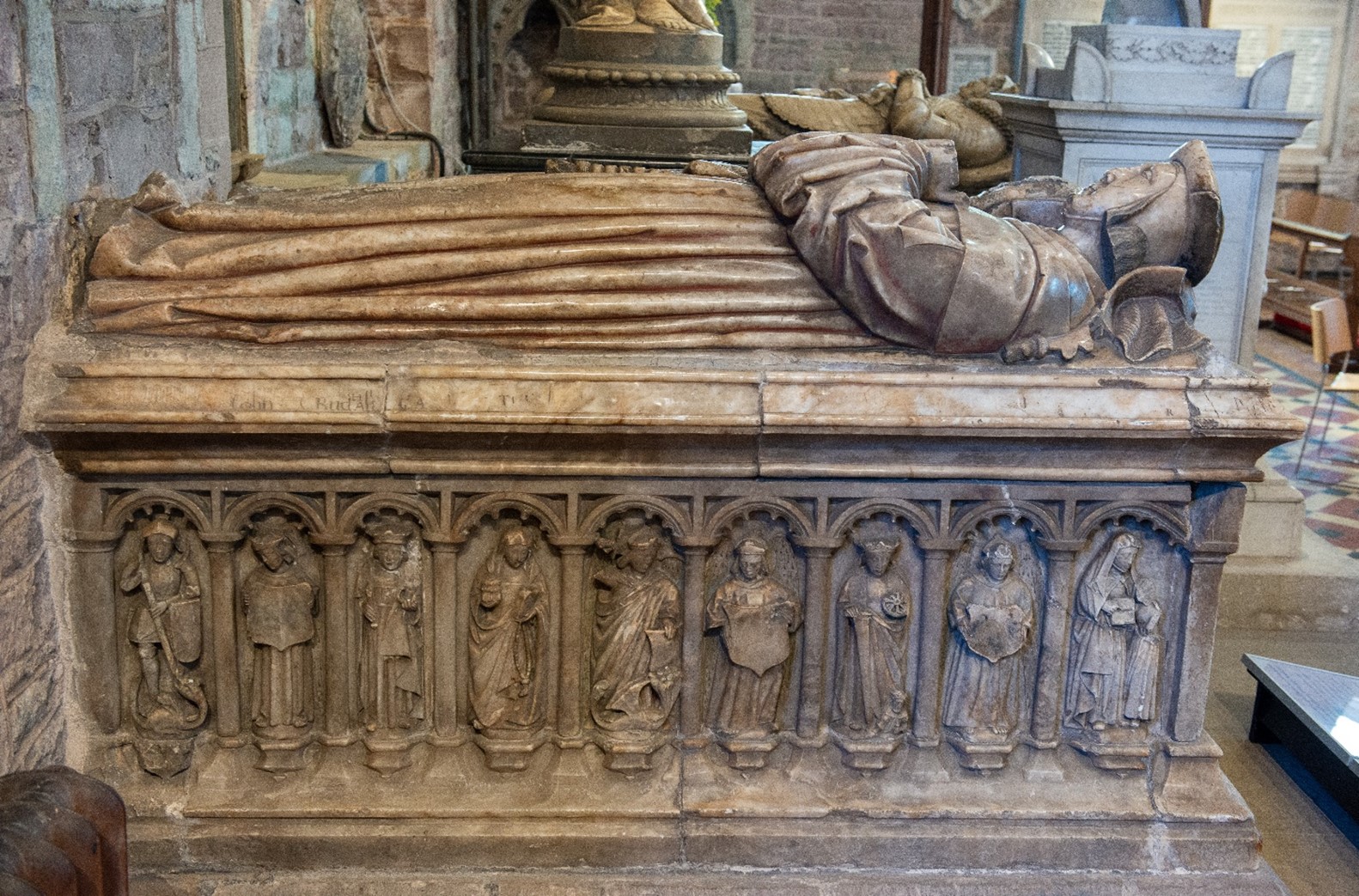
For the most part, the decoration of the tomb’s two long sides is more conventional, with representations of saints, including the family’s patron saint, St. Catherine, and angels, bearing heraldic shields. The exception is another tableau showing William and Anne and their nine children kneeling before the Holy Trinity with, between the secular and the divine, another heraldic shield, no doubt once bearing the arms of Rudhale and Milborne. The whole scheme reflects a deeply conventional piety at the beginning of an age of profound religious change. Beyond this assertion of piety, however, the tomb had another more secular purpose, concealed from the modern viewer by the loss of the paint from the heraldic shields. Those shields were designed to proclaim the serjeant’s connexions among the local gentry, largely achieved through Anne Milborne, who hailed from a more important family than his own, and his family’s consequent arrival among Herefordshire’s leading families. There may also be significance in the representation of the couple’s many children on both the Annunciation and Trinity panels, an expression, perhaps, of the couple’s pride in the fecundity of their marriage.
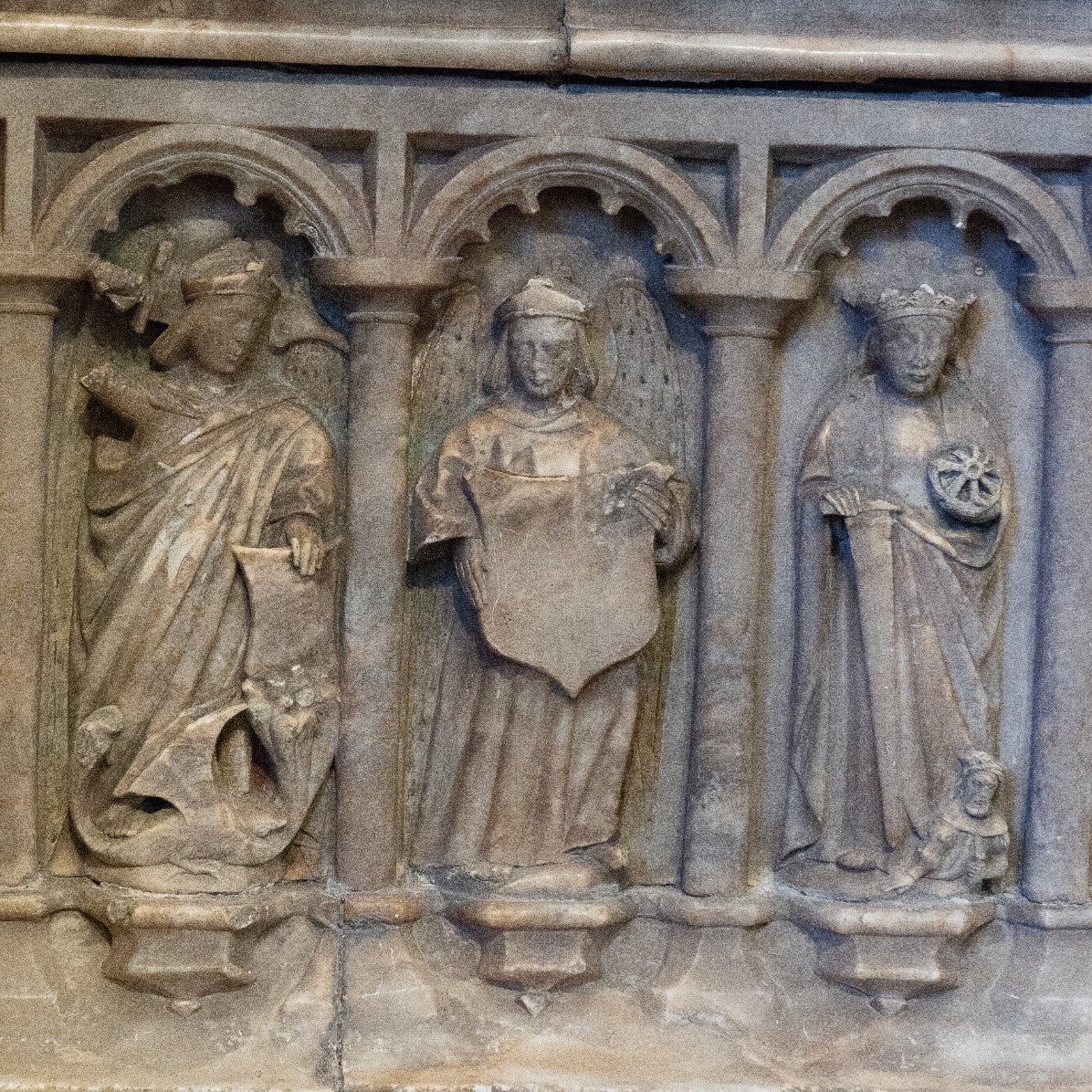
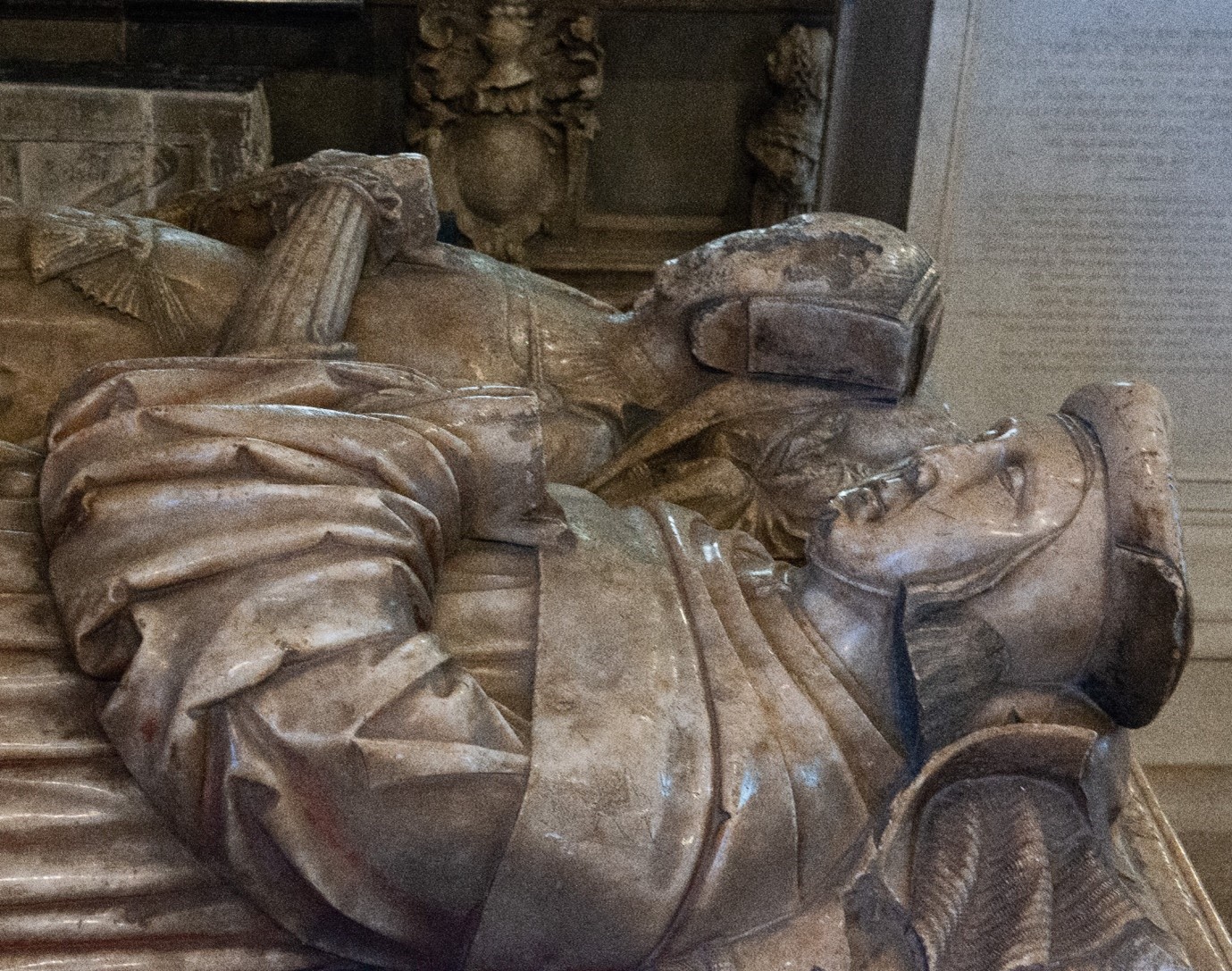
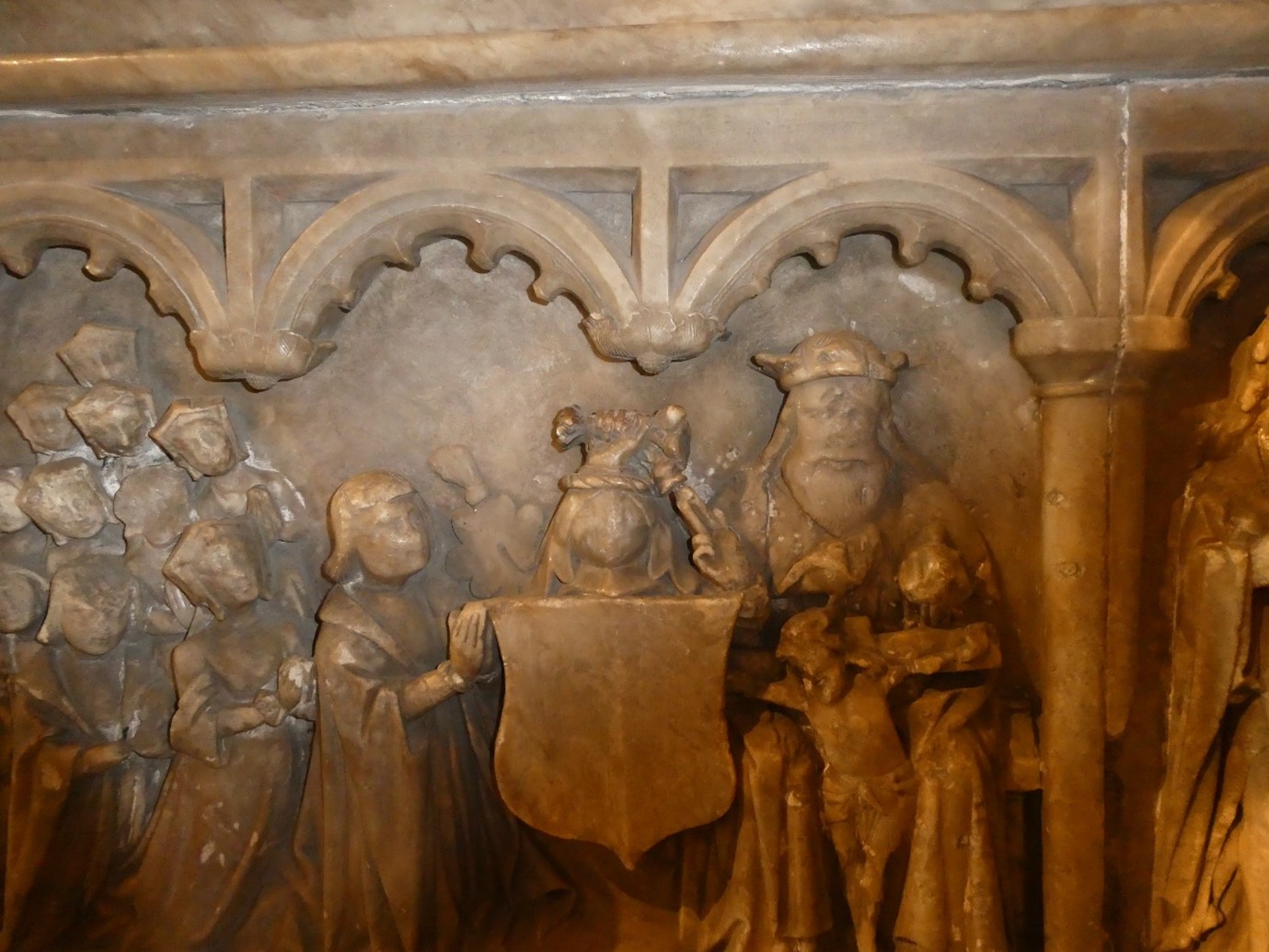
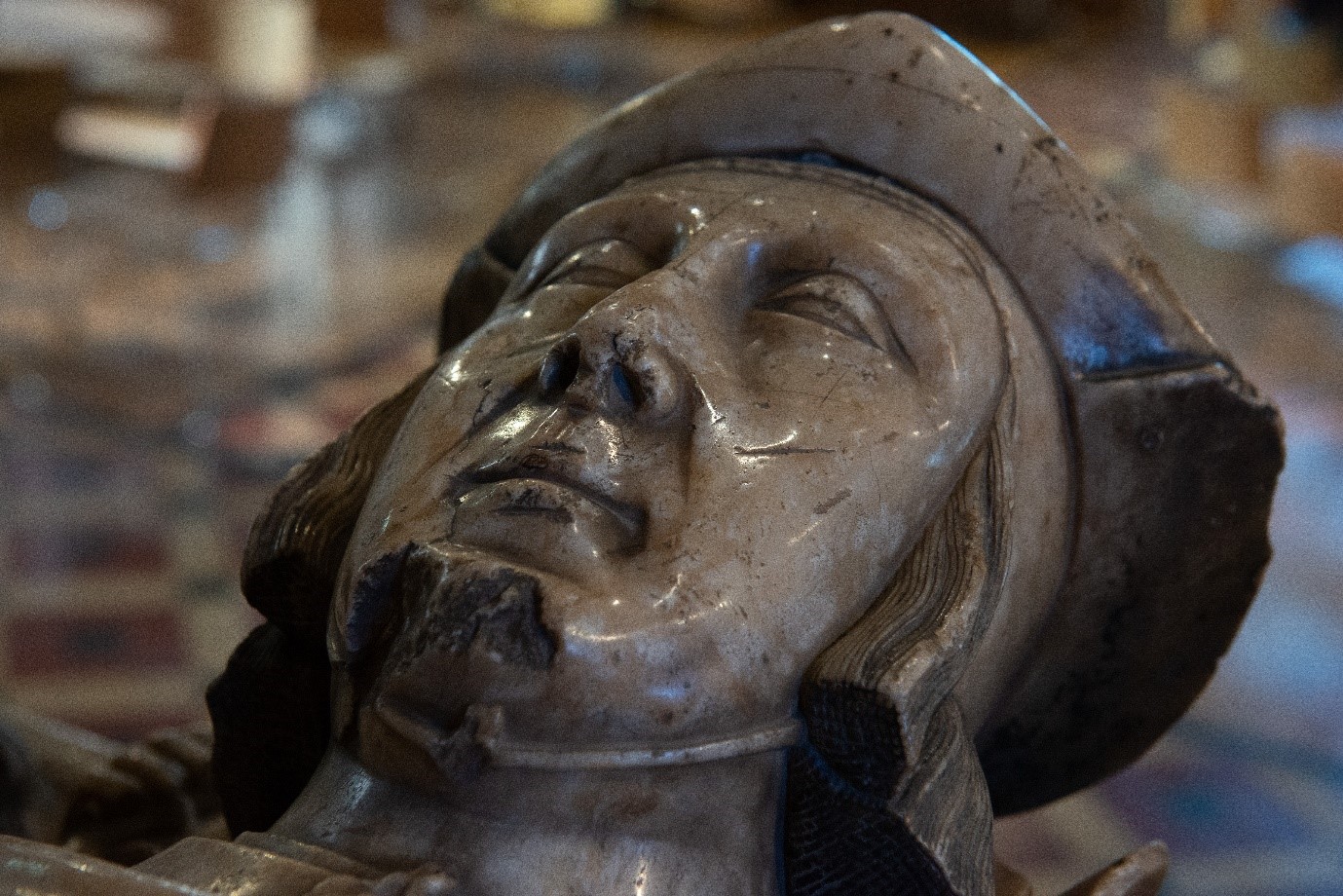
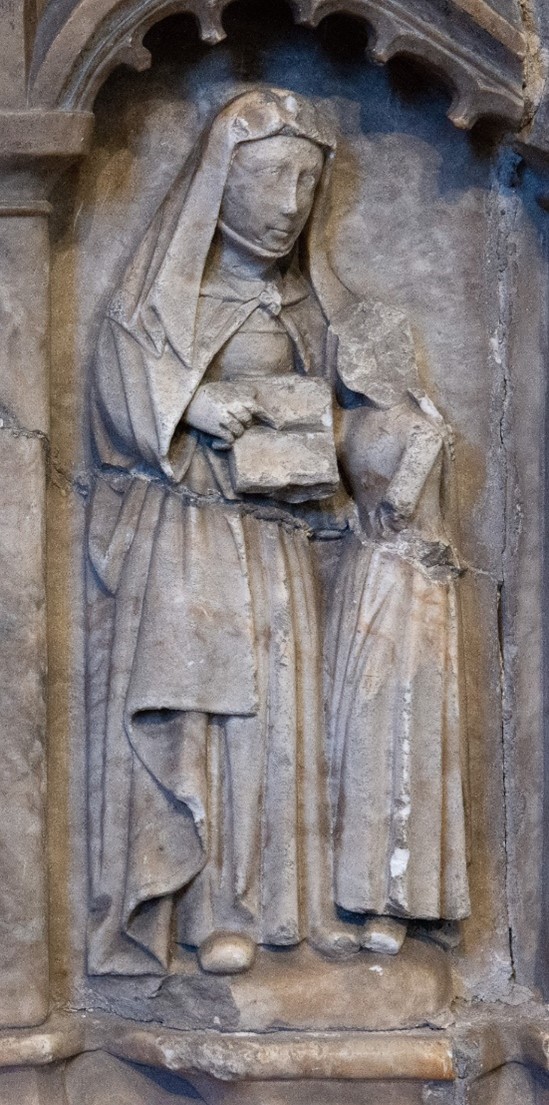
Given the individuality of the tomb, it is tempting to think that its design reflected, at least in part, the wishes of Rudhale himself. Indeed, there is a link between that design and the terms of the will he made only days before his death on 22 March 1530. In its preamble he invokes the prayers of the Virgin Mary and six saints, all of whom have their images on the sides of the tomb. Yet this link is markedly contradicted by the apparent indifference he expressed in the same document to his place of internment. He directed burial, ‘wher soever it shal fortune’ him to die or else where it should please his ‘frendes’. This is hard to explain if he had already commissioned an expensive monument, and it may rather be that it was commissioned by his widow, who survived into the 1540s. The death of their eldest son, John, within a few months of the serjeant, may have given her an additional responsibility for her late husband’s affairs, and it might not be fanciful to suggest that the image of her namesake, St. Anne, mother of the Virgin Mary, teaching her daughter to read, was her choice.
The photographs in this blog were very kindly supplied by Mr. Paul Cummings of Ross-on-Wye, save for that of the Holy Trinity scene, which was taken by my wife, Judith Payling. I am also grateful to Professor Nigel Saul for his advice.
SP
Further reading
N. Saul, English Church Monuments in the Middle Ages (Oxford, 2009)
Revd. J. Tarrant (and others), A History of St. Mary’s Church, Ross-on-Wye
J. Duncumb, Collections Towards the History of Herefordshire, volume III (London, 1882), pp. 123-4.
