
In today’s blog we pay tribute to Professor Robert C. Palmer who’s work has had a large impact on the History of Parliament. Dr Hannes Kleineke, editor of our Commons 1461-1504 project reflects on Professor Palmer’s incredible career.
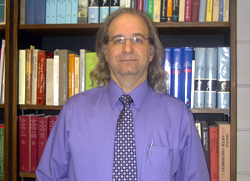
News has reached us of the death at the age of 76 of Professor Robert C. Palmer of the university of Houston, Texas. A specialist in medieval English legal history, Palmer held the Cullen Chair of History and Law at Houston until his retirement. Born in California, Palmer studied at the universities of Oregon and Iowa, and held a number of posts at American and Canadian universities, before being appointed to his chair at Houston in 1987. Palmer’s published work was often ground-breaking, being based on his detailed work on the medieval English legal records, the extent of which particularly at the start of his career both astonished and impressed his contemporaries. His monographs The County Courts of Medieval England (1982) and English Law in the Age of the Black Death (1993) in particular remain essential reading for any student of later medieval England and its governance.
While he never had any direct personal association with the History of Parliament, there can have been few scholars who made such an impact on the work of its medieval sections. In the last 25 years of his life, Palmer developed a project website, the Anglo-American Legal Tradition, which seeks to make the manuscript records of the English law courts accessible to scholars around the world in the form of high-quality digital images.
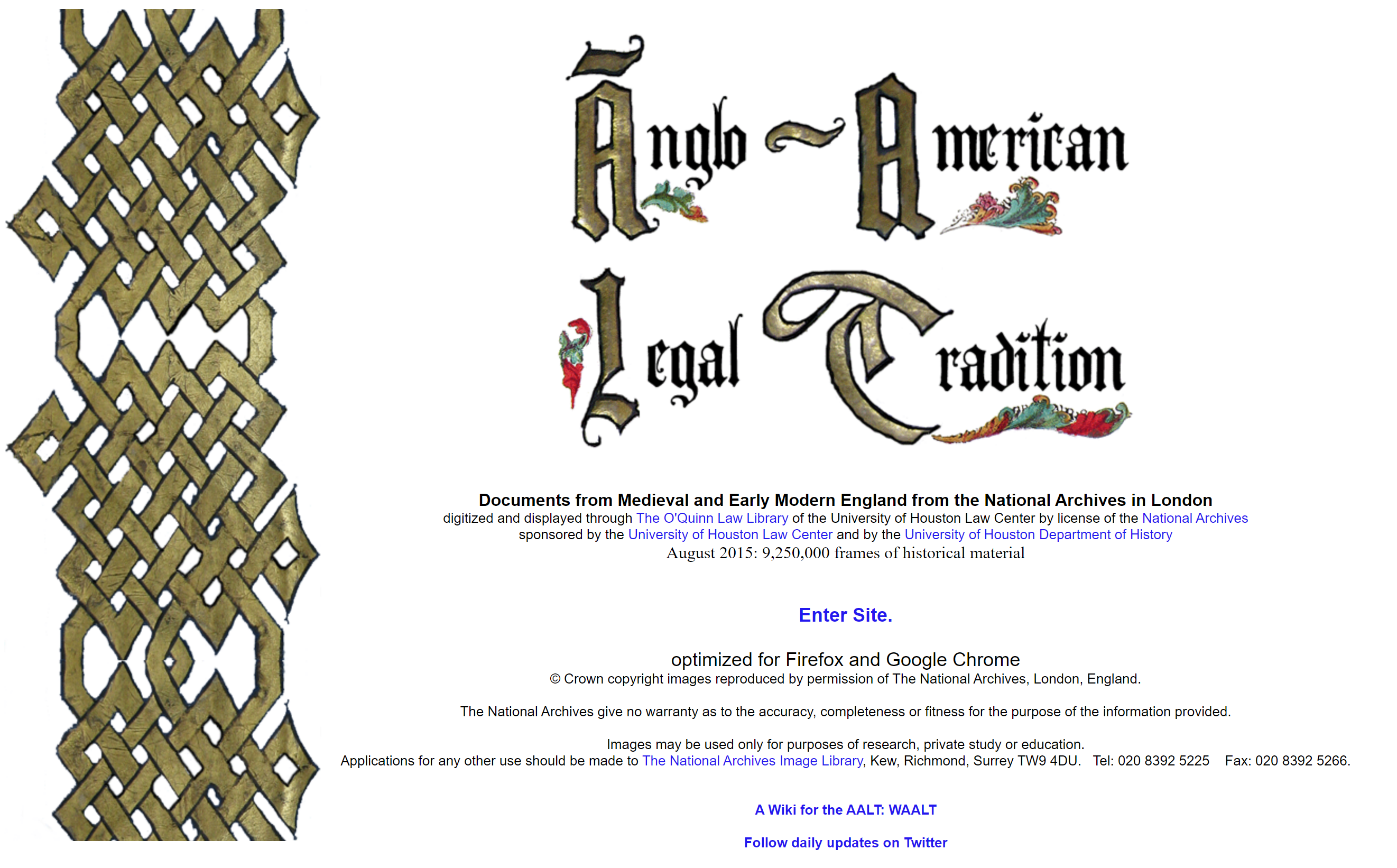
This website quickly became an invaluable resource for the staff working on the History’s volumes for 1422-61, allowing them to trawl plea rolls and related documents in far greater numbers than would have been possible had this invariably entailed trips to the National Archives. But it is fair to say that without the site work on the current 1461-1504 volumes would have largely ground to a halt during the recent pandemic, when archival repositories around the world closed their doors to researchers. Even with the archives once again open, the site continues to be extensively used by the History’s staff, and greatly facilitates the medieval section’s work; it has, in fact, become hard to imagine life without it.
Dr Simon Payling, Senior Research Fellow on the 1461-1504 section recalls:
‘I remember, in the early 1990s, flicking through a CP40 [plea roll of the court of common pleas] in the upstairs room in Chancery Lane, overhearing a discussion between Robert and one of the PRO staff about the cost of photocopying a roll. How far we have come since then.’
At the present day, the period covered by the website extends far into the 17th century, and incorporates literally tens of millions of images, as well as indices and other finding aids. Scholars everywhere owe an enormous debt of gratitude to Professor Palmer for his vision, and the enormous amount of time and energy he continued to dedicate to it right up to the end of his life. He will be sorely missed.
H.K.
