

In the latest post for the Georgian Lords, we welcome Ioannes Chountis de Fabbri from the University of Aberdeen, who considers the importance of horse racing in the formation of the Rockingham administration of 1765.
The structure of mid-eighteenth-century politics was often defined as much by social custom as by constitutional form. What Leslie Mitchell has called the ‘circle of acquaintances’ of the ruling, largely Whig, elite revolved around familiar settings: the Court, the clubs of St James’s, the country house, grand residences of Piccadilly and, not least, the racecourse. (Mitchell, 23) In these arenas powerbrokers met, exchanged intelligence, and frequently determined the fate of ministries.
Horse racing in particular lay at the heart of the intersection between politics and courtly society. One of the clearest examples came with the formation of the 2nd marquess of Rockingham’s first ministry in July 1765, an unlikely coalition negotiated not in the council chamber, but at Newmarket in May and at Ascot in June. Horace Walpole remarked drily that ‘the new ministry was formed at the races’. (Albemarle, i. 199)
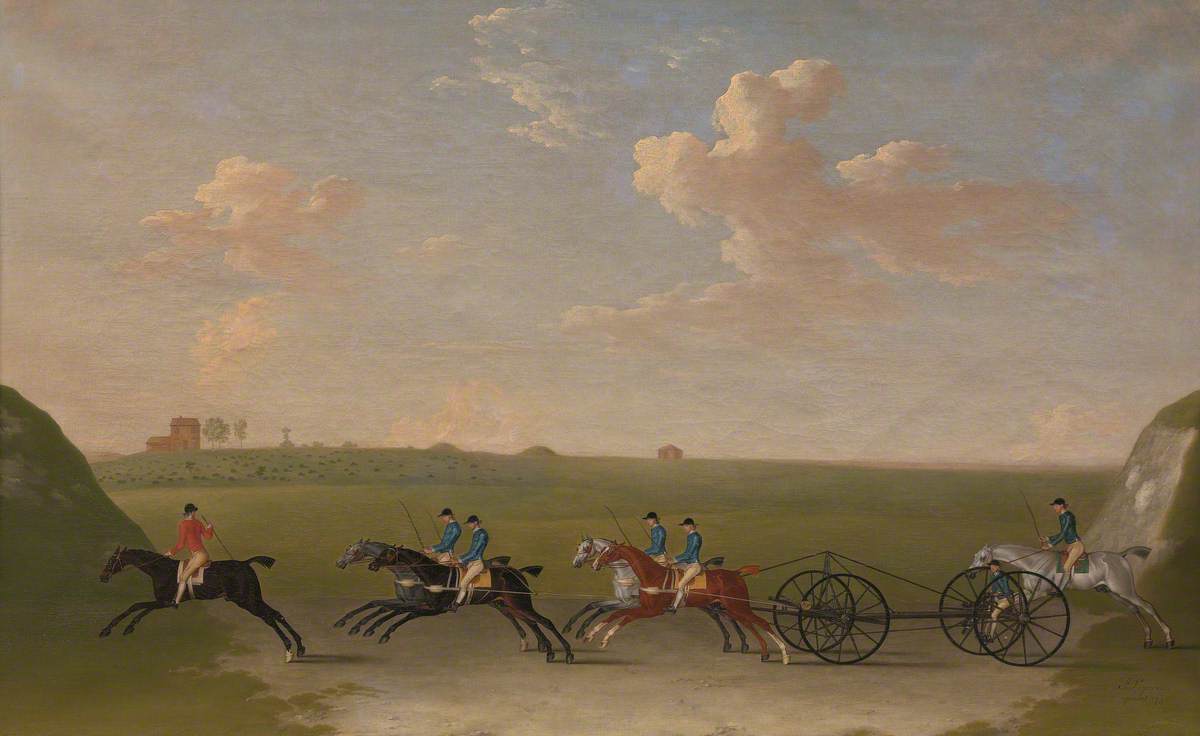
By the spring of 1765, George III was determined to be rid of his overbearing minister, George Grenville, who had been in office since April 1763. The task of taking the pulse of the political nation, fell to the king’s uncle, William Augustus, duke of Cumberland. (Brooke, 88–89)
The choice of alternatives was limited. William Pitt the Elder, still sulking in opposition, twice refused to serve. The veteran duke of Newcastle, nearing 72, was unpalatable to most. A younger generation of Whigs: Henry Bilson Legge, Philip Yorke, earl of Hardwicke, and William Cavendish, 4th duke of Devonshire, had all died in the preceding two years.
Cumberland had toured the great country houses in the summer of 1764, including Chatsworth, Wentworth Woodhouse and Woburn, discovering that the Whigs remained unenthusiastic about a return to power without Pitt. The stalemate seemed unbreakable. Yet the solution would not be found in the names listed in the London Gazette, but in the pages of the Newmarket Calendar.
By the 1750s and 1760s horse racing had become a central ritual of aristocratic and political life. Already favoured by Charles II in the seventeenth century, by the 1740s Newmarket was the undisputed capital of the turf. The Racing Calendar, first published in 1727 by John Cheny, recorded results and pedigrees, turning the turf into a semi-official world of statistics and reputations. Ascot, founded in 1711 by Queen Anne, had by the 1760s become a highlight of the London season, attracting large crowds and royal patronage. (Morton, 56–61) Both courses were more than sporting venues: they were theatres of status, where political alliances were cultivated over wagers, where a minister could be sounded out between heats, and where a successful stable enhanced a nobleman’s standing. As one contemporary put it, ‘the turf is the true parliament of our nobility’. (Lowerson, 14)
By 1765, Rockingham was already a figure of considerable weight within the Whig aristocracy, though not yet tested as a statesman. Born into immense wealth and heir to Wentworth Woodhouse in Yorkshire, he inherited his title in December 1750. In politics he aligned with the ‘Old Corps’ Whigs grouped around Newcastle, and from 1752 served as a gentleman of the Bedchamber to George II and George III, before resigning in 1762 in protest over Newcastle’s dismissal. Contemporaries described him as reserved, upright, and cautious: ‘[his] talents were not brilliant, but his integrity and firmness of purpose were unimpeachable’. (Albemarle, i. 73) Though ‘naturally diffident, he never failed in the discharge of what he considered a public duty’. (i. 74)
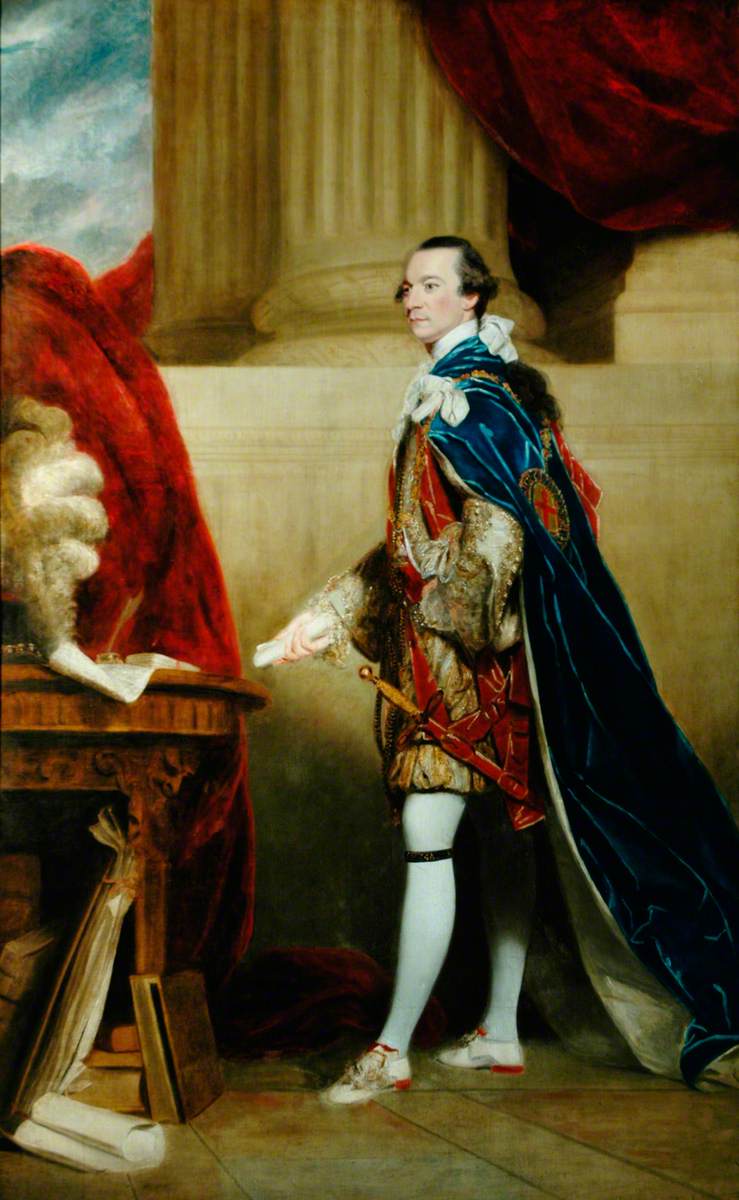
Rockingham’s early military service during the 1745 rebellion had brought him into contact with Cumberland, though he was too young to serve at Culloden. Nevertheless, the brief experience fostered a respect for Cumberland which endured. Their connexion was renewed in later years on the turf. Like Cumberland, Rockingham was a passionate breeder and owner of racehorses, and he became known as ‘the Racing Marquess’. (Albemarle, i. 165)
Cumberland was equally at home on the turf, and in June 1765 he held court at Ascot, where the outlines of a new administration were hammered out. As well as Rockingham, the new ministry was to include Augustus Henry Fitzroy, 3rd duke of Grafton, a great-grandson of Charles II. Not yet 30, Grafton brought youth and royal blood; Rockingham brought wealth, influence, and respectability. Their conversations at Ascot and Newmarket were, as Albemarle noted, ‘held not in the closet, but at the races’. (i. 199)
After the private conversations at Ascot and Newmarket, the decisive moment came at Claremont, Newcastle’s Surrey residence, on 10 June 1765. Gathered there were the ‘Old Corps’, Newcastle, Rockingham, Grafton, and leading allies from the Hardwicke and Devonshire factions to decide whether to enter office and, if so, on what terms. Crucially, Cumberland presided over the discussions. As Albemarle recorded, Cumberland ‘placed before them the situation of the King and pressed upon the leading Whigs the necessity of union if they were to serve with credit and effect’. ( i. 197)
The meeting was animated but uncertain. Pitt’s refusal to serve left the field open, yet no single candidate commanded unanimous enthusiasm. It was Cumberland who resolved the impasse. Having already sounded out Grafton and secured his willingness to serve under Rockingham, he now urged the party to unite behind the young marquess. Newcastle, initially hesitant, yielded when Cumberland assured him that George III would accept Rockingham as a conciliatory figure around whom the Whigs could rally.
The following day, Cumberland carried Rockingham’s name to the king, who accepted Cumberland’s counsel. With royal assent secured, the outlines of the ministry began to take shape.
Rockingham later admitted to Newcastle that he accepted office only reluctantly, ‘from a sense of duty to the King and to the cause’. (Albemarle, i. 207) His modesty stood in contrast to Pitt’s hauteur and Newcastle’s scheming. Pamphleteers and satirists delighted in the horse racing connexion: ‘From Jockeys to Ministers’, they jibed, suggesting the Newmarket Calendar was a better guide to government than the London Gazette.
The Rockingham ministry of 1765 was born out of weakness as much as strength. It was a government of compromise, stitched together by Cumberland’s personal authority and the trust he could command in the convivial world of the turf. Rockingham himself, inexperienced and cautious, owed his elevation less to dazzling ability than to the combination of fortune, birth, and connexions that made him acceptable when others were impossible. Yet the path by which he entered office reminds us how profoundly mid-eighteenth-century politics was embedded in aristocratic sociability. Walpole dismissed him as ‘a very insignificant young man’ (Albemarle, i. 218), while Edward Gibbon sneered that ‘the nation was governed by the jockey club’ (i. 220). In the eyes of many contemporaries, he remained ‘the Racing Marquess’, proof that what happened on the turf could have consequences far beyond the paddock. After Rockingham’s resignation in 1766, the independent Member, Velters Cornewall, quipped that he was ‘a jockey, but a good and high-bred racer, indeed.’
ICdeF
Further Reading
Albemarle, Memoirs of the Marquis of Rockingham and his Contemporaries (1852)
John Brooke, King George III (1972)
John Lowerson, Sport and the English Middle Classes (1993)
L.G. Mitchell, The Whig World (2005)
Charles Morton, History of Horse Racing (2004)

