

Today (6 August) marks the anniversary of both the birth and death of the Irish MP Arthur Wills Blundell Sandys Trumbull Windsor Hill, Earl of Hillsborough (and from 1845 Marquess of Downshire). Hillsborough‘s repeated physical altercations implicated him in two deaths and earned him a ferocious reputation, as this article from our House of Commons, 1832-1945 project explains.
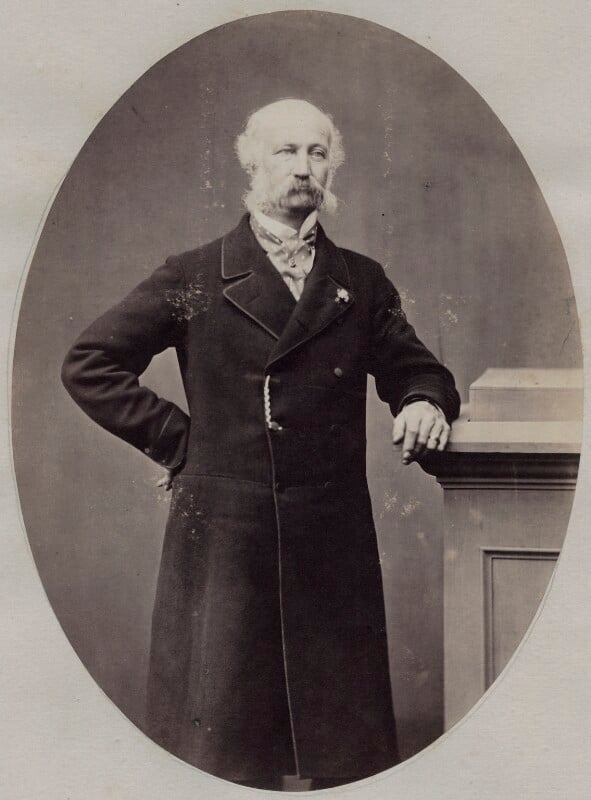
Hillsborough’s family (marquesses of Downshire) possessed large estates and extensive political influence in the north of Ireland, but made limited contributions to affairs of state. The 1st Marquess of Downshire’s record as a secretary of state for the colonies, 1768-72, was such that ‘no historian has had a good word to say’ for him. Hillsborough – the eldest son of the 3rd Marquess – was no exception to the family tradition. Yet in representing County Down from 1836 to 1845 he provided solid support for Sir Robert Peel before breaking with him over the Maynooth grant and the repeal of the corn laws.
From youth Hillsborough was reputed to possess ‘immense physical strength’. While studying at Oxford University in 1830 he got involved in ‘a pugilistic affray’ with two local boatmen. One of the pair, whom Hillsborough ‘easily disposed of’ due to his ‘superior science’ in fighting, was said to have died as a result of the bout. Jane Welsh Carlyle (wife of the historian Thomas Carlyle) later recorded that Hillsborough ‘is awfully strong, and his strokes tell, as he doesn’t expect!’
A few months later, in February 1831, Hillsborough accidently caused the death of Lord Conyers Osborne, the favourite son of the Duke of Leeds. After the two young men had ‘a slight rencontre’ in the quadrangle of Christ Church, Oxford, Osborne collapsed and died, the cause of his death being attributed by the Regius Professor of Anatomy to ‘an effusion of blood upon the brain’. The coroner’s verdict of death by ‘chance-medley’ satisfied Osborne’s father, and there the matter ended.
Osborne’s death left Hillsborough ‘in a state of mind approaching distraction’, but this did not prevent him entering the fray at a ‘ferocious’ election riot at Oxford just three months later. With ‘his gigantic arm’ he ‘knocked the mob about on either side of him’ in order to save a fellow undergraduate who ‘had been hung to a lamp-post by the strings of his gown!’ Nevertheless, in 1836 he was described by the king’s aide-de-camp, General William Dyott, as quiet, ‘unassuming’ and ‘gentlemanlike’, while Mrs. Carlyle later characterised him as ‘a dear, good kindhearted Savage of a Man!’
In August 1836 Hillsborough replaced his uncle, Lord Arthur Moyses Hill, as MP for County Down, and that November demonstrated his combative spirit at Banbridge by thanking Daniel O’Connell for giving him the opportunity to fling his ‘contemptuous defiance in his teeth’. A silent Member, Hillsborough rarely visited the division lobbies, but was a staunch Protectionist, arguing that in Ireland there was ‘no nice line of separation’ between the agricultural and the manufacturing interest, as the weaver and the farmer were ‘frequently combined in one person’. In April 1845 Hillsborough left the Commons upon succeeding as 4th Marquess of Downshire.
Generally regarded as a benevolent landlord who treated his Catholic and Protestant tenants even-handedly, he lived mainly in England, but maintained a strong electoral interest in County Down. His English estates consisted of 5,500 acres in Berkshire and Suffolk. When in Ireland he resided ‘in regal state’ at Hillsborough, the owner of 115,000 acres in five Irish counties worth a total of £72,500 a year. He remained a staunch Protectionist, using his position as president of the Royal Agricultural Society to call for ‘a war … on the part of the farmers against the Manchester cotton manufacturers’. He became one of the Conservative leader Lord Derby’s closest confidants among the aristocracy.
In 1860 his pugnacious reputation caught up with him when it was alleged that he had used his ‘Herculean strength’ to throw the skipper of his yacht overboard after finding the ‘rough, worthy sailor’ kneeling by the side of his seventeen-year-old daughter. Rumours that he was ‘being brought home to be tried by the Peers’ forced Downshire to issue a public rebuttal, in which he promised that if he ever caught the ‘scoundrel’ who had circulated the story, he would ‘throw him overboard’. Whether or not the matter ended as Jane Carlyle predicted it might, ‘in Lord Downshire giving somebody a good thrashing!’, is not known.
Having avoided further scandal, Downshire died in August 1868 at Herne Bay, Kent. His correspondence is held at the Public Record Office of Northern Ireland, where the Downshire Papers form a major historical archive of nineteenth-century estate management.
This is an updated version of an article originally published on the Victorian Commons website on 21 December 2015, written by Dr Stephen Ball.
