

The Speaker of the House of Commons is a remarkably familiar figure to television audiences around the world. Anyone viewing budget debates, though, will notice a different person occupying the Speaker’s chair: the ‘chairman of ways and means’. In this new ‘explainer’ article, Dr Philip Salmon examines the history of this post, currently held by Nus Ghani MP. During the 19th century, as he explains, this key position acquired a whole raft of new functions and responsibilities, evolving into its recognisably modern form.
The history of this role – essentially a ‘chair’ of all committees that were not ‘select’ but included all MPs – can be traced to the 17th century, when Parliament’s feuds with the monarch created a need for committees overseeing the nation’s expenditure (supply) and taxation (ways and means) to be chaired by someone independent of the Speaker and not too close to the monarch. The ‘chair of supply and ways and means’, as they became known, presided over the Commons when chancellors of the exchequer outlined their spending, funding and borrowing proposals, including the issue of exchequer bills, in what was effectively a ‘budget’. They also chaired all other committees ‘of the whole House’ and were responsible for sending messages and bills to the House of Lords.
By the end of the 18th century the wars with America and France had created unprecedented challenges for the nation’s finances, elevating the management of these committees to a new significance. The position attracted a salary for the first time in 1800, when the Speaker Henry Addington, soon to become prime minister, helped his cash-strapped brother-in-law Charles Bragge secure an annual income of £1,200 once in the post.
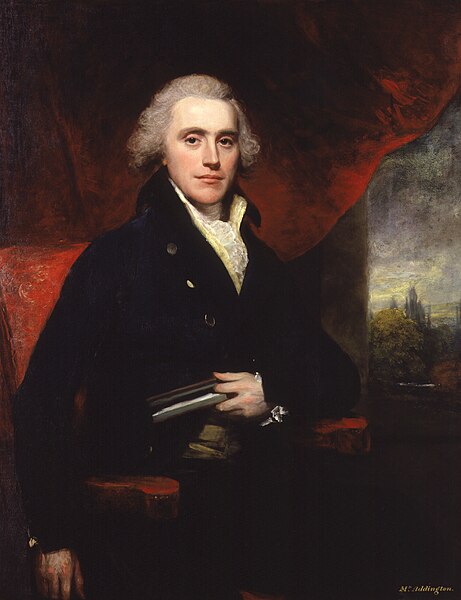
Partisan and family-based nominations like this were not unusual. Following the introduction of salaries, impecunity quickly began to feature alongside nepotism in deciding many appointments. The selection process in the Commons, like that of the Speaker, occasionally became highly charged, with ministers and opposition backing different candidates. The disputes over the election of Stephen Rumbold Lushington as chairman in 1810, or the reappointment in 1826 of James Brogden following his involvement in a financial scandal, were overtly partisan. Nor were chairs always as ‘impartial’ or ‘non-partisan’ in carrying out their duties as they officially claimed to be. Lushington went out of his way to try and promote his ‘character for impartiality’, but this did not stop him expressing his Ultra-Protestant hostility to Catholic emancipation while chairing Commons committees on the issue.
Victorian changes
One of the most striking expansions in the role of the chairman involved private bills and legislation. The latest edition of How Parliament Works notes that the ‘vast majority’ of laws passed by Parliament ‘and by far the more important, are public’. Throughout the 19th and early 20th century, however, exactly the opposite was true. Not only did ‘private’ acts of Parliament (not to be confused with private members’ bills) completely transform the physical environment and create Britain’s modern infrastructure – legalising the construction of railways, canals, tramways, docks, sewers, roads, bridges, museums, parks, and essential utilities such as water, gas, and electricity (to name but a few) – but they also outnumbered ‘public’ acts by a factor of more than two to one well into the 20th century (see figure 1 below).

By 1840 the business of private bills, the activity that many diligent Victorian MPs spent the bulk of their time on, was in urgent need of reform. The Lords had already begun to streamline their private bill procedures, leaving the Commons to catch up. In 1840 Ralph Bernal, chairman of ways and means from 1831 until 1841, agreed to take charge of all unopposed private bills, a role inherited and then expanded by his successor Thomas Greene, whose salary was accordingly increased to £1,500.
The appointment of Greene, known for his expertise on procedure and his impartiality, marked an important turning point in the professionalisation and expansion of the chairman’s role. In 1847 he assumed management of all private bills, a huge task given the railway boom of the 1840s, and one which continued to grow as the procedures regulating private legislation evolved. In 1865 the chairman also took over responsibility for presiding over the court of referees, the committee of MPs responsible for deciding the rights of petitioners to challenge private bills.

Source: The Graphic, 24 April 1880, p. 437
Another dramatic expansion of the chairman’s responsibilities occurred in 1853, when resolutions were passed enabling the postholder to stand in for the Speaker during temporary absences. This backup role as a ‘deputy Speaker’ was subsequently formally enshrined in the 1855 Deputy Speaker Act and is still in force today.
These additional duties in the second half of the century placed increasing demands on the individuals appointed as chairmen, who had to wait until 1902 to get their own deputy. Average tenure in the post was nearly six years between 1801 and 1852, with James Brodgen and Ralph Bernal clocking up an impressive thirteen and fifteen years respectively. By contrast, the longest length of service between 1852 and 1895 was only seven years, with the average tenure lasting just over three and a half years. Only one chairman in the first half of the 19th century received a peerage, but five were ennobled for their work in the second half, reflecting the growing importance of this role in the practical operation of Parliament.
19th century chairmen
Early 19th century appointees included men such as Henry Alexander, in post from 1801-6. He effectively inherited the role as a sop to the new Irish MPs, having served in the same post in the Irish House of Commons before its abolition. ‘Not the best of all possible chairmen’, he was often absent. His stand-in and successor Benjamin Hobhouse, meanwhile, was a Bristol merchant and shareholder in the Whitbread brewing dynasty, who had purchased his seat in Parliament for £4,000. He only lasted a year as a full-time chair before his health gave out.
Other postholders included Richard Wharton, unseated as an MP for bribing freeman voters in Durham in 1804; Stephen Lushington, who had purchased a seat in Parliament to help get his father-in-law General Harris a peerage; and Robert Peel’s nominee and close friend Sir Alexander Grant, the owner of 700 enslaved people in Jamaica, who famously tried to buy the ‘pocket borough’ of Gatton for the astonishing sum of £130,000 in 1830. The career of Grant’s predecessor James Brodgen, a financial speculator, ended in public disgrace. Having served as chair for thirteen years (1813-26), he was forced to quit after being embroiled in a financial scandal involving fraudulent dividends in one of his mining companies.
Later appointments included the Whig nominee Ralph Bernal, in post for fifteen years, 1831-41 and 1847-52. It was on his watch, the longest of the 19th century, that the position began to evolve into its more recognisably modern form. Also a slaveowner, Bernal narrowly missed out on becoming the Whig candidate for the Speakership in 1835, in part because of his noisy complaints about ‘destitution’ for slave owners following the abolition of slavery. Bernal’s procedural expertise, though, was widely respected and had a profound influence on the calibre of those selected to succeed him. His tendency to fall asleep, however, made him an easy target for satirists (see below).

Many of the ensuing postholders in the 19th century served as ministers at some point, reflecting a steady transition to talent-based appointments. Henry Fitzroy held junior office under Aberdeen before his appointment as chair in 1855. No-one seemed to notice the irony of him being a four-times great-grandson of Charles II. Like Bernal he also came close to being nominated for the Speakership in 1857. John George Dodson, who served a seven year stint from 1865-72, subsequently held senior ministerial posts under Gladstone and was rewarded with a peerage in 1884. Henry Cecil Raikes, the chair of ways and means from 1874 until 1880, became postmaster-general under Lord Salisbury. His lasting claim to fame, however, was to be recorded by an early Edison phonograph in 1888, making him one of the first Victorian politicians whose voice can be heard today. (Click here to listen)

The intellectual calibre increasingly required for the post was ultimately reflected in the appointment of two noted academics, both of whom ended up with a peerage. The Indian-born Lyon Playfair, a professor of chemistry and pioneer of modern encryption techniques, served from 1880-83, before becoming a Liberal whip in the House of Lords as Baron Playfair. Leonard Courtney, a leading advocate of proportional representation and author of books on the UK constitution, was in post from 1886 until 1893. His extraordinary efficiency also marked him out for the Speakership in 1895, only for failing eyesight to scupper his claims.
The long-anticipated transition from chair of ways and means to Speaker was finally achieved by James Lowther. In post as chair from 1895 to 1905, he went on to become the longest serving Speaker in modern history, from 1905 until 1921, when he was elevated to the Lords as Viscount Ullswater.
PS
