
Ahead of next Tuesday’s Parliaments, Politics and People seminar, we hear from Dr Philip Aylett. On 25 February, Philip will discuss ‘Scrutinising Wartime Britain: The Commons Committees on National Expenditure 1917-20 and 1939-45’.
The seminar takes place on 25 February 2025, between 5:30 and 6.30 p.m. It will be hosted online via Zoom. Details of how to join the discussion are available here.
The two world wars of the 20th century were – perhaps surprisingly – something of a golden age for select committee scrutiny in the House of Commons.
A committee on national expenditure (CNE), to ‘examine the current expenditure defrayed out of moneys provided by Parliament and to report what, if any, economies consistent with the execution of the policy decided by the government may be effected therein’, was first appointed in 1917. It published its final report in 1920. A committee with a similar remit was appointed between 1939 and 1945.
The difference between the activities of these committees and their unambitious peacetime equivalents in the early twentieth century was stark.
In particular, CNEs in both wars did much more than simply report ‘economies’ (potential savings in public expenditure). They made a number of recommendations on the administration and management of departments and, on occasions, touched on matters of policy. This was unusual at a time when the prevailing principle was that parliamentary discussion of policy should only take place openly in the Commons, where ministers could respond. Committees, often meeting behind closed doors, were not seen as appropriate mechanisms for policy debate.
The establishment of the World War I committee may have been prompted partly by a series of military disasters, including defeats in Mesopotamia and the Dardanelles, in the middle years of the war. Public disquiet about the conduct of the war extended from military matters to questions about the fitness of the war machine as a whole.
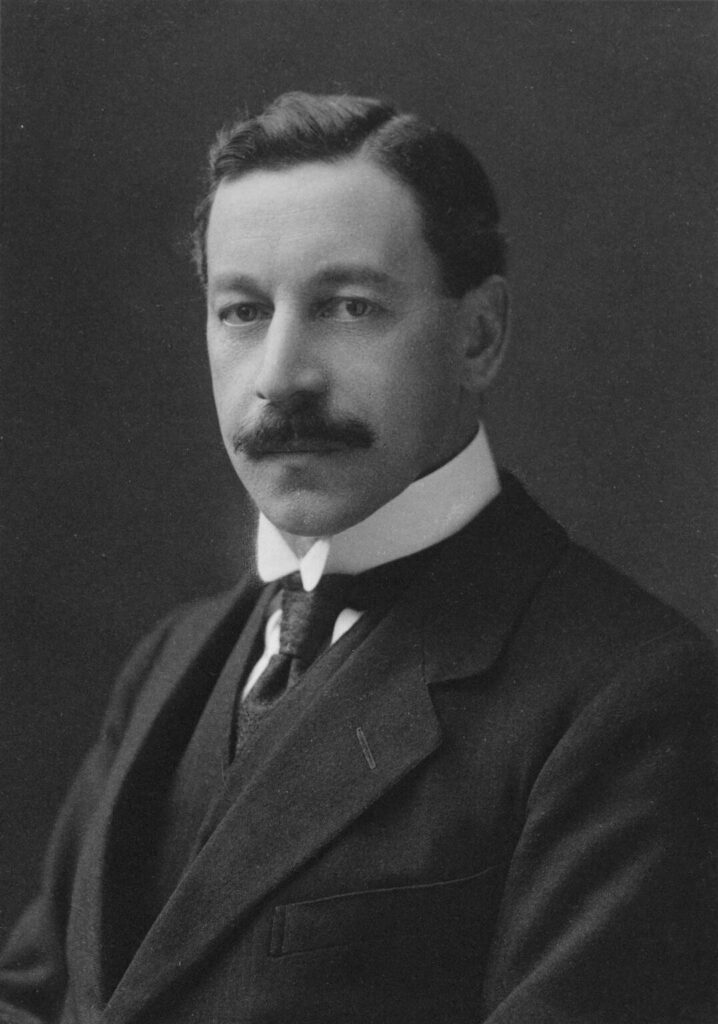
The CNE was appointed in August 1917, with the highly experienced former Minister Herbert Samuel in the chair. He was supported by civil servants seconded from ministries, who acted as secretaries to sub-committees. This structure of sub-committees allowed each to focus on a small group of departments – specialisation which contributed to the effectiveness of the CNE.
The CNE worked hard to cover the field of government activity, examining no fewer than 48 departments and sub-departments and holding a total of 265 meetings in its first year alone. Reports covered a wide range of government activity, from the war office to food production. An earlier experiment with an equivalent estimates committee between 1912 and 1914 had been nothing like as productive.
In the early autumn of 1917 the Committee visited the Front, where they took evidence from Sir Douglas Haig and other senior commanders. The CNE’s first report included a radical recommendation which must have been unwelcome to Haig. This was that the Imperial General Staff, ‘the advisers of His Majesty’s Government on all matters of military operations’, should be ‘required to take into close and constant consideration the comparative cost of alternative proposals before reaching their conclusions’. This was not, as far as we know, ever implemented.
The CNE was also bold in challenging the work of Winston Churchill as minister of munitions. The same first report of 1917 accused the ministry of ‘very serious instances of lack of financial control’. Churchill reacted strongly to the criticism, complaining in the Commons in April 1918 that it was unfair and selective in its conclusions. But the committee continued to attack the munitions ministry, and others where waste and disorganisation were evident. The press duly took notice.
The committee worked on for the rest of the war and a short time into peace, examining not just wartime spending but permanent features of the financial landscape such as the form of the spending estimates presented to the Commons.
But when peace came, the supporting civil servants went back to their home departments. And the focus of financial control moved away from the Commons. In the immediate postwar years there was growing anxiety about the cost of government, but in Whitehall there was a sense that the Commons and its committees should no longer be central to inquiring into it. The Geddes committee, which effectively wielded the eponymous and infamous axe to public spending in 1921 and 1922, included just one MP, Sir Eric Geddes, a former transport minister, and four senior business figures.
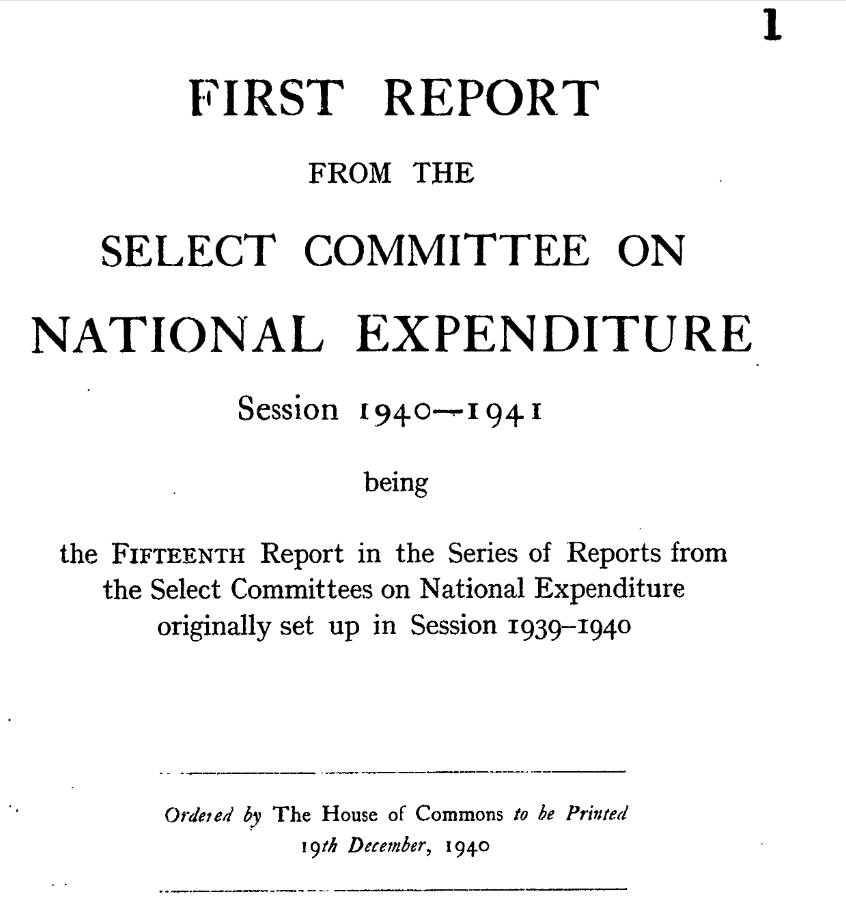
In the period between the wars, the Commons apparently lost interest in the potential of committees to seek economies and improve administration. There was a Commons estimates committee between 1921 and 1939, but despite a membership numbering up to 30, it did not normally appoint sub-committees. This unwieldy body was generally unambitious and very rarely touched on policy.
But the start of World War II prompted the appointment of a new CNE. Again, the crucial decision was taken to work largely through sub-committees. Civil servants were again seconded – the WWII CNE had a substantial staff of 11. There was very strong ministerial support, with Churchill, first lord of the admiralty, saying he was ‘entirely at the disposal’ of the committee in case of any difficulty. Clement Attlee, lord privy seal, welcomed the committee as doing ‘work of national importance.’ Ministers generally appreciated the work of a committee that could keep the vast machinery of war production and supply on its toes.
Emboldened by this, CNE sub-committees travelled extensively and made some radical recommendations. They considered issues as varied as weapons production, hours of work in munitions factories, food supplies, naval dockyards and the lack of coordination between the public relations departments of the various services.
As was the case in WWI, the CNE in the WWII was lucky in its chairman. Sir John Wardlaw-Milne, Tory MP for Kidderminster, was highly energetic in pursuing inefficiencies. But he was also a highly effective critic of the general conduct of the war, being hailed by the Manchester Guardian in May 1942 as having a ‘position of much influence in the House of Commons’.
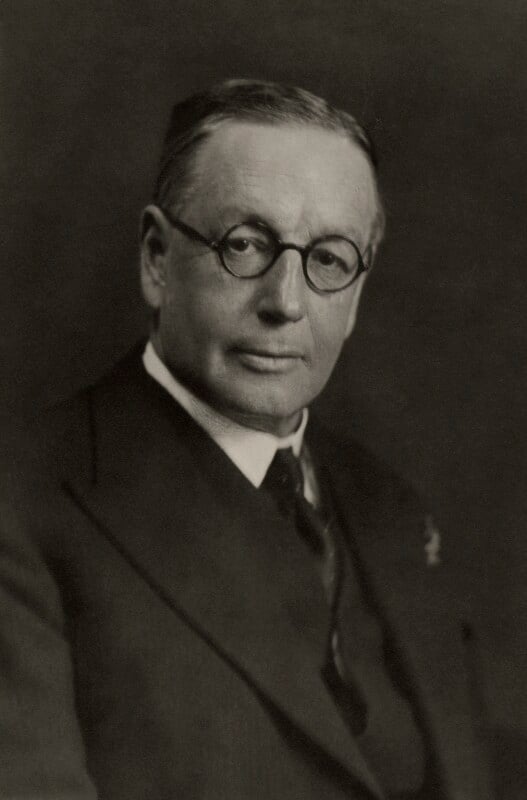
The fall of the Libyan city of Tobruk to Axis forces in June 1942 crystallised a mood of dissatisfaction with the Government, and on 1 July Wardlaw-Milne moved that the Commons had ‘no confidence in the central direction of the war.’ His role as Chairman of the CNE seems to have given him the confidence to mount a general attack on the government’s conduct of the war. Wardlaw-Milne bungled, however, in advocating the appointment of the Duke of Gloucester as minister of defence. Gloucester entertained little respect among MPs and the result was laughter on the benches and the end of any chance of a government defeat on this motion.
Nevertheless, the CNE continued to cause concerns in Whitehall. Sir John Anderson, Lord President of the Council, was outraged in April 1943 that the committee had taken evidence from ‘a subordinate official without the knowledge of the department concerned’. But in July the same year, Anderson, having had discussions with the Chairman of the CNE, accepted the right of the committee to call non-departmental witnesses without consulting the relevant department, and even to attend weapons trials.
Despite, and perhaps because of, this level of influence and access, the CNE did not long survive the end of the war. As in 1919, the seconded civil servants went back to the ministries. The staff of the post-1945 estimates committee was half that of the CNE, and it had difficulty in taking evidence from non-departmental bodies and travelling abroad for many years after the war. There was little strengthening of the Commons’ machinery of scrutiny until the advent of specialised committees in the mid-1960s.
The CNEs stood out from the generally feeble scrutiny committees of the first half of the twentieth century because they had confident leadership, a measure of support from ministries and the access and resources to do the job. They enjoyed a high profile in the press and seemingly among the public. But when the support of Whitehall, both political and technical, was withdrawn, the committees could not continue. For parliamentary scrutiny to be consistently effective, the consent of the scrutinised was, and is, vital.
PA
Philip’s seminar takes place on 25 February 2025, between 5:30 and 6.30 p.m. It will be hosted online via Zoom. Details of how to join the discussion are available here.
