

Continuing her series on the 1883 Corrupt Practices Act, Dr Kathryn Rix looks at its impact on electioneering, focusing on the November 1883 York by-election, which was the first parliamentary election held in England under the Act’s terms.
The 1883 Corrupt and Illegal Practices Prevention Act, a landmark reform aimed at tackling the corruption and expense of elections, received royal assent on 25 August 1883, the final day of the parliamentary session. This complex legislation, which laid down stringent rules on how much candidates could spend at elections and what they could spend it on, had been debated in the Commons over the past three years.
It had initially been proposed that the Act would come into force on 1 September 1883, but this would have left little time for those involved with elections to familiarise themselves with its contents. While Sir Richard Cross, the Conservative front bench spokesperson on the bill, suggested 1 January 1884 as a suitable date, the Liberal minister responsible for the bill, Sir Henry James, insisted that the Act must be in operation before that year’s municipal elections, to which it also applied, and 15 October 1883 was selected as the start date. Backing this, John Gorst, formerly the Conservative party’s chief agent, pointed out that the Ballot Act, which was ‘full of most novel and difficult provisions’, had been in force as soon as it passed. His claim that the first parliamentary by-elections using the ballot had been ‘conducted … without a single hitch or mistake’ overlooked some of the difficulties experienced at the 1872 Pontefract by-election. It was, however, a reminder of the speed at which new election procedures had previously been adopted.
The first parliamentary by-election held under the 1883 Act’s rules was in Ireland, where polling for the Limerick City contest took place on 16 November 1883. Newspaper reports suggested that the election was ‘the quietest ever remembered in Limerick’, with ‘a total absence of excitement’. The Act’s spending restrictions had a visible impact, with no party colours (such as rosettes or banners) on display and no cabs being hired to transport voters to the poll.
A few days later, on 22 November 1883, polling took place at the first English parliamentary by-election following the Act, at York. This contest, which saw one of York’s parliamentary seats change hands from the Liberals to the Conservatives by the narrow majority of just 21 votes, generated considerable interest. Just as election agents from across the country had flocked to Pontefract in 1872 to witness the Ballot Act’s impact, outside observers came to York to gain insights into the workings of the 1883 Act. Among them was George Croxden Powell, a Liberal party agent from South-West Lancashire. He was the honorary secretary of a new organisation, the Liberal Secretaries and Agents Association, founded the previous year to support those who took up political agency as a profession. He also attended the second English by-election under the Act, at Ipswich in December 1883, and shared his experiences of both contests with fellow party activists at a conference on the Act organised by the London and Counties Liberal Union.

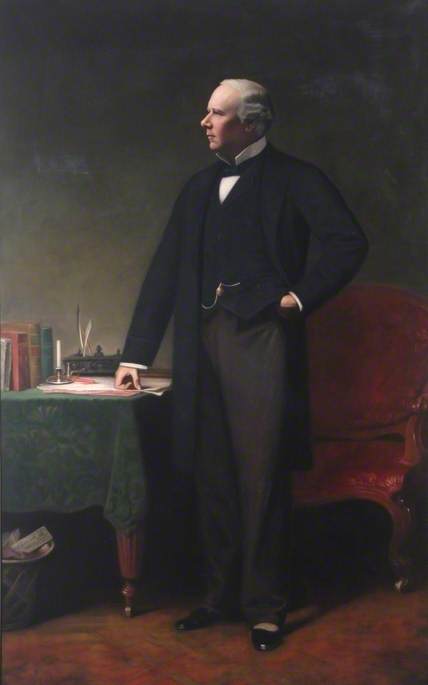
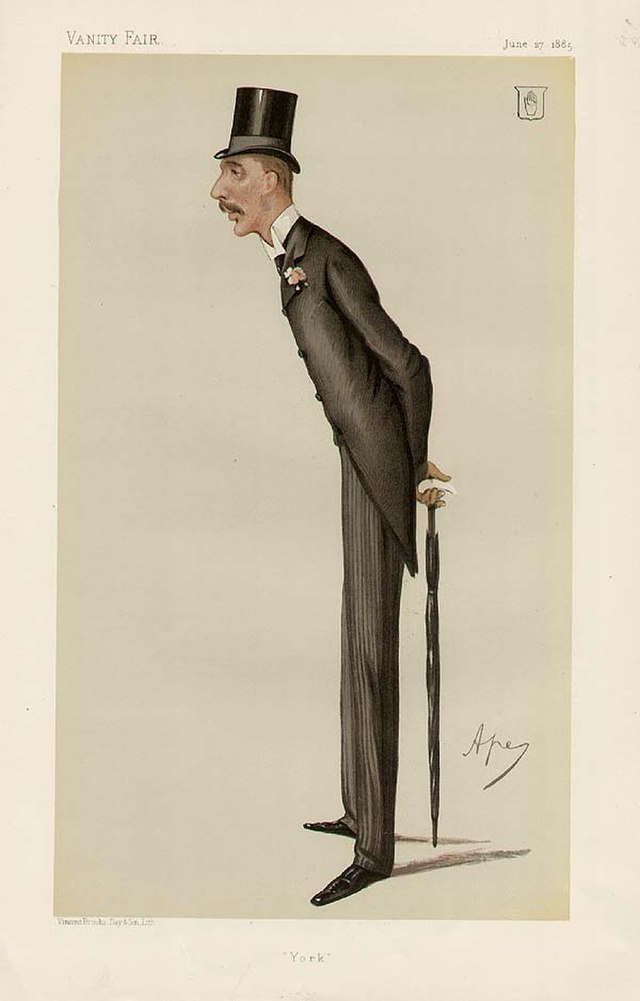
Unlike the Limerick by-election, York saw ‘more activity and excitement than might have been anticipated under the Purity Act’, as some newspaper reports dubbed the 1883 reform. Party colours were widely worn by the supporters of the rival candidates, Frank Lockwood (Liberal) and Sir Frederick Milner (Conservative), with one Tory-supporting lady even dressing her dog in a blue velvet jacket. While candidates were not allowed to pay for the conveyance of voters to the poll, party supporters lent their carriages to transport electors, and York’s Conservatives were felt to have the advantage in this respect.
In addition to press reports, an article written by the Liberal agent at York, E. T. Wilkinson, provided an invaluable picture of the Act’s impact on electioneering. He declared its limits on election spending to be ‘an inspiration of genius which ought to immortalise its author’, explaining that ‘other remedies attack the branches; this goes to the root of the evil’. With York having 11,387 registered voters, each candidate was permitted to spend £650 during his campaign, although in the event Lockwood spent only £450. The candidates’ combined expenditure of £1,100 marked a dramatic decrease from the £10,500 spent by York’s three candidates at the 1880 general election.
While Wilkinson saw the maximum spending limit as the most significant aspect of the 1883 Act, he also highlighted other key changes which had helped to curb corruption and expense. The Act restricted the number of paid election workers who could assist with the candidate’s campaign, meaning that at the by-election each candidate was allowed to employ one agent, 26 polling agents, 22 clerks and 22 messengers. Wilkinson recorded that whereas in 1880, a total of £2,319 had been spent on ‘many hundreds of messengers and clerks’, now just 40 were employed at a cost of £178. This was ‘amply sufficient’ for the necessary election tasks, proving that the real reason for hiring ‘a large army’ of election workers in the past had been to reward them for their votes or influence.
In a similar vein, limits on the number of committee-rooms meant that voters’ offers of rooms ‘at exorbitant rates’ to use for meetings of election workers or displaying election posters could be declined. The amount spent on committee-rooms at the by-election was only £38, compared with £630 in 1880. Another beneficial change was that committee-rooms were no longer allowed in public houses, which had previously made it difficult to prevent the ‘treating’ of voters with alcohol, resulting in elections becoming ‘a carnival of drunkenness’. Despite a procession with dray horses from the Tadcaster brewery (in which Milner was a partner) parading York in support of Milner and allegedly offering beer, Wilkinson recorded that
there was not more drunkenness than is usual on an ordinary market-day, and we were spared those disgusting exhibitions formerly so common, when the public streets were a disgrace to a civilised country, and when every low drinking-shop swarmed with fighting, cursing, drunken electors.
While Wilkinson welcomed the Act’s restrictions, they did not find universal favour. York’s cab owners and drivers were disgruntled that the ban on hiring vehicles to transport voters to the poll meant elections were no longer ‘a rich harvest of gain’. They showed their hostility to the Liberal government which had passed the measure by displaying Conservative colours and ‘vigorously hooting’ Lockwood’s supporters. Other voters similarly disappointed by the fact that ‘a mint of money’ was no longer being spent at York’s elections were also alleged to have voted against Lockwood or abstained. However, Milner’s stronger local connections were probably more significant in giving him his narrow advantage at the poll.
Wilkinson’s assessment of the Act was generally positive, welcoming the opportunity it gave candidates and agents to resist demands for excessive and unnecessary expenditure. Despite its spending limits, he recorded that it was possible to do just as much of ‘the legitimate work of elections, such as individual canvassing, and political instruction and appeal’. However, he did not believe the Act had completely eradicated corruption, noting that there had still been ‘considerable’ bribery, with promises made to pay voters after the election, and cases of treating. Overall, though, ‘corrupt practices were less open, flagrant, and widespread than on former occasions’. By the time the first general election under the Act was held in 1885, the electoral system had undergone a major overhaul, with the extension of the franchise in 1884 and a complete redrawing of the electoral map into largely single member constituencies in 1885. The final blog in this series will assess the long-term impact of the 1883 Act in these new electioneering conditions.
KR
Further reading:
E. T. Wilkinson, ‘The New Bribery Act and the York election’, Nineteenth Century (Jan. 1884), 123-37
Kathryn Rix, ‘“The elimination of corrupt practices in British elections”? Reassessing the impact of the 1883 Corrupt Practices Act’, English Historical Review, cxxxiii (2008), 65-97
