

In his latest post for the Georgian Lords, Dr Stuart Handley looks into the family of the notorious Lord George Gordon, who was at the centre of the political storm that resulted in the 1780 ‘Gordon Riots’ that rocked London and other British towns and cities…
The recent riots engulfing parts of Britain have rekindled interest in the propensity of the populace to riot during the eighteenth century – the Sacheverell riots of 1710, the Porteous Riots of 1736 and the Gordon Riots of 1780, being three examples that spring to mind. The latter took place in June 1780, taking their name from the principal instigator of the disorder, Lord George Gordon (1751-93), MP for Ludgershall, who was charged with high treason, but acquitted in February 1781.
Lord George was the third son of Cosmo Gordon, 3rd duke of Gordon, and Catherine, daughter of Alexander Gordon, 2nd earl of Aberdeen. This article provides some family background to the main actor in the drama, focussing mainly on his two elder brothers, who were in Scotland when the riots occurred.
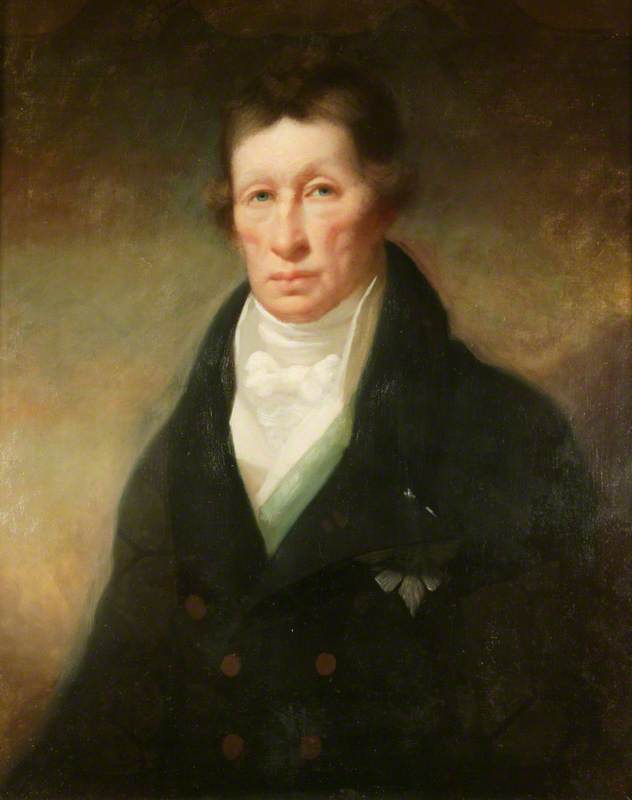
Gordon’s eldest brother was Alexander (1743-1827), 4th duke of Gordon, a Scottish representative peer from 1767 to 1784, and from 1784 earl of Norwich in the British peerage. He was married to Catherine (1748-1812), younger daughter of Sir William Maxwell, 3rd bt., ‘a great beauty but no fortune’, according to the duchess of Portland [University of Nottingham Library, Pw F 801]. Subsequently, she became a society figure and hostess for Henry Dundas and his friend William Pitt the Younger when Prime Minister in the late 1780s. The couple split in the 1790s, and after the death of the duchess, Gordon married his long-time mistress, Jean Christie, mother of five of his eight illegitimate children.
The duke of Gordon was heavily involved in trying to secure a seat for his youngest brother in the House of Commons. Preparations seem to have begun in 1772 for Lord George’s campaign for Inverness-shire. However, the sitting MP, Simon Fraser, son of the notorious Lord Lovat, executed after the Jacobite rebellion of 1745-6, kept his seat after a negotiation which saw Gordon returned instead for the venal borough of Ludgershall, owned by George Selwyn.
Selwyn sold his seats at Ludgershall to the ministry, so with Lord North in agreement, and the duke of Gordon presumably paying – hence his comment in 1776 that he had given it to his brother ‘as a free gift without laying you under any restriction whatsoever’, Gordon was safely elected as an MP. [NRS, GD224/655/7/2] However, his conduct there soon caused comment. In April 1778 Gordon was said to have ‘rather looked mad in the House last night’, where ‘his abuse of Lord North was in regard to the bargain about the borough he comes in for’. [A. and H. Tayler, Lord Fife and His Factor … 1729-1809 (1925)] Consequently, an analysis of the forthcoming election in 1780, noted that Lord George Gordon had no chance of being re-elected for Ludgershall, and indeed, he never sat in the House again.
Initial reports in London suggested that both the duke of Gordon and another brother, Lord William, were attempting to raise their clans in Scotland in support of Lord George. These rumours turned out to be false, though, the opposite being the case. Indeed, the duke made sure that there was no disorder and wrote to the king to assure him of his loyalty. [Jones Letters, ed. G. Cannon, i. 412] The duke did, however, travel to London to begin the organization of his brother’s defence, arranging visits to the Tower from his sister, the dowager countess of Westmorland, and George Gordon, 3rd earl of Aberdeen.
Informed observers were unsure as to whether Lord George’s his actions could be deemed treasonable. On 13 June Lady Spencer was informed that ‘the lawyers seem to be of opinion, that Lord George Gordon cannot be convicted of high treason’. The duke himself was nervous as the date of the trial approached, writing on 26 Jan. 1781, ‘God grant it was well over. I am in great anxiety about him I do assure you but I hope all will go right’. [NRS, GD44/43/248/9] His brother’s ultimate acquittal on 6 February 1781 had surprisingly little effect on the duke’s career. He remained involved in politics and achieved office in the 1790s as a supporter of the government.
The other brother, Lord William Gordon (1744-1823) was originally perceived as ‘one of the most accomplished young noblemen of the age’, [Namier and Brooke, ii. 519], but his career was sent into turmoil by his scandalous elopement in February 1769 with Lady Sarah Bunbury, sister of Charles Lennox, 3rd duke of Richmond, with whom he had already had a daughter. Lady Sarah eventually went to reside with her brother and was divorced in 1776. Having been described in March 1769 by one commentator as ‘odd to a degree, and certainly a little mad (several of his family are shut up)’, and by another as ‘a beggar and mad’ [Leinster Correspondence, i. 568, 570], Lord William seems to have escaped abroad for a few years.
Upon Lord William’s return his brother, the duke, managed to secure his return in a by-election for Elginshire in April 1779, which he retained in the general election the following year. in March 1781, he married Frances Ingram Shepheard, daughter and coheiress of Charles, 9th Viscount Irwin, who resided at Temple Newsam, near Leeds, a convenient staging post for visiting Scotland. In 1784 he transferred to Inverness-shire, and after a two-year break, he was returned for Horsham, on the interest of the dowager Viscountess Irwin.
As for Lord George Gordon, upon his release he continued to agitate for political change, was eventually cast adrift by his family in 1785 and two years later converted to Judaism. He died in Newgate prison on 1 November 1793.
Biographies of Lord William Gordon can be found in both The House of Commons 1754-90, edited by Namier and Brooke, and The House of Commons 1790-1820, edited by R. Thorne. Lord George Gordon features only in Namier and Brooke. The Duke of Gordon will be covered in the forthcoming House of Lords 1715-90 volumes and in the planned volumes on The House of Lords 1790-1832.
SNH
