

The History of Parliament were deeply saddened to hear of the recent passing of Clyve Jones, a champion of 17th and 18th century political history and a long friend of the History of Parliament Trust. Here Dr Stuart Handley looks back on Clyve’s impact both on the field and those working within it.
A commemoration of Clyve’s work is taking place on 20 September, 2-5pm – booking via the IHR website.
Before the pandemic struck, Clyve Jones had become an iconic figure at the History of Parliament. He would visit the History’s offices in Bloomsbury Square, to pick up his correspondence and work on Parliamentary History Texts and Studies or attend Parliamentary History meetings. He had his own chair, which had to be manoeuvred about the building for his comfort, and the House of Lords section had a gizmo which converted his floppy disks into usable files.
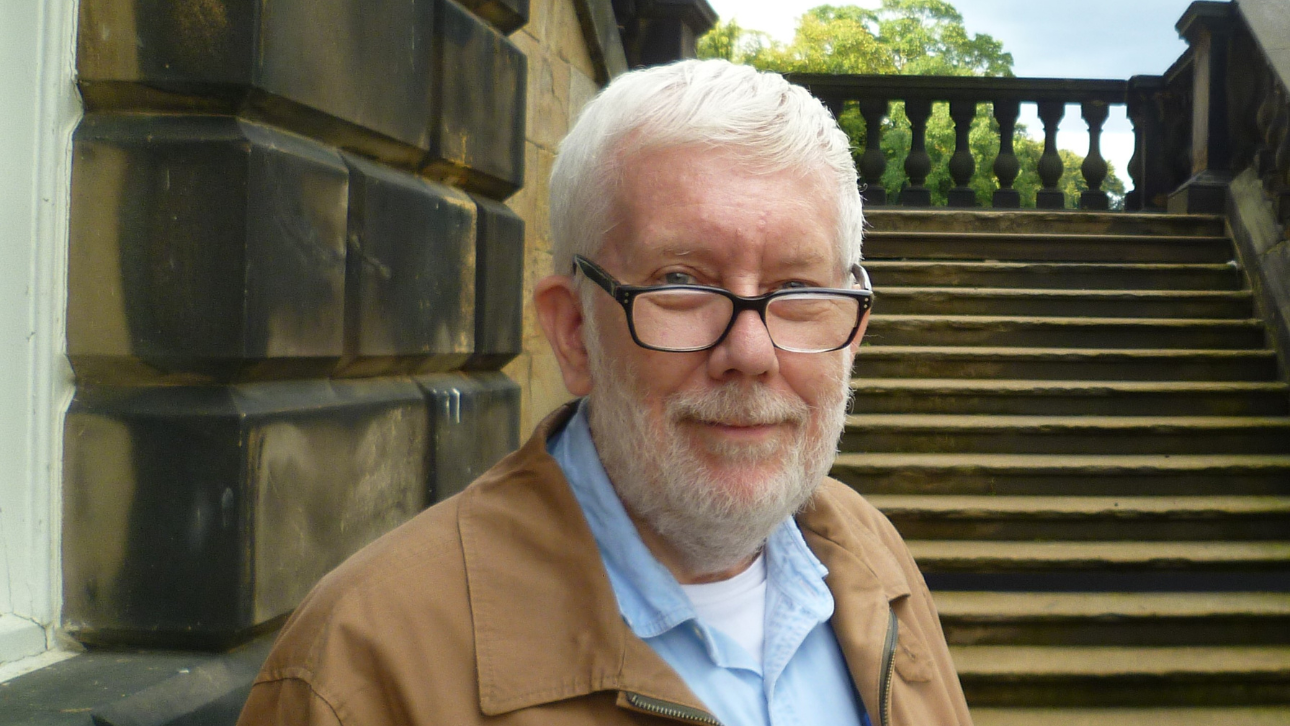
However, Clyve’s relationship with the History of Parliament went back much further, and his work on parliamentary history back to his student days at Lancaster when he worked under Austin Woolrych.
Clyve and the History entered my life shortly after I began my Ph D. under the supervision of Professor Geoffrey Holmes at Lancaster in 1982.
When Geoff first mentioned the History to me, he barely differentiated Eveline Cruickshanks and David Hayton, working on the House of Commons 1690-1715, from Clyve – then a librarian at the Institute of Historical Research – regarding the trio as engaged in fundamentally the same pursuit. This was helped by the proximity of the two institutions: the History of Parliament, based then in Tavistock Square, (and latterly in Woburn Square and Bloomsbury Square) was just around the corner from the IHR located in Senate House in Russell Square. With the British Library housed in the British Museum round the corner, and the Public Records Office a few minutes away in Chancery Lane, the IHR proved to be a hub for the historical profession and a wonderful resource for research students like myself, with Clyve acting as the focal point in bringing people together.
One of the most important initiatives in parliamentary history, also began in 1982 – the publication of Parliamentary History. A Yearbook. Subsequently Parliamentary History, Eveline was the editor, but both Clyve Jones and David Hayton were on the editorial committee. In the first volume Clyve contributed an essay co-authored with Geoffrey Holmes and a piece in the “Notes and Documents” section with Edward Gregg (South Carolina). Clyve succeeded Eveline as editor in 1986, and continued in that role until 2014, when he became editor of the Texts and Studies sub-series.
With work on the House of Commons 1690-1715 in full flow and the new journal up and running, many other projects took shape with Clyve very much at the centre of the process. This continued even after the publication of that section in 2002. Clyve had shared with Geoffrey Holmes a belief in the importance of the House of Lords in the period after 1660, so he again was a significant source of advice and provider of information and references to the History’s volumes on the House of Lords 1660-1715 (2016) edited by Ruth Paley and its successor volumes on 1715-90 currently under progress under the editorship of Robin Eagles.
Research trips were undertaken by Clyve, Eveline and David to various archives, both public and private, and even to the U.S.A. (the full extent of which were revealed by Professor John Philips on one of his visits to London, when he told the tale of Eveline’s fluffy pink pullover). Additional staff joined the 1690-1715 section, notably Andrew Hanham, Perry Gauci and Mark Knights and collaborators such as Edward Gregg, Richard Davis (Washington, St. Louis), Sir John Sainty (House of Lords RO), Stephen Taylor (a Scouloudi fellow at the IHR and then Reading, latterly Durham), John Beckett (like Clyve, a Lancaster graduate) were all brought into the mix.
Some significant collaborative projects were undertaken. Clyve and David Hayton, edited A Register of Parliamentary Lists 1660-1761 (1979) and A Register of Parliamentary Lists 1660-1761 A Supplement (1982), both published by the University of Leicester, under the general editorship of Aubrey Newman, a major contributor to the 1715-54 and 1754-90 sections on the House of Commons. They were joined by Grayson Ditchfield in editing the expanded, British Parliamentary Lists, 1660-1800 (1995).
Collections of essays edited by Clyve followed, most notably Party and Management, 1660-1784 (1984), and A Pillar of the constitution: the House of Lords in British politics, 1640-1784 (1987), plus Hanoverian Britain and Empire: essays in memory of Philip Lawson, edited by Clyve in collaboration with Stephen Taylor and Richard Connors (1998). A short history of parliament: England, Great Britain, the United Kingdom, Ireland and Scotland, edited by Clyve in 2009, shows in its list of authors the collaborative nature of the project. Most of the History of Parliament’s annual lectures also found their way into the pages of Parliamentary History. Most fittingly of all was the volume of Parliamentary History, 39/1 (2020), Peers and politics, c. 1650-1850: essays in honour of Clyve Jones, edited by Richard A. Gaunt and D. W. Hayton.
Clyve retained his Lancaster links, forging a lasting partnership with Geoffrey Holmes which saw them edit The London Diaries of William Nicolson Bishop of Carlisle 1702-1718 (1983). Clyve also edited
Britain in the first age of party, 1684-1750: essays presented to Geoffrey Holmes (1987), the launch party for which was held in the IHR, and Parliamentary History, 28/1 (2009) entitled British Politics in the Age of Holmes. Geoffrey Holmes’s British Politics in the Age of Anne 40 Years On (2009), which included the unpublished lecture by Geoffrey, ‘Tom Wharton and the Whig Junto: Party Leadership in Late Stuart England’, which Clyve had first heard at the Lancaster History Society in 1968.
Similarly, Clyve was fundamental, along with Ella Holmes, Bill Speck and Stephen Taylor in ensuring that some of Geoff Holmes’s unpublished work was made available to scholars. Geoff’s original intention had been to publish a study of Robert Harley’s ministry of 1710-1714, but this was unfinished. Eventually, a typescript was produced, The Great Ministry (2005) and copies made for private circulation (both the History of Parliament and IHR have copies). Later, Parliamentary History, 29/3 (2010) published the first two chapters, edited by Bill Speck.
All in all, everyone involved in researching parliamentary history knew Clyve, and most have benefited from his efforts to see such research published. The History of Parliament will miss his input and visits.
S.H.
