

On this day, 1930, Arthur Latham was born. Labour MP for Paddington North (later Paddington) from 1969 to 1979, his career both inside and outside the Commons reflected the ebb and flow of the Labour Party’s ‘hard left’. Alfie Steer explores the significance of Latham’s career, and what it reveals about the history of left-wing politics in late Twentieth Century Britain.
Arthur Latham’s journey to parliament was a relatively conventional one for a Labour politician. Growing up in a working-class family, his father a trade unionist, Latham joined the Labour Party after the 1945 election. A councillor in Romford by 21, he rose through the ranks of local politics on Romford and later Havering Council, eventually becoming leader of the Labour Group. While personally uncomfortable with the self-promotion that came with seeking a parliamentary seat, he was selected to fight the safe Tory seat of Woodford in 1959, given the daunting task of challenging Sir Winston Churchill. In his 2014 History of Parliament oral history interview with Andrea Hertz, Latham describes the strange experience of spending a few hours with Churchill and his wife Clementine, at the election count.
While his political beginnings were similar to many Labour politicians in the post-war era, Latham’s later activism reflected the emergence of new radical energies within the party and British politics more widely. Radical movements in 1960s Britain, typified by the student protests of 1968, the campaign against the American war in Vietnam, and new social movements around feminism, black radicalism and gay rights, frequently came into conflict with Harold Wilson’s Labour government. While some activists sympathetic to these energies left the Labour Party in disillusionment, others formed grassroots pressure groups to challenge the Wilson government from within. One of these activist groups, Socialist Charter, was believed to play a direct role in securing Latham’s victory in the 1969 Paddington North by-election, his campaign reportedly bolstered by the ‘help of 200 to 300 activists’ from the group [Kogan & Kogan, 13]. From then on Latham’s career frequently intersected with the fortunes of the party’s so-called ‘hard left’. His entry into parliament was both directly helped by left-wing activists, and formed an early part of a much wider change in the House of Commons’ factional composition.
Latham’s election was part of an influx of new left-wing Labour MPs, mostly coalescing around the Tribune Group, a faction within the Parliamentary Labour Party founded in the early 1960s by supporters of left-wing newspaper Tribune, which had grown significantly towards the end of the 1970s. Further, this new generation were considered far more willing to rebel, even if it meant defeating the government on the floor of the Commons. A self-described ‘rebel in the House’ and considered by others ‘a thorn in the side’ of the 1974-79 government, Latham became chairman of the Tribune Group in November 1975, then at the height of its rebelliousness [Telegraph, 22 Dec. 2016].
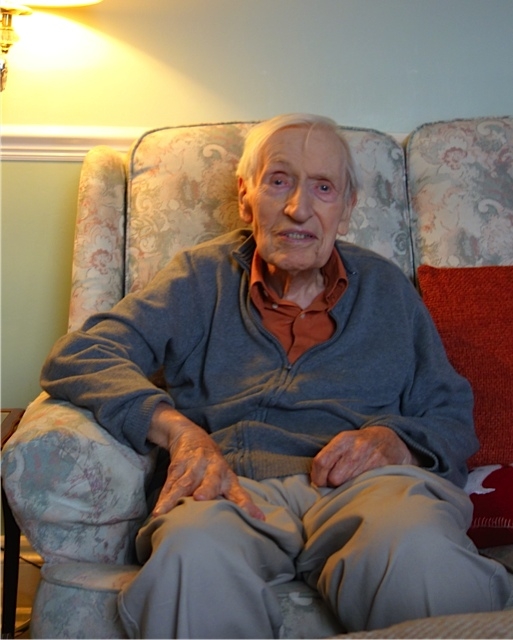
While Latham was prepared to often be a lonely minority on matters of principle, there were some major disagreements between the government and backbench MPs during his time in Parliament. This was revealed through the whipping system, which privileged the top-down leadership of the government, rather than the collective view of the parliamentary party. This was in complete contrast to Latham’s experience of local government decision-making and was illustrated particularly clearly when it came to parliamentary votes on joining the European Common Market.
Latham’s frustration reflected the growing disconnect between the Labour government and its backbenches, and anticipated the internal divisions that would plague the party into the 1980s. Yet there were still limits to the Tribune Group’s rebelliousness. Latham describes how the group had to strike a ‘delicate balance’ between exerting pressure on the government without bringing it down entirely. At times, this meant that the Tribune Group was mobilised to support the government rather than rebel against it.
The period not only saw conflict between the Labour government and backbench MPs, but also a ‘crisis of legitimacy’ [Randall, 215] between the party’s parliamentary leadership and its grassroots membership. Once again Latham played a part in this internal conflict.
In June 1973, the Campaign for Labour Party Democracy (CLPD) was formed. Made up largely of former Socialist Charter members, the pressure group was launched in reaction to Harold Wilson’s vetoing of radical policies endorsed by party conference. To ensure similar such flagrant rebuffs of conference sovereignty did not happen again, CLPD advocated a series of major reforms to the party’s constitution, ensuring that the party’s parliamentary elites were more accountable to the grassroots membership. This included making it mandatory for incumbent MPs to go through a re-selection process, and widening the franchise for the election of party leader to include ordinary members and trade unionists, as well as MPs. It was Latham who booked the room in the House of Commons where CLPD met for the first time. In this small act he played an early facilitating role in the formation of a campaign that would eventually achieve major changes in Labour’s constitution, decisively altering the relationship between the party’s grassroots membership and its parliamentary elites.
Latham’s career reflected a wider reconceptualization of what an MP’s role could be. The new generation of left-wing MPs were not only less deferential to the party leadership, but also ascribed greater importance to activism outside parliament. Latham spent little time in the Commons chamber and made few speeches, describing it in the 2014 interview as ‘not a good investment of time’. Instead, he was ‘extremely busy’ outside, both with constituency work and in supporting extra-parliamentary movements. A lifelong peace activist, Latham was a member of the British Campaign for Peace in Vietnam, the Campaign for Nuclear Disarmament and the Movement for Colonial Freedom. In 1977 Latham was elected Executive Chair of the Greater London Labour Party. While ostensibly an administrative position, his election again reflected a wider shift to the left in London politics, which culminated in Ken Livingstone’s radical administration on the Greater London Council (GLC) from 1981 to 1986. Latham returned to local government himself in 1986 and became leader of Havering Council in 1990. He would eventually briefly resign from the Labour Party in response to the Iraq War, once again reflecting a common experience of left-wing disillusionment within the party, and a period of dramatic decline in the party’s membership.
Arthur Latham’s career was therefore frequently a bellwether for the progress of Labour’s ‘hard left’ from the 1960s onwards. His parliamentary career intersected the left’s rise in influence and his later trajectory frequently emulated the experience of other left-wing activists across the country. Studying the political activism of Arthur Latham provides not only an enlightening insight into the experience of a committed left-wing politician, but also reveals the contours of much wider political changes in Britain in the second half of the Twentieth Century.
A.S.
Download ALT text for all audio clips here.
Further reading
David Kogan and Maurice Kogan, The Battle for the Labour Party second edition (London: Bloomsbury, 2018).
Ken Livingstone, If Voting Changed Anything, They’d Abolish It (London: Collins, 1987).
Hugh Pemberton and Mark Wickham-Jones, ‘Labour’s Lost Grassroots: The Rise and Fall of Party Membership’, British Politics 8:2 (2013), pp.181-206.
Nick Randall, ‘Dissent in the Parliamentary Labour Party, 1945-2015’ in Emannuel Avril and Yann Béliard (eds.), Labour United and Divided from the 1830s to the Present (Manchester: Manchester University Press, 2018), pp.193-220.
John E. Schwarz, ‘Attempting to Assert the Commons’ Power: Labour Members in the House of Commons, 1974-1979’, Comparative Politics 14:1 (1981), pp.17-29.
Rhiannon Vickers, ‘Harold Wilson, the British Labour Party, and the War in Vietnam’, Journal of Cold War Studies 10:2 (2008), pp.41-70.
With access to the British Library sound archive still unavailable, a full catalogue of our oral history project and details with how to access interviews is available on our website.
Find more blogs from our oral history project here.
Alfie Steer is a historian of modern and contemporary Britain, currently studying for a DPhil at the University of Oxford. His research focuses on the history of the Labour Left from the end of the miners strike to Jeremy Corbyn’s election as Labour leader in 2015. His most recent article was published in Contemporary British History, and has written book reviews for Twentieth Century British History and the English Historical Review. Outside of academia he has written for popular publications such as Tribune.
