

As the UK prepares to go to the polls for the 2024 General Election, modern politicians continue their campaigns across the nation, in an attempt to persuade electors to vote for them on July 4. However, for much of the middle ages, parliamentary elections saw no voting take place at all! Dr Hannes Kleineke, editor of our House of Commons 1461-1504 project, explains some of the difficulties that came with electing representatives in the 15th century…
For much of the middle ages, and even into the modern period, many parliamentary elections were ‘arranged’. This meant that rather than conducting a formal poll, the election meeting would simply rubber stamp a pair of candidates agreed upon by the leading men (and sometimes women) of the counties. The process by which the candidates in question were chosen is by and large obscure, but it is worth noting that their confirmation nevertheless followed a formal process.
The parliamentary elections in the English counties were held in shire courts, and forty days thus had to elapse from the issue of the parliamentary writs to the electoral meeting. This period of grace was necessary not merely because of the time it would take for the writs ordering the elections to be delivered to the English counties, but also because in a select number of northern counties (Lancashire, Lincolnshire, Northumberland and Yorkshire) the county court only met every six, rather than every four weeks. Even so, many electoral writs arrived so late as to make it impossible for the sheriffs to hold their elections within the normal cycle of meetings of the county court. Thus, elections in Lancashire had to be held at specially convened electoral meetings in 1423, 1427, 1429 and 1433; while on other occasions special meetings were also held in Cumberland, Westmorland, Bristol and Nottinghamshire.
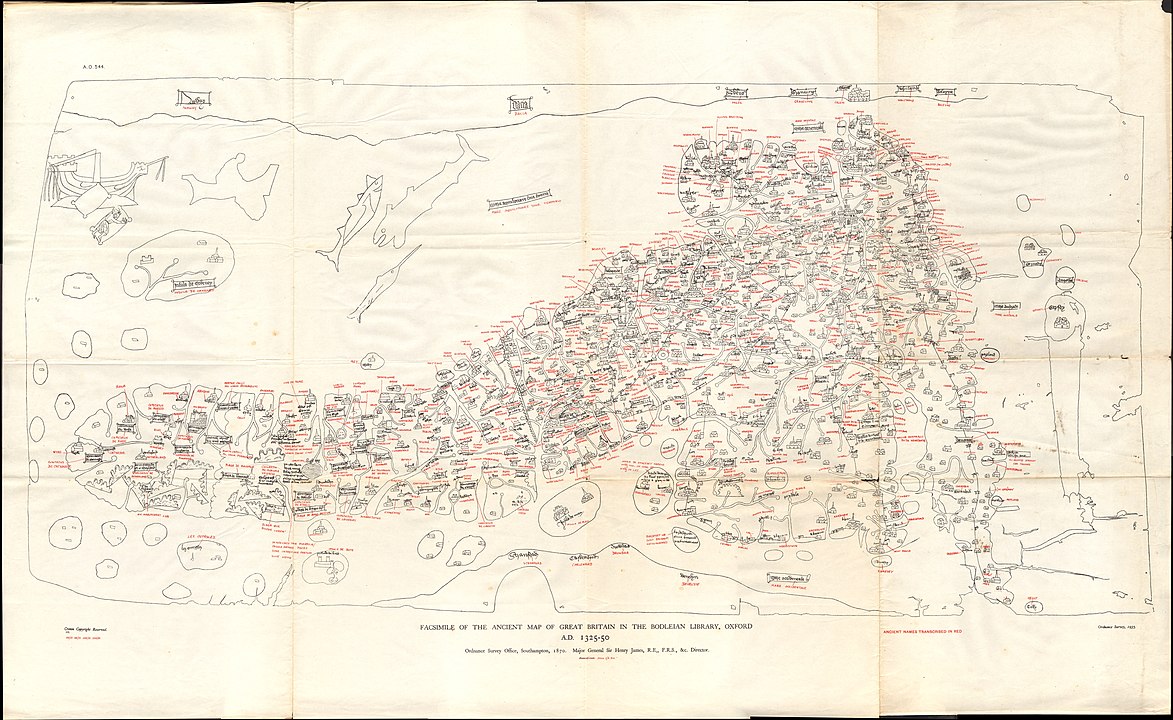
In 1459, special circumstances prevailed, not merely on account of the political crisis which followed the Yorkist rout at Ludford Bridge, and which saw the King’s cousin and principal opponent, Richard, duke of York, his two eldest sons Edward, earl of March, and Edmund, earl of Rutland, and their Neville allies, the earls of Salisbury and Warwick flee into exile. On 9 October the government summoned a Parliament, allowing 41 days before the opening on 20 November. Yet, by the end of October it had become apparent that many sheriffs had not yet identified any candidates, and were due to hand over their offices just a few days later. The administration thus took the extraordinary step of sending letters under the privy seal to all serving sheriffs instructing them to hold their parliamentary elections even if their relevant county court fell after the date of their discharge. This proved to little avail: no elections were ever held in Sussex and Hertfordshire, and the Members for Berkshire, the city of York and Shropshire were confirmed only after Parliament had assembled, in the case of Shropshire as late as 29 November, nine days into the session.
On a few rare occasions it is clear that no agreement could be found among the county elites, and that the choice of MPs therefore had to go to a ballot. One such occasion was the Nottinghamshire election of 1460, when the names of four candidates, Sir Robert Strelley, John Stanhope, Richard Sutton and William Babington, were placed before the electorate. In the ensuing contest Strelley and Stanhope each secured over 150 votes, while Sutton and Babington were left far behind with just 56 and 44 votes respectively.
Before such a poll could be taken, the sheriff (or his deputy) was faced with the onerous task to ensuring that the electors who turned up in the county court were qualified to vote. This meant establishing that they met the statutory income qualification, that is that they each held freehold lands worth 40s. per annum, but also that they actually resided within the relevant county, and not within any separate constituencies within its boundaries. This, for instance, became one of the principal grounds on which the Warwickshire elections of 1427 were challenged, for some of the electors present, ‘pompous men’, were said to have hailed from the town of Warwick, and they or others were moreover said to have shouted unreasonably in making their nomination.
Perhaps the most curious election of the period (as far as the records allow us to tell) was that held in Berkshire in early 1453. The election that year was not held (as was normal) at Abingdon, but instead at Chipping Lambourn, which, while not a county town, had the advantage of being the residence of the sheriff, John Roger. The return names just eleven further voters, and it is perhaps no surprise that one of the men elected was Roger’s son and heir, Thomas. Alongside him, the sheriff returned the county’s veteran representative, the courtier John Norris, who nevertheless seems to have been sufficiently concerned by the odd proceedings to secure for himself an alternative seat in distant Truro.
H.W.K.
Further reading:
H. Kleineke, ‘Parliamentary Elections’, in The History of Parliament: The Commons 1422-61 ed. L.S. Clark (Cambridge, 2020), 219-73.
J.G. Edwards, ‘The Emergence of Majority Rule’, Transactions of the Royal Historical Society, 5th ser. Xiv (1964).
