

Despite all of the political events of recent years, the upcoming General Election is the first time that the nation has gone to the polls since late 2019- nearly reaching the five year term limit, as determined by the Dissolution and Calling of Parliament Act 2022. But the length of Parliaments hasn’t always been five years and in the 18th century the rules came under question, as Dr Robin Eagles explores for our Georgian Elections Project…
Following the Revolution of 1688, new legislation had been enacted ensuring that parliaments could not last longer than three years. This had been a central demand of Whigs like the duke of Shrewsbury. Following the accession of George I in 1714, though, the Whigs spotted an opportunity of cementing their dominance by extending the length of parliaments to help shut out their Tory rivals. According to the terms of the Triennial Act, there ought to have been an election in 1718, but the Whig ministry chose to amend things so they would not need to go to the polls again until 1722. Consequently, on 10 April 1716 the duke of Devonshire introduced a new bill, repealing the Triennial Act and replacing it with a Septennial Act, meaning that the maximum length of a parliament became seven years. The king and his heirs retained the right to dissolve earlier if they wished.
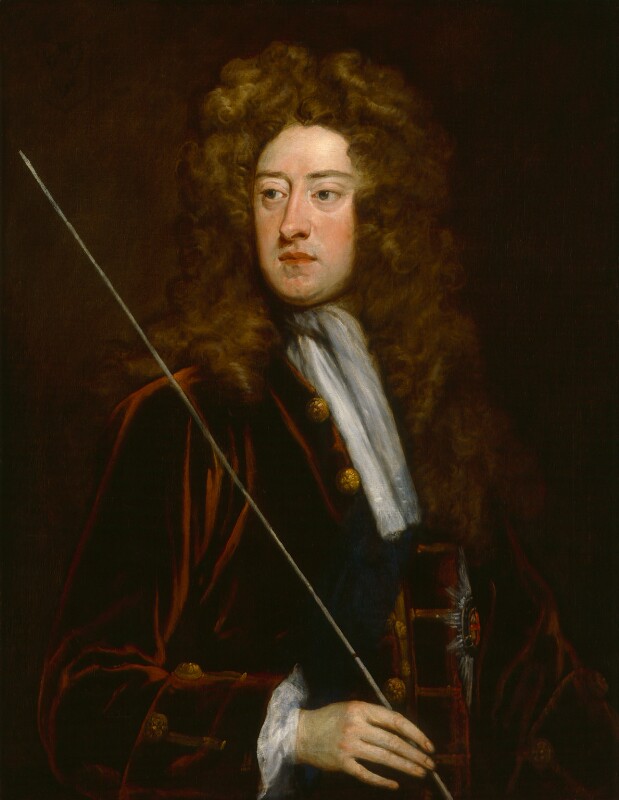
© National Portrait Gallery, London
The justification for the change was ‘to prevent the too frequent returns of Elections & tumults in the kingdom’ and one commentator reckoned it would ‘give as great blow to Toryism and the Pretender’s Interest, as any thing that has been done since the settlement of the Protestant succession’. [Worcester Record Office, Lloyd pprs, 970.5:523/634-6] Another believed that it would put an end to elections being interfered with by foreign interests. In marshalling their arguments, it was said that ‘Whigs argued upon security and order whilst Tories spoke about liberty.’ The ministry was confident of a substantial majority, even though parliamentarians on both sides were torn by the move.
The bill passed in the Lords on 18 April by 69 votes to 36, while in the Commons, about 25 Whigs joined with the minority voting against the bill. Just how important the measure was, was indicated by the presence of both Prince and Princess of Wales for some of the debate. [BL, Add. MS 72493, f.76] Several printers were also reprimanded by the House authorities for printing the text of the Lords’ protest against passing the bill. [LJ xx. 344]
What was in no real doubt was the ministry’s ability to get the bill passed and it was enacted accordingly shortly after. The text of the new act concluded:
Be it enacted… That this present parliament, and all parliaments that shall at any time hereafter be called, assembled or held, shall and may respectively have continuance for seven years, and no longer, to be accounted from the day on which by the writ of summons this present parliament hath been, or any future parliament shall be appointed to meet, unless this present, or any such parliament hereafter to be summoned, shall be sooner dissolved by his Majesty, his heirs or successors. [1 Geo. I, stat. 2, c. 38]
The Act remained in force until 1911, when it was amended to reduce the length of parliaments to five years. It was finally repealed a century later with the passage of the Fixed-term Parliaments Act.
RDEE
