

Robert Harley (1661-1724) was in his late 20s when he was first elected to Parliament as MP for Tregony in April 1689. He would remain a member of Parliament, first of the Commons and then of the Lords, for the rest of his life. Both his power and personal style was reflected in a number of nicknames: ‘Robin the Trickster’, ‘Harlequin’ and ‘the Dragon’ being some of the best known. Plenty of people were returned to Parliament earlier than Harley. Yet, if not the youngest MP, Harley was a particularly well prepared one. Dr Robin Eagles reconsiders Harley’s upbringing and progress towards Westminster.
Harley’s family were proud of their roots as an old marcher family based in Herefordshire since the 14th century. More recently, they had embraced nonconformist Protestantism, so after a period of home tuition, Harley went on to be schooled at two famous dissenting establishments: first under Samuel Birch at Shilton in Oxfordshire, and then in London at Monsieur Foubert’s French academy just off Piccadilly. He was a precocious, if sometimes lazy, child. When he was just seven it was said ‘Robin has a good memory and learns apace’ though two years later his mother was concerned at his tendency to socialize with the servants. To this she attributed ‘a strange clownish speech and behaviour’. [Hill, 4-5] The family’s deeply felt Protestant faith also left its mark on him and around the same time that Lady Harley was worrying about him clowning around, he also showed signs of religious anxieties, fretting in particular about the unforgivable ‘sin against the Holy Ghost’. [Hill, 5; HMC Portland, iii. 317]
At the age of ten Harley’s home tutoring ended and he was packed off to Birch’s school, where he remained until 1680. On 28 August 1671 he sent his father, Sir Edward, his first letter, hoping in time to send him ‘fairer fruites than these first beginings’. [HMC Portland] He was far from alone there. His younger brother, Edward, went with him, and they were later joined by another brother. At least three more future parliamentarian colleagues were also in the school with him: Simon Harcourt, Thomas Trevor, and Thomas Rowney. Under Birch, Harley acquired some knowledge of Classics, though it was a disappointment to his parents that Birch was not proficient in instructing his pupils to dance. [Cliffe] Harley’s instruction was supplemented by tips by his father, advising in one letter that his son read his Greek lexicon and Erasmus’ Adages. [HMC Portland] One lesser-known detail of Birch’s career – a former Parliamentarian officer, and ejected minister, who had been taken under Lord Wharton’s wing – was that he had clearly owned a large hunting dog, kitted out with a metal collar engraved with Birch’s name, address and coat of arms. The collar was subsequently discovered in Somerset.

Sending the boys to Birch had been Lady Harley’s idea, but that theirs was an affectionate family is indicated by her impatience come December 1671 for them to be home again for the holidays. A ‘charet’ [chariot] was dispatched to pick them up and Lady Harley apologized to her husband; ‘if I am a little impatient I am excusable being at the longest I ever thought of without seeing them’. [HMC Portland]
By 1678 Harley’s parents were clearly beginning to think of the next stages of his education. Oxford appears to have been considered, but in October Sir Edward wrote to his son asking him to inform Birch that it was no longer necessary to secure him lodgings there: ‘I have altered my thoughts therein’. The change of plan was the more poignant, as when Harley was eventually raised to the peerage, the title he took was that of Oxford, and as the preamble to his patent emphasized, it was particularly appropriate for such a learned person to be made earl of the university city.
By the summer of 1681 Harley was established in London. The same year, he entered Monsieur Foubert’s Academy, where he seems to have enjoyed some fairly raucous living among his fellow students. However, he also seems to have been busy acting as his father’s agent. There were frequent letters from Sir Edward enquiring after French Protestant exiles (Huguenots), pointing out that he was happy to accommodate them in Herefordshire at very favourable rates. Harley was also supposed to be finishing his education, though, and a year on Lady Harley returned to the theme of her eldest son’s perceived laziness. Writing to her husband, she reported that she had been advised a year was quite long enough to perfect everything learned in an academy: ‘I hope Robin does not lose his time’. [HMC Portland]
Harley’s period of formal education ended when he quit Foubert’s establishment in December 1681. His political education was, however, only just beginning. If he had already taken on some of the qualities later associated with him as a Member of Parliament, he quickly acquired some of his other key characteristics. A busy maker of notes himself, we can perhaps see where some of this came from.
First, from his father, who was accustomed to send around detailed reports of political happenings to the family. Second, in February 1684, an unnamed correspondent sent to Harley just such a list as he was later to compile himself by the bucket-load. It opened with the names of the sureties for a group of lords who had just been bailed and then went on to deliver a detailed exposition of the comings and going at Court: who was in and who was out. In the summer of 1688 it was Harley advising his father of ‘hot talk’ of a new Parliament, rather than the other way around, and he wrote of dining with Lord Chandos and talking ‘freely’ of elections. By September he was recounting to his father details of which candidates were likely to stand where and who was thought sure of being elected.
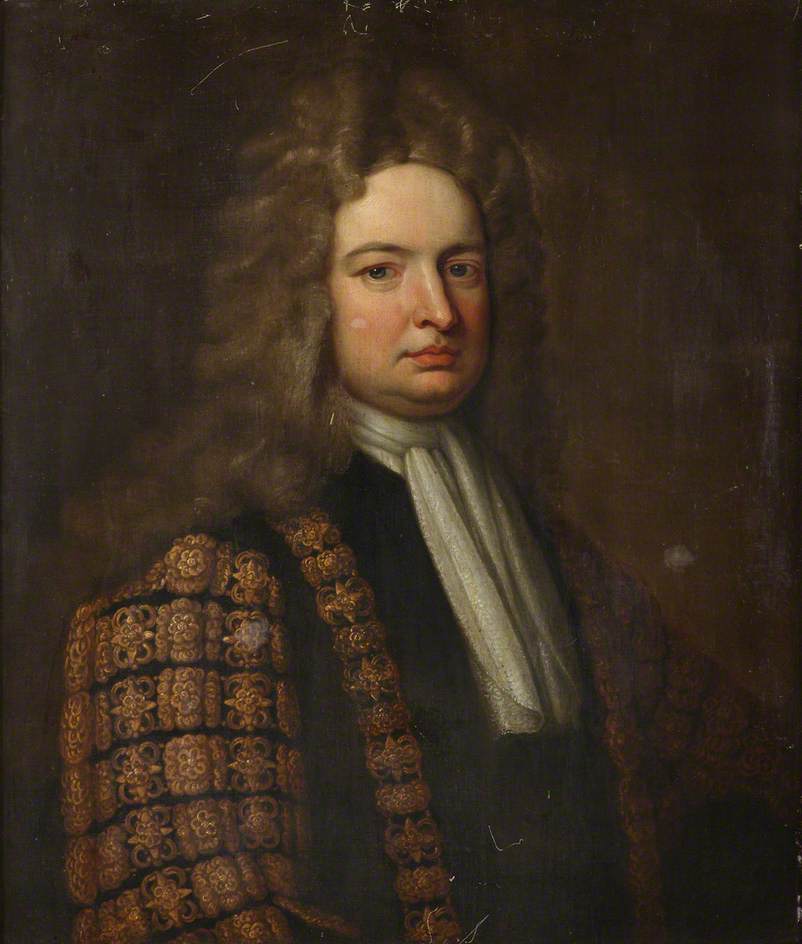
At the outset of the Convention Parliament in January, though not yet a member himself, Harley was to be found writing to his father from ‘the door of the House of Commons’, filling him in on events at Westminster. In April, his father returned the favour by writing to his son passing on the news of his election for the Cornish borough of Tregony thanks to family intervention and the patronage of the local borough-mongers, the Boscawens. Sir Edward concluded the dispatch with a prayer that God might:
Enable you with every good and perfect gift, that you may with godly sincerity be faithful and serviceable in this great occasion.
HMC Portland, iii. 436
Quickly employed by the Commons as a committee-man, Harley would in time serve as Speaker, as Secretary of State and ultimately as Lord High Treasurer.
RDEE
Further Reading:
Trevor Cliffe, Puritan Gentry Besieged, 1650-1700 (2002)
Brian W. Hill, Robert Harley, Speaker, Secretary of State and Premier Minister (1988)
Historical Manuscripts Commission: Papers of the Duke of Portland, vol. III.

