

In 2022, Kate Gibson, Leverhulme Early Career Fellow at the University of Manchester, published her book Illegitimacy, Family and Stigma in England, 1660-1834. To measure the impact of stigma and disadvantage on children born outside of marriage she utilised the History of Parliament Online. In this blog she explains how the History of Parliament provided her with essential information and her findings on how illegitimacy had a significant impact on an individual’s life chances.
For centuries in England and elsewhere, children born outside of marriage have faced considerable stigma, and social and economic disadvantage, enshrined in law. These laws reflected the fear that illegitimate children’s existence threatened the systems of inherited property, title and status through the paternal line which underpinned the social order. Outside marriage, paternity rested on a woman’s word: unthinkable in a patriarchal society which feared female sexuality and agency. In England, these laws were partially amended in 1926, and only finally abolished in 1987.
My research focuses on illegitimacy in eighteenth-century England, a period when illegitimacy increased dramatically. This period was also one of considerable debate about parental responsibilities, inheritance law, and the rights of unmarried mothers and their children to paternal maintenance and state support through the poor law system. Historians have largely focused on this latter issue, approaching illegitimacy as an aspect of poverty that was policed as a lower-class problem by middling and elite lawmakers. My research, in contrast, looked at children born to labouring, middling and elite families, to measure the impact of class on how illegitimate people were treated by their families and communities. I found that illegitimacy occurred across the social scale, and that several of those who made the laws had illegitimate relatives. Illegitimacy was not ‘an offence of the poor and obscure’, as historians Keith Wrightson and David Levine put it in 1979, but affected thousands of children born into families across English society.

When measuring the impact of stigma and disadvantage, databases like History of Parliament Online are invaluable. Part of my research involved tracing a cohort of illegitimate individuals across their lives in comparison with their legitimate counterparts. Illegitimacy often had quite subtle negative impacts, and could vary considerably based on individual circumstances like their family’s wealth, occupational background or religious convictions, or the length and importance of their parents’ relationship with each other. Individual comparison is therefore an important way of teasing out patterns in how illegitimate children were treated.
One strand of my analysis compared the lives and fortunes of 225 individuals who were part of the national elite, the children or grandchildren of peers or baronets. These families sat in Parliament, owned swathes of English countryside, and ran the army, navy and church. They also often had illegitimate children. I compared the education, marriages and occupations of illegitimate children against either their legitimate half-siblings or closest paternal cousins, using databases such as History of Parliament Online or The Cambridge Alumni Database and archival records like letters, diaries, wills and accounts.
In general, my research revealed that illegitimacy had a significant, measurable impact on an individual’s life chances, particularly boys. Illegitimate sons were usually sent to different, cheaper and less prestigious schools, and were half as likely to attend Oxford or Cambridge universities. Illegitimate boys were therefore more likely to be excluded from the culture and networks of elite society that were propagated through educational institutions; they had fewer opportunities to make influential friends or even learn the college slang that would demonstrate their belonging. Illegitimate boys were more likely to marry lower down the social scale, and more likely to marry later in life, suggesting that it took them longer to accumulate the property and wealth that would enable them to set up a household.
When it comes to illegitimate men’s influence in Parliament, illegitimate sons of elite families were half as likely as legitimate younger sons to become MPs. This was mainly because they did not inherit landed estates and so couldn’t meet the property qualification. This demonstrates the significance of inherited property to how status was maintained in this period. Families kept power by passing on land, and it was very difficult for those who lacked this support – illegitimate children but also middle and lower class individuals – to enter the governing class. But, it was not impossible, and my research revealed some extraordinary success stories. Although illegitimate MPs reached office on average 13 years later than legitimate younger sons, several were able to do so after successful military or naval careers. Military bravery was an opportunity for illegitimate men to demonstrate merit and service to their country, allowing them to earn high office, prize money and respect without disrupting legitimate inheritance systems. An illegitimate child who inherited status was a threat to the orderly running of patriarchal society, but one who earned it by proving that they had characteristics of masculine valour that were prized in elite culture, could be welcomed. Out of the 11 illegitimate boys who became MPs in my cohort, all but one had been in the army or navy, including three generals and three admirals or vice-admirals. The Napoleonic wars in particular provided new opportunities for illegitimate boys to make their fortunes.
Illegitimate children were not excluded from elite society, but they were disadvantaged. They did not benefit from the same social capital as their legitimate counterparts in being known as the future heirs of peers. They were heavily dependent on familial goodwill, and their fortunes varied considerably based on how willing their fathers were to acknowledge them. Although they could achieve success, they did so considerably later in life, and so for them periods of financial insecurity lasted far longer than for their counterparts who could rely on inheritance.
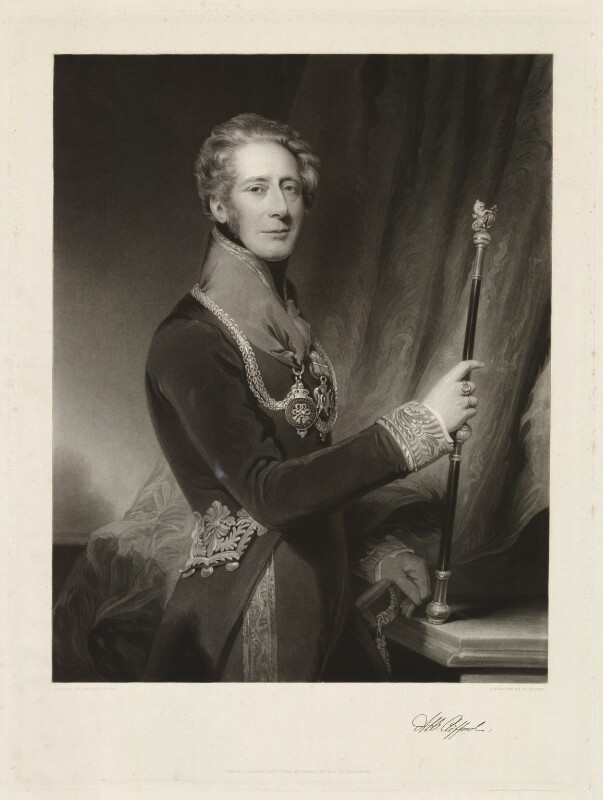
Illegitimate children also had to contend with social stigma. Augustus Clifford (1788-1877) was the illegitimate son of Lady Elizabeth Foster and William Cavendish, 5th Duke of Devonshire. After a distinguished naval career and considerable financial support from his legitimate half-brother, he became an MP in 1818. Despite this success, he was still affected by the stigma surrounding illegitimacy. Prime Minister Lord Melbourne said of Clifford and another illegitimate MP, Charles Fox, that they ‘feel . . . it very much . . . I never knew one who didn’t feel it . . . they are under a slur and a ban, and not their own fault’. Differences in social status, including illegitimacy, were visibly maintained through the highly codified behaviour of polite society, by systems such as leaving or entering rooms in order of precedence. In his mid-twenties, Clifford began to demand recognition as the son of a Duke, a claim to inequality that was quashed by elite society. At a dinner party he sent a message ‘to beg it might be understood he took the rank of a Duke’s son’ and ‘made a point of walking out of the room’ in front of the legitimate sons of the Duke of Portland and the Earl of Leven. Although the company politely ‘gave him the precedence he desir’d’, his ‘folly’ was reported to his relative Lady Bessborough so she could intervene. She wrote to Granville Leveson Gower, ‘you can have no idea of the noise it makes here, nor of the offence people take at it’. She sympathetically reasoned, ‘I think he is asham’d of it [his illegitimacy], tho’ he still marches in before every one else; it is a great pity, for it makes him enemies when he has a thousand merits to make him friends.’ Illegitimate children faced clear material and legal disadvantage, but we also shouldn’t underestimate the negative effects of a near constant undermining of their social position, which limited their access to the networks of soft power that ran eighteenth-century society.
Kate Gibson is a Leverhulme Early Career Fellow at the University of Manchester. Her most recent book, Illegitimacy, Family and Stigma in England, 1660-1834 was published by Oxford University Press in 2022 and shortlisted for the Royal Historical Society’s 2023 Whitfield Prize. The book is the first full-length study of the impact of illegitimacy across the social scale in eighteenth-century England, exploring how illegitimacy affected relationships with family, care during childhood, marriage and occupational opportunities, as well as individuals’ sense of inclusion and identity. You can find out more about the book in an interview for the history of sexuality blog Notches here. Her current project is a history of fostering and adoption in eighteenth-century Britain. Blogs and talks about her research are available online through History Workshop and Care Experienced History Month.
Further reading
Kate Gibson, Illegitimacy, Family and Stigma in England, 1660-1834 (Oxford, 2022)
Keith Wrightson and David Levine, Poverty and Piety in an English Village: Terling, 1525–1700 (2nd edn, Oxford, 1995), p. 128.
Alysa Levene, Thomas Nutt, and Samantha Williams (eds), Illegitimacy in Britain, 1700–1920 (Basingstoke, 2005)
Royal Archives: VIC/MAIN/QVJ (W) (Princess Beatrice’s copies), Queen Victoria’s Journals, 1832–1901 [online edition], 26 December 1838.
Lord Granville Leveson Gower, Private Correspondence 1781–1821, ed. Castalia, Countess Granville (London, 1916), vol. 2, pp. 422–3, Lady Bessborough to Granville Leveson Gower, 13 December 1811.
