

Following the victory of Parliament over King Charles I in the first English Civil War, the New Model Army, Charles, and radical groups convened at Putney to discuss the political settlement. Sarah Mortimer, Associate Professor at Christ Church, Oxford, and David Scott, editor of the House of Lords 1640-1660 section, discuss the debates surrounding the constitutional status of king and Lords.

With the old frame of government shattered by civil war, the soldiers-turned-politicians of the New Model Army gathered at Putney in October 1647 to thrash out their terms for settlement not only with the defeated King Charles but also with their paymasters at Westminster. Historians have focused on the opening salvos in these ‘Putney debates’, when the Levellers – a group of radical agitators with friends among the soldiery – ambushed the army leadership with their manifesto An Agreement of the People, sparking passionate exchanges about electoral reform. Yet discussion on day four at Putney remained as vigorous as ever, and dominating the agenda was not whether the ‘poorest he’ should have the vote, but what role the king and Lords would play in any future settlement. Where the army’s blueprint for overhauling England’s ‘ancient constitution’, the Heads of Proposals, included a place for Charles and his nobles, the Agreement, with its emphasis on popular consent and political accountability, was much less accommodating. As the radical soldier William Allen put it, ‘the difference between us I think is in the interest of king and Lords’ (The Clarke Papers ed. C.H. Firth [Camden Society, new series xlix, 1891], p. 376).
What followed was a complex debate about the future constitutional status of the king and House of Lords, a debate in which the participants differentiated carefully between the two. And the records we have suggest that contrary to Allen’s opinion there was a large degree of common ground. Oliver Cromwell’s son-in-law Henry Ireton, the army’s chief political strategist, was swift to clarify that no one denied that the safety and preservation of the people must come first, before the ‘interest’ of the king and Lords. The question was rather what kind of interest they should have – and how this might in fact be consistent with the army’s political priorities.
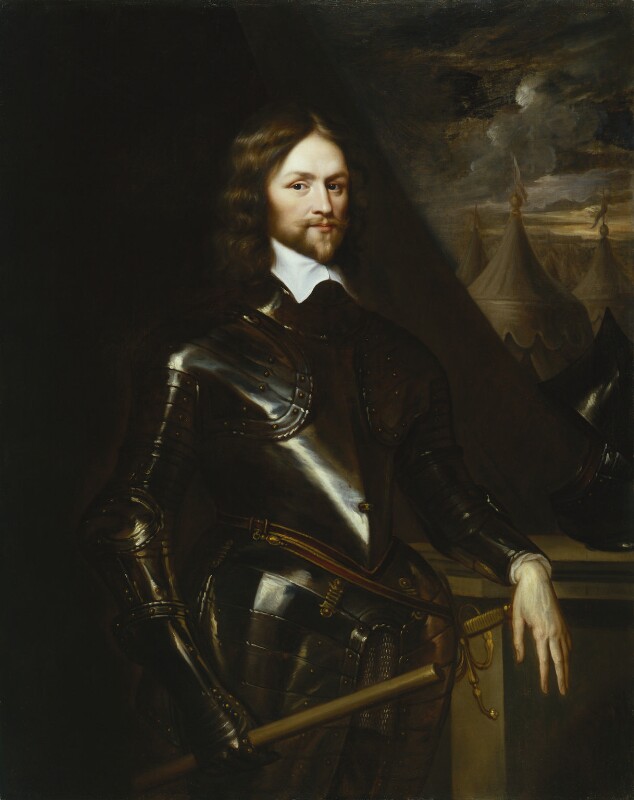
© National Portrait Gallery, London
Even the leading Leveller spokesman John Wildman was anxious to make clear that distrust of the king did not extend to the Lords. ‘None have any exception against the persons of the Lords or the name of Lords’ (The Clarke Papers, p. 386) he insisted – the issue was rather the scope of their power. He was apparently comfortable with the continuing existence of the peerage, of a society that was stratified and in which some enjoyed high status by virtue of their birth. But since, in his view, the ‘foundation of all justice is the election of the people’ (The Clarke Papers, p. 386), then it would be wrong to give peers, as members of the Lords, a special power over the definition or dispensing of such justice.
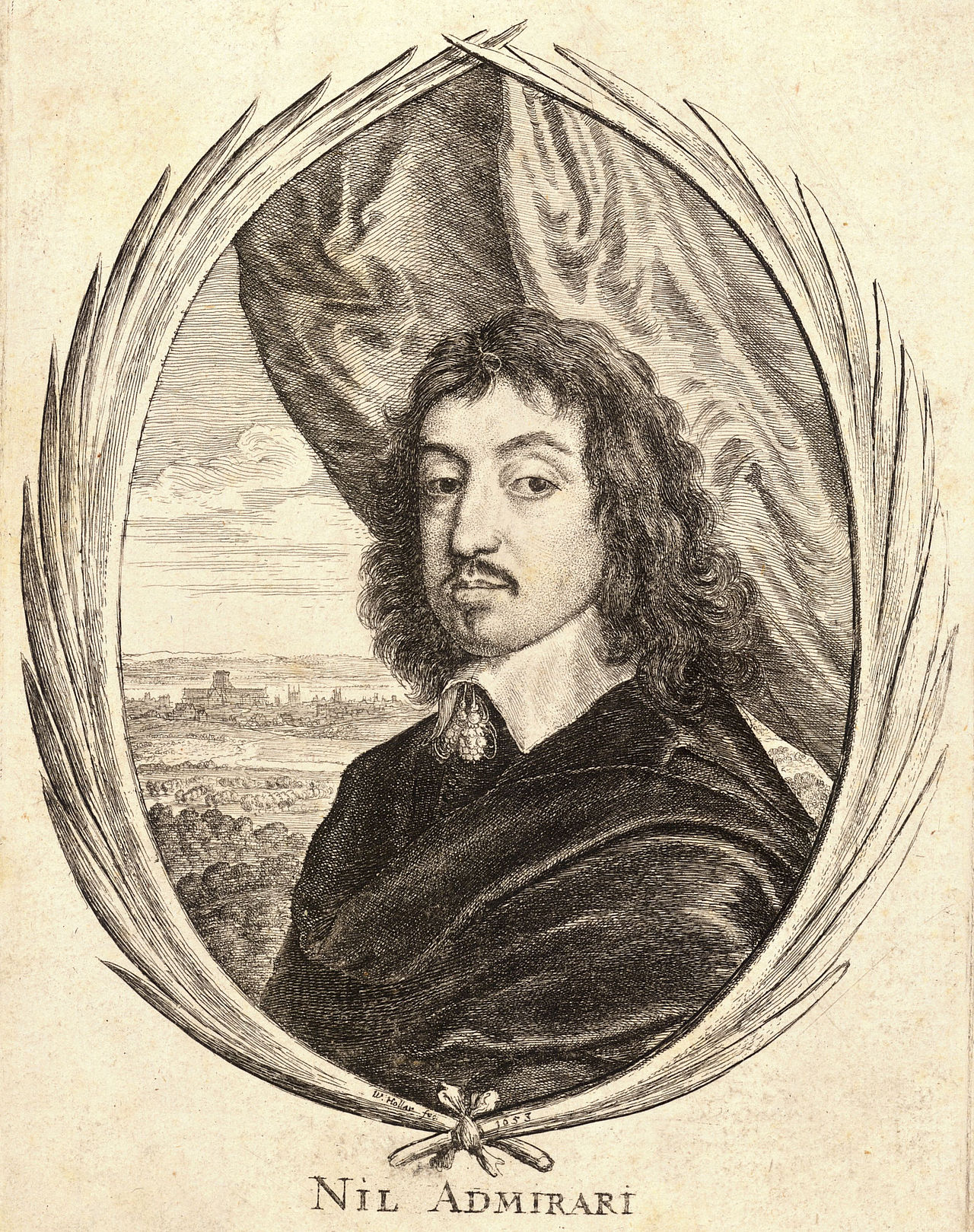
Wildman’s comments allowed Ireton to mount a staunch defence of the Lords, appealing to ideas of justice and equity. If a core principle for the Levellers was that no one could be bound by laws to which they had not consented, then, by rights, this rule should extend to the nobility as well. Assuming the continuing existence of the peerage, there needed to be a forum through which they too could consent to laws which affected their person and estates. That forum, Ireton suggested, was the House of Lords. Of course, he explained, if peers became officers of state then they would be subject to the House of Commons like anyone else; but as members of the Lords with their titles and privileges they were different, they stood apart from the body of the people as represented in the Commons. Similarly, the right to trial by one’s peers could surely not be denied to the nobility. ‘I would fain know’, asked Ireton, ‘how we can take away that right of peers to be tried by their peers when that it is a point of right for the Commons to be tried by their peers’? (The Clarke Papers, p. 392).
Warming to this theme, Ireton claimed that his position on the Lords actually had a firm basis in Wildman’s own arguments. After all, if government were based upon consent and the people had consented to set up a king and Lords, then there was no reason to abolish them. Moreover, the existence of the Lords was perfectly consistent with the safety of the people, because the exemption of some few individuals from the laws made by the Commons was a minor matter as long as every man was properly protected in their rights. But Ireton was clear that if all were to be protected by the law then all must be bound by it – no one could be completely exempt. Peers no less than the king were, as he put it, ‘suable, impleadable in any court’, though he added that ‘a Lord may be sued and tried per pares [by his peers] only’ (The Clarke Papers, p. 405). For Ireton, England was a law-governed polity, and though over time and through consent those laws might apply differently to some social groups, no one could stand above or outside the law itself.
We know little of the subsequent debates at Putney, but Ireton’s views evidently carried considerable weight in the army. The next day a committee convened and agreed that although all officers and ministers of state must be subject to the Commons, ‘the persons of peers, otherwise than in such capacity as aforesaid, shall bee tried and judged only by their peers’ (The Clarke Papers, p. 408) – with the obvious implication that the House of Lords would be necessary to this process. The clerk recorded that no one present dissented from this position.
Although the contours of settlement may have been uncertain in autumn 1647, it is clear that they were expected to include a House of Lords at least in some form. This was not simply conservative inertia, though there was no doubt plenty of that; it also reflected a genuine feeling within the army that if the principles of justice and rule by law were to hold, then this meant the retention of legal protection for the peerage and therefore of certain kinds of privilege and hierarchy. Only when the House of Lords refused to go along with these principles, and objected to the trial of the king, would positions change and the peers find themselves cast out of Parliament.
SM and DS
Biographies of John Wildman, Henry Ireton and Oliver Cromwell appear in the House of Commons 1640-60 volumes which are available to purchase here.
Further reading:
S. Mortimer, ‘Henry Ireton and the limits of radicalism 1647-1649’ in Revolutionary England, c.1630-c.1660: Essays for Clive Holmes ed. G. Southcombe, G. Tapsell (Routledge, 2017), pp. 55-72
P. Baker, E. Vernon, The Agreements of the People, the Levellers and the Constitutional Crisis of the English Revolution (Palgrave, 2012)
The Putney Debates of 1647: the Army, the Levellers and the English State ed. M. Mendle (CUP, 2001)
