
Being an MP during the civil wars and interregnum came with a certain amount of danger. The decisions that MPs made often came with severe consequences. Dr Vivienne Larminie, assistant editor for the House of Commons 1640-1660, reflects on the difficult choices MPs had to make at this time and the financial and personal repercussions they faced for making the wrong decision.
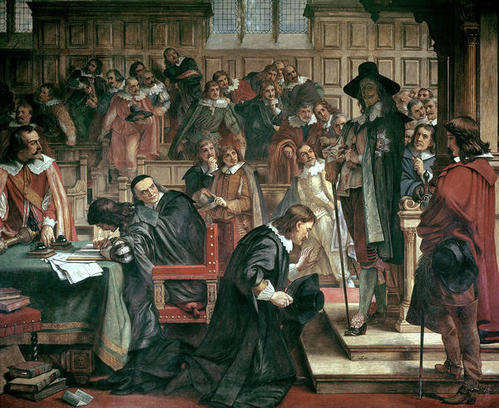
Throughout the history of the Westminster Parliament, there have been times when MPs faced difficult choices which had potentially life-changing consequences. For the MPs who sat in the Commons between 1640 and 1660 there were unique challenges, unparalleled to that date and arguably since. Decisions were required in 1642 over whether to obey Charles I’s commission of array or Parliament’s Militia Ordinance; in 1644 over attendance at Westminster or the rival Parliament at Oxford; in 1648/9 over whether to continue peace negotiations with the defeated king or pursue him to trial and execution; thereafter, whether to participate in the novel experiments of the republic and protectorate; and on numerous occasions, how to respond to military force used upon the Commons itself. The hazards of miscalculation – financial and personal – were all too real; the rewards of discernment might be safety and lucrative high office. Evidence for decision-making may often be circumstantial rather than direct, but there is still a greater variety of relevant sources than for earlier periods. Whether clearly mapped or not, political trajectories might be complex.
By the time Charles raised his standard at Nottingham on 22 August 1642, calling on his subjects to join him, some MPs had long ceased attending Parliament. Such a one was Thomas Howard, Member for Wallingford. Still only 22 that summer, he was representative of a cadre of young aristocrats whose families had long served at the royal court and whose sympathies naturally lay there. But sharing their alignment were men who only a few months earlier had been ranged among the king’s critics in the Commons – among them, lawyer Edward Hyde, who had joined Charles at York in May and who was to give the crown more than 20 years sterling service, and Lucius Cary, 2nd Viscount Falkland, who was to be killed at first battle of Newbury in 1643. Equally, there were those in the royalist camp whose personal religious preferences accorded better with Protestant reforming zeal at Westminster – men like Sir William Fleetwood, cupbearer to the king, and Sir Edmund Verney, royal standard-bearer)– but who, however conflicted, could not lay aside their loyalty to the monarchy; Fleetwood became a royalist fundraiser at Oxford while Verney was killed at the battle of Edgehill.
Meanwhile, other courtiers adhered to Parliament, and attracted special hostility for so doing. Father and son Sir Henry Vane the elder, whose near-30-year court career had culminated in his being treasurer of the household, and Sir Henry Vane the younger, treasurer of the navy, put their considerable talents to use in the parliamentarian cause and after the war had ended in building up the republic. Cornelius Holland, MP for New Windsor and paymaster in the household of the royal children, was one of several former courtiers delegated to sell off royal goods from 1649. Like Vane the younger and Sir John Danvers, he was a regicide. Signature to Charles I’s death warrant brought Vane a martyr’s death in 1662 and Holland a precarious exile on the continent, though lingering habits of luxury meant that he fled by coach rather than less noticeable horseback.
Death in the field – outright or from festering wounds – claimed several MPs, while noxious imprisonment accounted for Marlborough Member John Francklyn, roughly handled when captured defending his town and soon overcome by the terrible conditions in Oxford Castle. Death was also the penalty for those caught treacherously changing sides. Execution was the fate in January 1645 of Yorkshire MPs Sir John Hotham and his son John, after they abandoned the militancy which had seen them deny the king entry to Hull in 1642, in favour of covert peace-making. Only a pardon from Parliament’s then commander-in-chief, Robert Devereux, 3rd earl of Essex, saved Nathaniel Fiennes from the sentence handed down by court martial after he had – too readily according to some – surrendered the vital garrison at Bristol to the royalists in 1643. Nonetheless, his political career revived not once, but twice, surviving also being purged from Parliament in 1648 for his involvement in last-ditch peace negotiations with Charles.
For a good many on both sides, the more likely penalty of their chosen allegiance was financial. Some experienced this almost immediately, especially if their estates were in areas hotly contested between crown and Parliament. Speaker William Lenthall and Great Marlow MP Bulstrode Whitelocke suffered plunder and destruction in the early days of the war from royalist troops manoeuvring around Oxford. In Lenthall’s case, the onslaught on his property was explicitly sanctioned by a royal proclamation that declared him a traitor. With the parliamentarian victories and the surrender of Oxford in 1646 it was royalists who bore the brunt. Those who had attended the Oxford Parliament – even if perhaps unwillingly, like John Whistler – or otherwise compromised themselves were required to compound for their delinquency and pay fines.
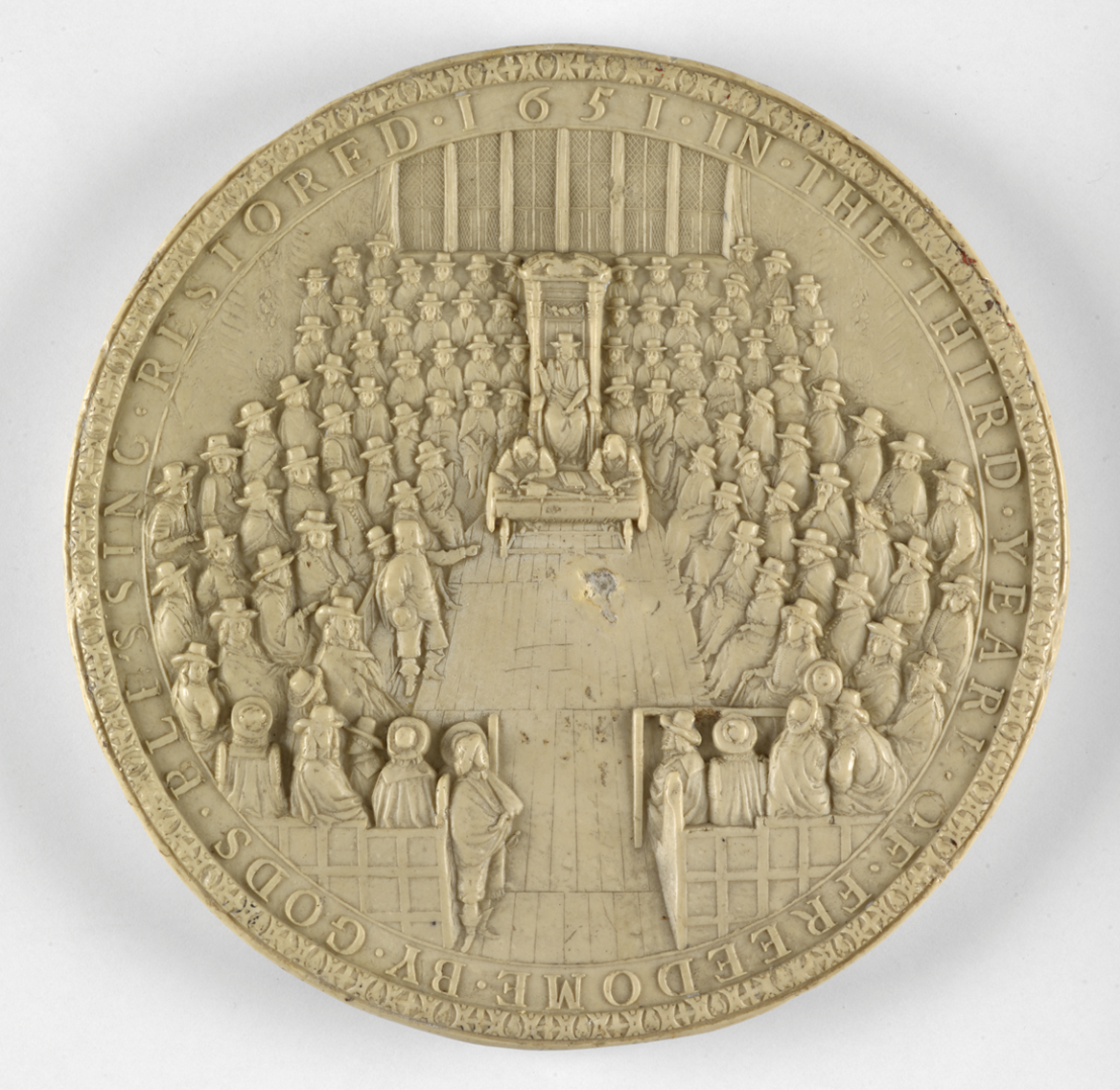
Yet both war and the new regimes that followed it also offered opportunities for profit. As has been noted previously, military procurement, expanded government and perceptions that MPs could be bribed provided the context. Was there any room in this for decisions driven by political principle? The House of Commons project has revealed both men who clung to ideals as to how the state should be run and men who struggled to find humane compromises. For instance, republicans as unlike as Sir Arthur Hesilrige and Edmund Ludlowe, are found asserting themselves against the army to the end of the period, while there was a spectrum of attitudes on whether or not the ‘Quaker’ James Naylor should be prosecuted and condemned by Parliament as a heretic, from hardliners such as Dorset Member John Fitzjames, through Bulstrode Whitelocke, struggling between tolerant instincts and fear of popular disorder, to high-ranking army officer John Lambert, for whom religious toleration was fundamental. It is the interaction of individuals, ideas and political reality which makes this period and the Commons volumes come alive.
VML
Further reading:
History of Parliament: The House of Commons 1640-1660, ed. Stephen K. Roberts (2023)
