The final blog in our trio for LGBT+ History Month comes from our Public Engagement Officer, Sammy Sturgess. She considers how nineteenth century legal reform in the British Empire impacted the regulation of homosexuality and its Commonwealth legacy…
2019 is the 70th anniversary of the Commonwealth so it seems appropriate to consider the legacy of British colonial-era legislation on Commonwealth nations. Specifically, given that it’s LGBT+ History Month, here we’ll discuss the nineteenth century codification of law and how this related to homosexual offences in the British Empire and continues to affect the lives of LGBTI+ people in the Commonwealth today.
2018 saw the legacy of British colonial-era legislation relating to the criminalisation of homosexuality take centre stage in the press on more than one occasion. In April 2018 Trinidad and Tobago declared that section 13 and 16 of their Sexual Offences Act which related to male homosexuality were ‘unconstitutional, illegal, null, void, invalid and of no effect to the extent that these laws criminalise any acts constituting consensual sexual conduct between adults’(‘How Britain’s colonial legacy still affects LGBT politics around the world’, The Conversation, 15 May 2018). Later in September, LGBTI+ activists in India rejoiced in the ruling of the Supreme Court that Section 377 of the colonial-era Indian Penal Code, which criminalised ‘unnatural acts’, was repealed. The legacy of British rule and its correlation to legal, social and cultural discrimination against LGBTI+ people in former British colonies is strong – of the 71 countries that still criminalise homosexuality, 35 are in the Commonwealth. Let’s take a look at the origins of the legislation that was rolled out widely in the British colonies in the nineteenth century and whose legacy still pervades the lives of LGBTI+ individuals in over three-quarters of Commonwealth countries.
In Britain, as well as other European nations, the nineteenth century was a time of great political and legal reform. Britain’s legal system was reformed by a series of legislative changes that adhered to the existing system, but other European powers, along with the British Colonial Office, developed penal codes. Douglas E. Sanders has attributed the development of penal codes to the modernisation of the legal system amidst the general drive for modernity in the West during the last surge for colonial dominance by European powers. The first penal code to be drawn up that set out the entirety of British law to be enacted in the British Empire was that of India. Section 377 of the Indian Penal Code deemed that,
Whoever voluntarily has carnal intercourse against the order of nature with any man, woman or animal shall be punished with imprisonment for life, or with imprisonment of either description for a term which may extend to ten years, and shall be liable to fine
Douglas E. Sanders, ‘377 and the Unnatural Afterlife of British Colonialism in Asia’, Asian Journal of Comparative Law, 4 (2009), 1-49 (p. 8).
This code became the basis upon which other penal codes and legislation were devised and implemented across the British Empire. Its wording and often the exact article numbers, including article 377, under which homosexual offences could be tried, was used in codes and legislation across Asia, Africa and Australasia. Therefore, in those Commonwealth countries where homosexuality is still criminalised, article 377 and its kin remain in place in current law.
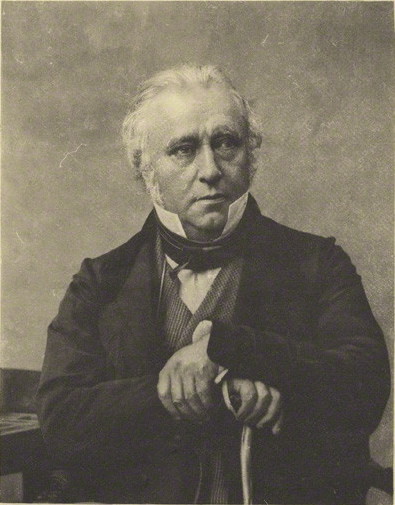
The chief architect of the Indian Penal Code of 1860 was historian, poet and Whig politician, Thomas Babington Macaulay. On retiring from his seat for the constituency of Leeds, Macaulay spent a four-year stint in India between 1834 and 1838 working for the British Colonial Office before returning to his political career. He had been called to the bar in 1826, and although he had no real law practice to speak of in Britain, his legal education ensured his appointment as the chair of the Indian Law Commission, which was established in 1833. Macaulay, the son of a British colonial governor and abolitionist, Zachary Macaulay, had been heavily involved in the campaign for electoral reform in Britain that culminated in the Great Reform Act of 1832.
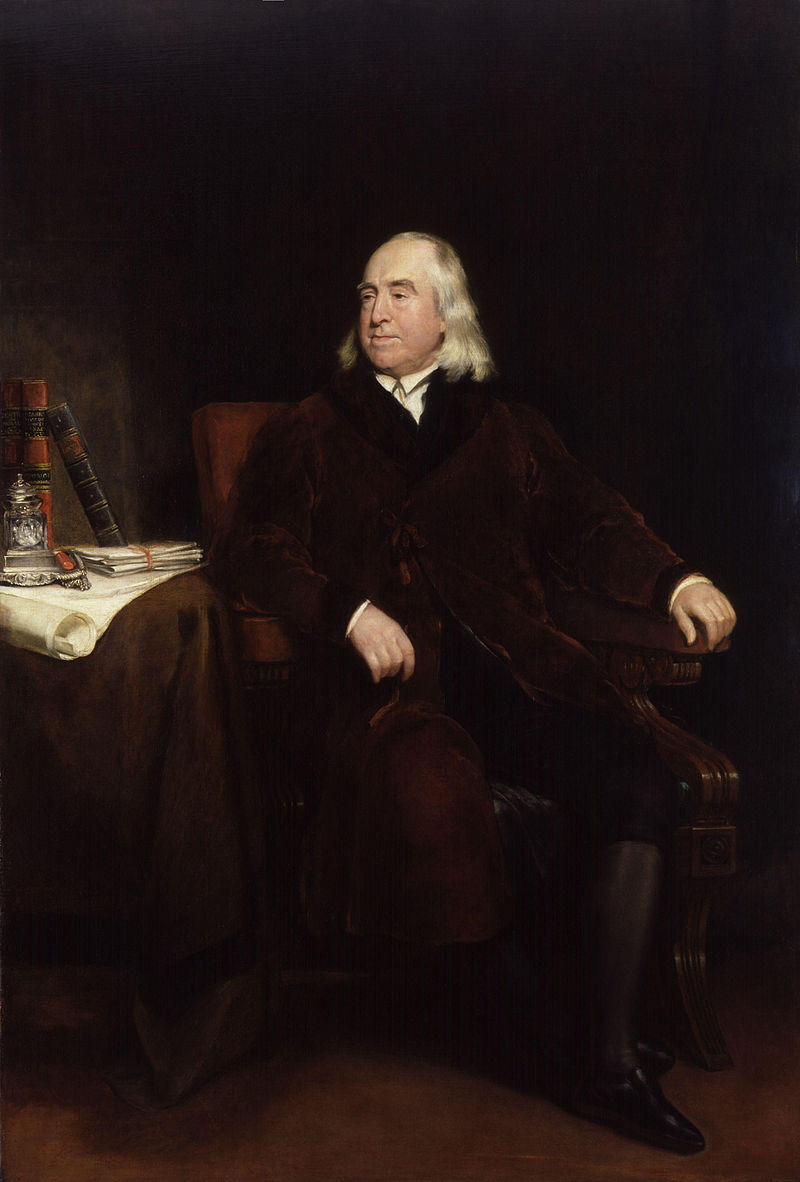
His colleagues in the Commission, John Macleod and Charles Hay Cameron, suffered from poor health so Macaulay became the driving force and primary engineer of the Indian Penal Code, the draft of which was finished in 1837. It was enacted in 1860 and enforced in 1862. A passionate politician renowned for his intellect, Macaulay and his code have often been associated with utilitarian philosophers like Jeremy Bentham and John Stuart Mill, the former of whom is seen as the inventor of codification. Sanders, however, argues that as an advocate for sexual liberty and tolerance, had Bentham lived to see the enactment of the Indian Penal Code and its article 377, he would not have approved.
Although Macaulay’s code was the first of its kind in the British Empire, subsequent codes were devised in the 1870s by R.S. Wright and then James Fitzpatrick Stephen. The latter was introduced to Parliament as a Ministerial Bill in 1878 and although it was never ratified, it was later adopted in Canada and was the basis for the Queensland code of 1899. The increased regulation of sexual acts in Britain and its colonies in the second half of the nineteenth century came as other European powers (save Germany) began to abolish parallel restrictions. This continued further in Britain with the so-called Labouchere Amendment in the Criminal Law Amendment Act 1885. The radical Liberal MP, Henry Labouchere proposed a change in language relating to the regulation of male homosexual acts.
Any male person, who in public or private, commits, or is party to the commission of, or procures or attempts to procure the commission by any male person of, any act of gross indecency with another male person, shall be guilty of a misdemeanour.
British Library, 6485.aaa.6., ‘The Criminal Law Amendment Act 1885’, p. 6.
This legislation, also known as the Blackmailer’s Charter, allowed for the continued marginalisation and persecution of homosexual people in Britain and continued to shape attitudes at home and throughout the empire.
Labouchere’s amendment was not repealed until 1967, when homosexual acts between men over the age of 21 were partially decriminalised in England and Wales. While reform has been even slower in many Commonwealth countries, the recent changes to the law in Trinidad and Tobago and in India suggest that the tide is beginning to turn against the pervasive legacy of nineteenth-century legislation in some former British colonies.
SS
Further reading:
Enze Han and Joseph O’Mahoney, British Colonialism and the Criminalization of Homosexuality: Queens, Crime and Empire (London: Routledge, 2018)
Douglas E. Sanders, ‘377 and the Unnatural Afterlife of British Colonialism in Asia’, Asian Journal of Comparative Law, 4 (2009), 1-49
David Skuy, ‘Macaulay and the Indian Penal Code of 1862’, Modern Asian Studies, 32 (1998), 513-557
https://edition.cnn.com/2018/09/11/asia/british-empire-lgbt-rights-section-377-intl/index.html
